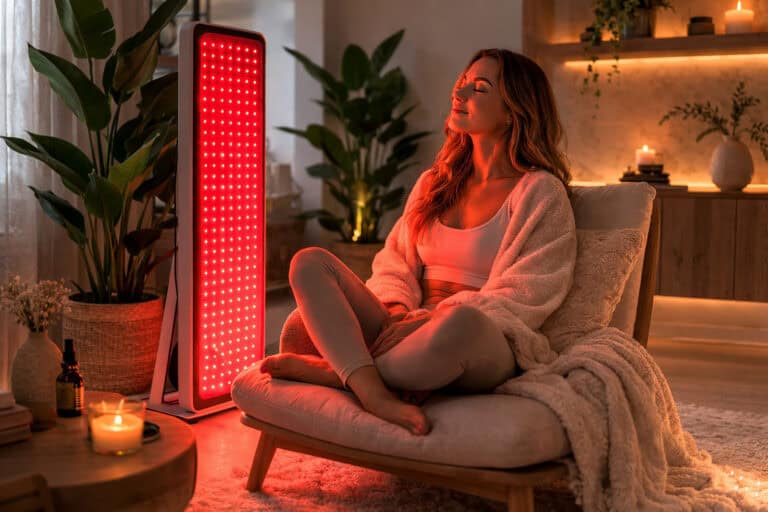
Red Light Therapy for Sleep and Circadian Rhythm: Can Light Help You Rest Better?

😴 Struggling to fall asleep or wake up refreshed? You’re not alone. Modern life — with its blue-light screens and irregular schedules — often disrupts our natural circadian rhythm, the body’s internal clock that regulates sleep-wake cycles. This has led many to explore red light therapy for sleep as a way to restore balance and promote deeper rest. 🌙
But can simply exposing yourself to red wavelengths really help you sleep better? In this article, we’ll explore the science behind light and melatonin production, examine how red light compares to blue light, and share practical strategies to use red light therapy for a healthier, more consistent sleep cycle. 🔬
🌍 Understanding Circadian Rhythm
Your circadian rhythm is essentially your body’s **24-hour internal clock**. It influences when you feel alert during the day and when you naturally start to feel drowsy at night. This rhythm is guided by the **suprachiasmatic nucleus (SCN)** in the brain, which responds directly to light exposure. ☀️
When your eyes detect light, signals are sent to the SCN to regulate hormones, body temperature, and alertness. In a healthy cycle, bright light in the morning helps you wake up, while darkness at night triggers melatonin release — the hormone that makes you feel sleepy.
But with artificial lighting, late-night screen time, and irregular schedules, this delicate rhythm can easily fall out of sync. That’s where **red light therapy** may offer a natural way to nudge your system back on track. 🔄

🌙 The Role of Melatonin in Sleep
Melatonin is often called the “sleep hormone.” Produced by the pineal gland, it increases in the evening to prepare your body for rest. Light exposure is the biggest factor controlling melatonin levels:
- 🔵 **Blue light** (from phones, TVs, and LED bulbs) suppresses melatonin and tricks the brain into staying alert.
- 🔴 **Red light** has minimal impact on melatonin suppression, making it a far better option for evening light exposure.
That’s why sleep experts recommend dim, warm light in the hours before bed. Unlike harsh artificial lighting, red wavelengths allow melatonin to rise naturally, signaling the body that it’s time to rest. 🛌
💡 Why Red Light Supports Better Sleep
Research suggests that red light wavelengths (around 630–700 nm) may actively support sleep in two key ways:
- ✅ Preserving melatonin — unlike blue or white light, red light doesn’t block melatonin production at night.
- ✅ Calming physiological effects — red light exposure may help lower heart rate and prepare the body for rest.
One study published in PubMed found that athletes exposed to red light therapy reported improved sleep quality and endurance after two weeks. While more large-scale studies are needed, the evidence points toward red light being a safe, low-risk way to improve sleep hygiene.
In contrast, exposure to bright white or blue light at night disrupts circadian timing — one reason late-night scrolling can make it harder to fall asleep. 📱❌
🌟 Benefits of Red Light Therapy for Sleep
People using red light therapy for sleep often report a variety of improvements, especially when they use it consistently in the evening. Documented benefits include:
- 😴 **Falling asleep faster** — reduced nighttime alertness from blue-light exposure
- ⏰ **Improved sleep duration** — supporting longer, uninterrupted rest
- 🌀 **Better circadian alignment** — reinforcing a healthy sleep-wake cycle
- 💪 **Daytime energy & recovery** — more restorative sleep can enhance performance and mood
Though results can vary, these benefits make red light therapy an appealing option for people struggling with insomnia, jet lag, or inconsistent schedules. 🌍✈️
💡 Device Options for Sleep Support

Choosing the right device makes a difference when using red light therapy for sleep. Common options include:
- 🛋️ **Bedroom red light lamps** — designed for evening relaxation, replacing harsh bedside lamps
- 📱 **Portable red light panels** — versatile devices you can use for both skin and sleep benefits
- 😷 **Wearable devices** — like masks or headbands with built-in red LEDs for targeted exposure
Panels tend to be the most versatile, but bedside lamps offer a more natural way to shift your evening environment toward restful light. The key is to **avoid blue/white light in the evening** while introducing soft red illumination. 🕯️
➡️ See our 2025 Buyer’s Guide for an overview of options.
🛌 Best Practices for Using Red Light Before Bed
To maximize results, consistency and timing are everything. Here are some science-backed tips:
- 🌇 **Use in the evening** — 30–60 minutes before bedtime for 10–20 minutes
- 📍 **Keep it gentle** — sit 6–12 inches from the device for a relaxing glow
- 📆 **Stay consistent** — aim for 4–5 nights per week to reset your rhythm
- 📴 **Pair with sleep hygiene** — avoid caffeine late in the day and keep your bedroom cool and dark
Many users combine RLT with calming evening rituals like stretching, journaling, or herbal tea to reinforce the brain’s association with rest. 🍵🧘
⚠️ Risks & Limitations
Red light therapy is considered very safe for most people. Unlike UV exposure, it does not damage DNA or increase cancer risk. However, there are some caveats:
- ❌ **Inconsistent results** — some people notice dramatic improvements, others only mild changes
- ❌ **Not a cure for chronic sleep disorders** — RLT helps regulate rhythm, but conditions like sleep apnea need medical treatment
- ❌ **Overexposure** — using devices too close or for too long may cause mild eye strain or skin irritation
Those with light-sensitive conditions or who take medications that increase sensitivity should consult a healthcare provider before starting. 👩⚕️
🔍 How RLT Compares to Other Sleep Aids
There are countless products and techniques designed to improve sleep, from supplements to blackout curtains. Here’s how red light therapy stacks up:
- 💊 **Melatonin supplements** — can work short-term but may cause grogginess or dependency if overused
- 📱 **Blue-light blocking glasses** — reduce disruption but don’t actively support circadian rhythm repair
- 💡 **Red light therapy** — naturally preserves melatonin while providing additional calming effects on the body
- 😴 **Prescription sleep aids** — effective in acute cases but often come with risks of side effects and dependency
RLT stands out as a non-invasive, drug-free option that works with the body’s biology rather than overriding it. 🌿

🌙 Incorporating RLT Into a Nightly Routine
For best results, think of red light therapy as part of a **holistic bedtime ritual**. Here’s a sample nightly flow:
- 🚫 Turn off bright screens and overhead lights about 1 hour before bed
- 💡 Turn on a red light lamp or sit near your red light therapy device for 15 minutes
- 📓 Journal, meditate, or stretch while under the light
- 🛏️ Transition into bed with a calm, dark environment
Pairing RLT with mindful, screen-free habits maximizes its circadian benefits and helps your brain recognize that it’s time to sleep. 💤

👩⚕️ What Experts Say About Red Light for Sleep
Sleep medicine experts agree that light is one of the most powerful tools for regulating circadian rhythm. According to the Cleveland Clinic, carefully managing light exposure can significantly improve sleep quality.
In clinical settings, red light has shown promise for:
- ✅ Supporting athletes’ recovery by improving sleep quality
- ✅ Helping shift workers realign circadian patterns
- ✅ Providing a safer alternative to blue or white light in sleep environments
While larger trials are needed, early data combined with expert endorsements make red light a valuable, low-risk tool for sleep hygiene. 🔬
❓ Frequently Asked Questions
People curious about using red light therapy for sleep often ask:
- 🕒 How long should I use red light before bed?
- 🔴 What wavelengths are best for circadian rhythm?
- 😴 Can I fall asleep with the red light on all night?
- 📱 How does it compare to blue-light blocking glasses?
- 👩⚕️ Is red light therapy safe for children or older adults?
➡️ These questions are addressed in detail in the FAQ section below to give you science-based answers. ✅
✅ Conclusion: Can Red Light Therapy Help You Sleep Better?
The take-home is simple: **yes—used in the evening, red light can support healthier circadian timing and better sleep**. By minimizing melatonin suppression and creating a calming pre-bed environment, red light therapy offers a low-risk, drug-free way to wind down. Results are best with consistent nightly routines and good sleep hygiene.
- 🌙 Use gentle red light 30–60 minutes before bed
- 🔌 Limit blue/white light exposure at night
- ⏰ Keep a steady schedule to reinforce your rhythm
Curious which device fits your lifestyle? Explore our 2025 Buyer’s Guide. For broader context, visit our Benefits hub, skim the latest posts on the Blog index, or contact us with questions. Sleep well. 😴