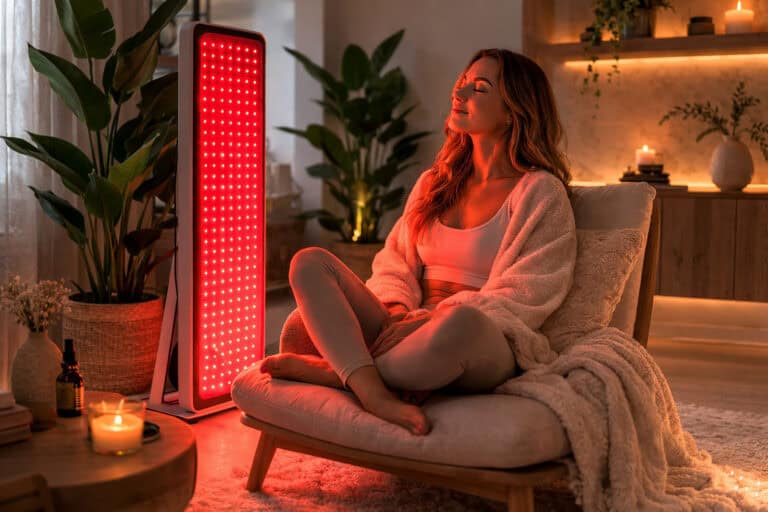
Red Light Therapy for Skin Health & Anti-Aging

Red light therapy for skin health has become one of the most talked-about at-home wellness topics because it sits at the intersection of skincare, consistency, and non-invasive self-care. In practical terms, people are usually interested in it for smoother-looking skin, improved skin tone, support for collagen, and a more refreshed overall appearance. That interest is not coming out of nowhere. Clinical and review literature suggests photobiomodulation may help support skin appearance through cellular signaling, collagen-related pathways, and local circulation when devices are used appropriately and consistently.
That said, this is not a miracle treatment, and it should not be framed as one. Red light therapy is best understood as a gradual-support modality rather than a fast cosmetic reset. It may help the skin look healthier over time, but results depend on device quality, wavelength profile, session consistency, treatment distance, and the broader skincare habits surrounding it. It also works best when expectations stay realistic.
If you are still building your foundation, start with our guide to what red light therapy is. For a broader overview of science-backed use cases, see Red Light Therapy Benefits: Backed by Science.
Want the bigger picture first?
Compare education and device guidance in our Best Red Light Therapy Devices buyer’s guide →
What people usually mean by skin health and anti-aging support
When readers search for red light therapy for skin health, they are usually not asking one single question. They are often trying to improve several visible concerns at once, such as:
- fine lines and wrinkle visibility
- uneven-looking tone or dullness
- overall skin texture
- post-breakout marks or redness appearance
- support for a calmer, more consistent skincare routine
That matters because red light therapy is generally discussed as a supportive skin-rejuvenation tool, not a condition-specific cure. Cleveland Clinic notes that red LED therapy is commonly used in skin-focused settings for concerns like facial texture, fine lines, age spots, and general signs of photoaging, while also emphasizing that evidence quality varies by use case and device setup. A separate Cleveland Clinic explainer also notes that red LED light may stimulate collagen production and help reduce inflammation-related skin stress in some contexts.
In other words, the strongest editorial framing is this: red light therapy may support healthier-looking skin and may improve certain visible signs of aging over time, but it should be viewed as part of a broader skin-health strategy rather than a stand-alone answer.
How red light therapy may support skin at the cellular level

The basic idea behind photobiomodulation is that certain wavelengths of visible red and near-infrared light can interact with cellular structures involved in energy production and signaling. Review literature on low-level light therapy in skin has described mechanisms involving mitochondrial activity, ATP-related energy support, nitric oxide signaling, circulation-related effects, and downstream cellular communication pathways that may influence tissue response over time.
For skin, these mechanisms are especially relevant because appearance is influenced by several overlapping processes: barrier function, hydration habits, collagen architecture, microcirculation, and recovery from day-to-day environmental stress. Red light is being studied for how it may nudge these systems in a favorable direction without heat damage or invasive intervention.
If you want a deeper mechanism-first explanation, read How Red Light Therapy Works at the Cellular Level. If you are confused about why wavelength matters, our guide to red light therapy wavelengths fills in that missing piece.
Collagen support is one reason anti-aging interest is so high

One of the biggest reasons people explore red light therapy for skin health is the possibility that it may support collagen-related processes. Collagen is a structural protein closely associated with firmness and skin texture, and visible aging often becomes more noticeable as collagen architecture changes over time.
Clinical evidence here is encouraging, though still best interpreted conservatively. A controlled trial published in Photomedicine and Laser Surgery reported improvements in skin complexion, skin feeling, roughness, and collagen density in treated participants. More recent clinical work on facial photobiomodulation also found improvements in visible skin-aging measures, while a 2023 study on facial skin aging reported improvements in visible signs of aging that persisted for a period after treatment ended. A 2023 study on periocular wrinkles also reported significant reductions in wrinkle volume after red-light-based photobiomodulation.
That does not mean every user will see dramatic wrinkle reversal. It does suggest that when wavelength, dose, and consistency line up properly, red light therapy may help support smoother-looking skin and modest visible improvements in skin aging markers.
Why some people notice tone, texture, and “glow” before anything else

In real-world at-home use, the earliest perceived changes are often not dramatic wrinkle reductions. More commonly, people notice that their skin looks a little calmer, a little more even, or a little more vibrant. That can be influenced by several overlapping factors:
- improved routine consistency because treatment becomes a daily ritual
- support for circulation-related skin appearance
- possible changes in visible roughness or surface texture
- a more intentional skincare pattern with fewer random product changes
This is one reason red light therapy tends to fit well into gentle anti-aging routines. It may not replace evidence-based skincare basics like sun protection, appropriate cleansing, and dermatologist-guided care when needed, but it can complement them. A useful mental model is that red light therapy may help support the environment in which skin renewal and maintenance happen, rather than forcing immediate visible transformation.
For a broader science-grounded overview beyond skin, visit our Red Light Therapy Blog and browse related educational posts.
How to build a realistic at-home skin routine with red light therapy

The most useful skin routine is usually the one you can repeat consistently without irritation or confusion. For skin-focused home use, that often means placing the device where it naturally fits into an existing morning or evening routine rather than treating it like a separate complicated event.
Practical setup habits that usually work best
- Use the device on clean, dry skin unless the manufacturer clearly instructs otherwise.
- Keep treatment distance and session time consistent so your routine stays repeatable.
- Avoid stacking too many aggressive skincare actives around the same time if your skin is already reactive.
- Track changes by month, not by day.
- Prioritize basic skincare fundamentals, especially sun protection, because no light device replaces them.
For a general setup framework, see How to Use Red Light Therapy at Home. If you need timing guidance, our session duration and frequency guide can help you stay realistic.
What the current evidence supports and what it does not
The skin literature around photobiomodulation is promising, but it is not infinitely broad. The strongest support tends to cluster around visible skin aging, texture-related improvement, wrinkle appearance, and general rejuvenation outcomes. Reviews in dermatology and skin research suggest that LED-based photobiomodulation has enough supportive evidence to justify careful optimism, especially for non-invasive rejuvenation goals.
Still, there are important limits:
- studies vary in wavelengths, treatment frequency, and device power
- clinical outcomes are not identical across all skin concerns
- at-home consumer devices are not interchangeable
- results are often gradual and modest rather than dramatic
That is why responsible education matters. Red light therapy may support skin appearance and healthy-aging routines, but it should not be presented as a guaranteed answer for deep wrinkles, major pigmentation issues, or every cosmetic concern. Readers who want a broader overview of evidence quality should also review what the evidence shows.
Who may be a good fit for skin-focused red light therapy

Red light therapy for skin health tends to make the most sense for people who:
- want a non-invasive routine with low day-to-day burden
- are comfortable waiting weeks rather than expecting overnight change
- want to support texture, tone, or visible aging gently
- prefer consistency-based wellness tools over more aggressive cosmetic interventions
It may be less satisfying for people who want immediate dramatic changes, who are inconsistent with routines, or who expect one device to replace all skincare and professional care. That is also why device selection matters. Panel size, wavelength mix, treatment coverage, and ease of daily setup can influence whether a routine becomes sustainable.
Comparing devices for facial and home use?
See our editorial overview in the best red light therapy devices for skin and anti-aging roundup →
Common mistakes that can make skin results less impressive

Red light therapy routines often underperform because the routine itself is inconsistent or poorly matched to the device instructions. A few common issues show up again and again:
- using the device sporadically and expecting cumulative results
- changing treatment distance every session
- pairing treatment with too many other new skincare variables
- ignoring safety guidance for eyes or sensitive skin
- assuming longer sessions always mean better outcomes
More is not always better. Appropriate dosing matters. Overdoing sessions or improvising around manufacturer guidance can make a routine harder to judge and less comfortable to sustain. Before starting, it is smart to read our red light therapy safety guide and our page on possible side effects.
What realistic results often look like over several weeks
People considering red light therapy for skin health often ask the same question in different words: how long until I see something? A realistic answer is that visible changes, when they happen, usually show up gradually. Early impressions may include a more polished or less dull appearance. Changes in fine lines, roughness, or visible texture generally take longer and vary substantially by age, routine quality, baseline skin condition, and device consistency.
It is also important to separate maintenance from transformation. If your skin already looks relatively healthy, the benefit may be support for steadiness and routine quality rather than dramatic before-and-after change. If visible photoaging is more established, the improvements may still be meaningful but incremental.
That is why the best use case is often “ongoing support for skin appearance” rather than “rapid anti-aging correction.” This framing is more accurate and tends to match the evidence better.
Red light therapy works best when skin health is treated as a system

Skin does not exist in isolation. Sleep habits, UV exposure, stress load, skincare product choices, hydration habits, and consistency all shape what you see in the mirror. Red light therapy can fit into that system well because it is typically easy to repeat and does not require recovery time. But it still performs best alongside basic skin-health fundamentals.
A simple, realistic stack often looks like this:
- consistent sun protection
- gentle cleansing and barrier-respecting skincare
- repeatable red light sessions several times per week
- patience with the timeline
- professional guidance when skin concerns are significant or persistent
If you are still deciding whether this type of tool fits your lifestyle, our Is Red Light Therapy Right for You? page can help frame the decision more clearly.
Frequently asked questions about red light therapy for skin health
Can red light therapy help with wrinkles?
It may help reduce the appearance of fine lines and wrinkles over time, especially when used consistently and appropriately. Clinical studies in skin rejuvenation suggest improvements in wrinkle-related outcomes are possible, but results are usually gradual rather than dramatic.
How long does it take to see skin-related results?
Many people judge progress too early. Texture and glow-related changes may be noticed sooner than deeper visible-aging changes. In practice, it often makes more sense to evaluate progress over several weeks rather than after only a few sessions.
Can red light therapy replace skincare products or sunscreen?
No. Red light therapy may support skin health, but it does not replace basic skincare habits. Sunscreen, gentle cleansing, and a well-chosen routine still matter, especially if anti-aging support is your goal.
Bottom line: red light therapy may support healthier-looking skin, but consistency matters most
Red light therapy for skin health is one of the more plausible non-invasive wellness tools for people who want gradual support for skin tone, texture, and visible aging concerns. The evidence does suggest it may support collagen-related pathways, skin appearance, and certain rejuvenation outcomes. But the strongest results usually come from realistic expectations, repeatable habits, and a device setup that actually fits your life.
If your goal is smoother-looking skin, a calmer routine, and long-term support rather than instant transformation, red light therapy may be worth considering. If your goal is dramatic cosmetic correction, it is better to approach the category with caution and informed expectations.
Ready to go deeper?
Compare educational guidance and home-use options in our Best Red Light Therapy Devices buyer’s guide → or contact Red Light Sage if you want help navigating the site.
Sources: Cleveland Clinic overview of red light therapy, Cleveland Clinic LED light therapy explainer, controlled trial on red and near-infrared phototherapy for skin complexion and collagen density, 2023 study on reversing visible skin-aging signs with photobiomodulation, 2023 study on periocular wrinkle reduction, review of low-level light therapy in skin, systematic review of LEDs in dermatology.