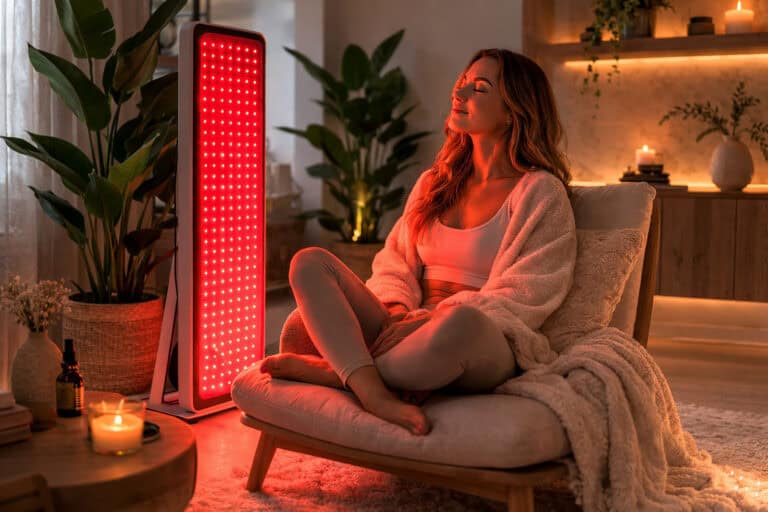
Red Light Therapy for Mood & Mental Health

Can red light therapy support mood and mental wellness?
Interest in red light therapy for mood has grown as more people look for non-drug wellness tools that fit into a realistic home routine. While red light therapy is not a cure for depression, anxiety, or other mental health conditions, early research on photobiomodulation suggests it may support certain brain and nervous-system processes linked to energy production, circulation, sleep quality, and emotional resilience.
That cautious framing matters. Mental health is complex, and mood changes rarely come from one factor alone. Sleep, stress load, social connection, daylight exposure, exercise, therapy, medication, and medical history all influence how someone feels. Red light therapy belongs in that broader wellness conversation—not as a guaranteed answer, but as a tool that may be worth understanding.
In this guide, we’ll look at what the science currently suggests, where the evidence is still thin, and how people commonly build a practical home routine around consistency, timing, and realistic expectations. For a broader device overview, see our Best Red Light Therapy Devices (2026 Buyer’s Guide).
Compare at-home device options
If you want to pair the science with practical shopping guidance, explore our red light therapy buyer’s guide →
Why researchers are exploring light-based support for mood
Researchers are interested in light-based interventions for mood because light affects more than the surface of the skin. Different forms of light exposure can influence circadian timing, alertness, sleep pressure, and nervous-system signaling. In the red and near-infrared range, photobiomodulation is being studied for how it may interact with cellular energy systems, especially in tissues with high energy demand like the brain.
That does not mean every red light device is automatically a “mental health device.” It means there is a biologically plausible reason scientists are asking whether certain wavelengths, doses, and treatment patterns could support mood-related outcomes in some people.
Clinical interest has focused especially on transcranial photobiomodulation, where light is directed toward the head using carefully designed protocols. Early reviews and small trials have reported promising signals, but the field still needs larger, better-standardized studies before firm conclusions can be made. A useful starting point is a review of photobiomodulation for major depressive disorder on PubMed, along with earlier clinical literature discussing preliminary antidepressant potential in carefully controlled settings via systematic review data.
For a foundational overview of the technology itself, you can also read What Is Red Light Therapy?.
How red light therapy may relate to mood-support pathways

Much of the discussion around mood support starts with mitochondria. Photobiomodulation is commonly described as interacting with cellular energy production, especially through mitochondrial pathways. In simple terms, researchers are exploring whether light exposure in the right wavelengths may help support ATP production and cellular efficiency in targeted tissues.
Several proposed mood-relevant mechanisms are frequently discussed in the literature:
- Cellular energy support: brain tissue has high energy demands, so even small changes in metabolic efficiency may matter.
- Nitric oxide signaling and circulation: light may influence blood flow and tissue oxygenation, which are relevant to brain function.
- Neuroinflammatory balance: some studies explore whether photobiomodulation may affect inflammatory signaling that overlaps with mood-related research.
- Circadian alignment: better timing, better sleep, and more stable daily rhythms often support better mood regulation.
These mechanisms are still being studied, and they should not be overstated. But they help explain why mood, focus, sleep, and recovery often appear in the same conversation. If you want the deeper biology, visit How Red Light Therapy Works at the Cellular Level.
What the current evidence actually says
The evidence base is encouraging, but still developing. Reviews of transcranial photobiomodulation have found that the approach appears generally well tolerated and potentially helpful for depressive symptoms in some study populations, while also emphasizing major limitations such as small sample sizes, varied devices, inconsistent dosing, and differing outcome measures. A 2023 review on photobiomodulation for major depressive disorder describes the treatment as potentially effective but not yet definitive.
That nuance is important. Promising does not mean proven. It means the field has enough signal to justify ongoing investigation.
More recently, a randomized sham-controlled trial published on PubMed found that a self-administered wearable transcranial protocol appeared feasible and well tolerated, but the dosage used did not produce a clear antidepressant effect. Interestingly, the study did report improvement in sleep quality, which matters because sleep and mood often move together.
There is also broader literature showing that light exposure influences circadian rhythms, sleep, alertness, and mood regulation more generally. A widely cited review available through PubMed Central explains how light affects human circadian rhythms, sleep, and mood. That does not validate every home red light claim, but it supports the idea that timing and light environment matter.
Set realistic expectations before you start

If someone is exploring red light therapy for mood support, the healthiest mindset is to expect gradual support, not dramatic overnight change. Even in areas where light-based interventions are being studied, results tend to depend on regular use, appropriate timing, device quality, and the person’s broader lifestyle context.
In practice, realistic expectations usually look like this:
- You may notice routine-related benefits before emotional ones, such as feeling more consistent, relaxed, or better structured in your day.
- Sleep improvements may matter as much as direct mood changes.
- Stress resilience and recovery can influence how you feel emotionally over time.
- Red light therapy works best as part of a wider wellness plan, not as a standalone solution.
This is especially true if mood challenges are tied to burnout, poor sleep hygiene, a chaotic schedule, or inconsistent daylight exposure. For some people, the real value of a panel is that it creates a repeatable 10- to 20-minute pause in the day—something calming, structured, and easier to stick with than a more complicated routine.
How people often build a home mood-support routine
A practical home setup tends to be simple. Most people do better with a consistent location, a repeatable schedule, and minimal friction. That might mean placing a panel in a bedroom corner, home office, reading area, or recovery space—somewhere it can become part of an existing habit rather than a separate “project.”

Common routine patterns include:
- Morning use: often paired with journaling, light stretching, or a calm start to the day.
- Afternoon reset: used during a break to reduce mental fatigue and step away from screens.
- Evening wind-down: used as part of a low-stimulation routine focused on relaxation and consistency.
Timing matters because light influences alertness and biological rhythms. Some people feel better using red light earlier in the day, while others prefer evening sessions in a quiet environment. The best approach is usually conservative: keep sessions consistent, avoid stacking too many changes at once, and track how sleep, energy, and mood respond over several weeks.
For a practical usage framework, see How to Use Red Light Therapy at Home and Red Light Therapy Session Duration & Frequency.
Mood, sleep, and circadian rhythm are closely connected

One reason red light therapy for mood gets attention is that mood and sleep are deeply linked. Poor sleep can amplify irritability, mental fatigue, low motivation, and stress sensitivity. Better sleep does not solve every emotional struggle, but it often improves the baseline you are working from.
That is why some of the most meaningful mood-related benefits may be indirect. If a red light routine helps you create a steadier bedtime pattern, reduce overstimulation before sleep, or become more consistent with self-care, that can support emotional regulation over time.
Research on light and circadian biology also helps explain why the broader light environment matters. Daytime light exposure, nighttime light hygiene, and schedule regularity all affect how the brain organizes sleep and alertness. We cover that relationship in more detail in Red Light Therapy for Sleep & Circadian Rhythm.
Important mental health caveats and safety boundaries
It is essential to separate wellness support from mental health treatment. If someone is dealing with persistent depression, severe anxiety, trauma symptoms, panic, suicidal thoughts, or major functional decline, self-directed device use should not replace professional care.
Red light therapy may be explored as a supportive routine alongside appropriate medical or mental health guidance, but it should not be framed as a substitute for therapy, medication management, or crisis support when those are needed.
Before starting, it is also wise to consider:
- whether you are sensitive to light exposure
- whether headaches or overstimulation are triggered by bright devices
- whether your routine timing may interfere with sleep rather than support it
- whether you are adding too many changes at once to judge what is helping
For general precautions, visit How to Use Red Light Therapy Safely and Red Light Therapy Side Effects. If you are unsure whether this fits your situation, our contact page is the best place to reach us.
Who may find this topic most relevant

In practical terms, this topic is often most relevant for adults who are already focused on wellness fundamentals and want to experiment carefully with an at-home routine. That can include people who are:
- trying to create a more consistent morning or evening habit
- looking for a screen-free reset during stressful workdays
- supporting recovery from mental fatigue or burnout
- interested in the overlap between sleep quality, energy, and mood
What tends to work best is not intensity—it is consistency. A calm, repeatable setup usually beats an overly ambitious routine that gets abandoned after a week. If your goals also include cognitive energy or daytime focus, you may want to compare this page with Red Light Therapy for Brain Health & Focus.
Choosing a device that fits a realistic routine
If your goal is mood support through routine-building, the “best” device is often the one you will actually use consistently. That usually means paying attention to:
- placement: can it live in a space you already use daily?
- session ease: does setup feel simple enough to repeat?
- comfort: does the brightness and physical footprint fit your space?
- body coverage: do you want a small targeted panel or broader exposure?
For many households, a panel that works in a bedroom, reading area, or office is easier to maintain than a setup that requires moving equipment every session. If you are comparing options, browse our Red Light Therapy Blog for educational content and then review the buyer’s guide for device comparisons.
Common mistakes when using red light therapy for mood support
The most common mistakes are not usually about choosing the “wrong” panel. They are about using the tool in a way that makes it hard to evaluate or maintain.
- Expecting a dramatic emotional change in a few sessions
- Ignoring sleep, stress, and daylight habits while judging the device alone
- Using it inconsistently
- Picking a location that adds friction to the routine
- Treating wellness support as a replacement for needed mental health care
A better approach is to give the routine enough time, keep notes on sleep and daily energy, and view results through the lens of overall lifestyle patterns. That kind of measured approach is more aligned with what the evidence actually supports.
Need a practical next step?
Compare common at-home setups in our guide to the best red light therapy devices →
Frequently asked questions about red light therapy for mood

Can red light therapy treat depression?
No home device should be described as a guaranteed treatment for depression. Current research suggests photobiomodulation may be promising in some settings, especially in carefully studied transcranial approaches, but the evidence is still developing and should not replace professional care.
Is red light therapy better used in the morning or evening for mood?
That depends on the person and the goal. Morning use may fit an energy or routine-building goal, while evening use may support a calmer wind-down. Because light timing can influence alertness and sleep, consistency and self-observation matter.
How long should I try a routine before judging it?
A short trial rarely tells the full story. A few weeks of regular use, alongside notes on sleep, stress, and energy, gives a more realistic picture than a few scattered sessions.
Bottom line
Red light therapy for mood is best understood as a developing wellness topic—not a miracle fix. The most credible evidence suggests that photobiomodulation may support mood-related pathways through effects on cellular energy, circulation, and circadian biology, but current research is still too early and too inconsistent to justify exaggerated claims.
For many people, the practical upside is not just the light itself. It is the routine: a calmer environment, a steadier schedule, better consistency, and more deliberate recovery habits. Those changes can matter.
If you want to keep exploring, start with the science on our Benefits page, browse the wider blog index, or compare at-home options in our red light therapy buyer’s guide.