Red Light Therapy and Immune Signaling

Red light therapy and immune signaling is a topic that gets talked about in broad, often exaggerated terms. A more careful explanation is that red and near-infrared light may influence how cells communicate during stress, recovery, and inflammation. That does not mean red light therapy “boosts immunity” in a simple all-purpose way. Instead, the more evidence-aligned view is that photobiomodulation may help modulate certain signaling pathways involved in inflammation, cellular energy production, and tissue recovery.
In practical home use, this matters because many people are not looking for a medical claim. They are trying to understand whether consistent red light sessions may support overall recovery, resilience, or wellness habits alongside sleep, nutrition, movement, and stress management. That is the lens we use here: cautious, mechanism-based, and realistic.
Want the broader device overview first?
If you are still comparing formats and use cases, start with our Best Red Light Therapy Devices (2026 Buyer’s Guide) →
What immune signaling actually means in red light therapy discussions
Immune signaling refers to the chemical messages cells send to one another when the body is responding to stress, damage, pathogens, or normal repair processes. These messages often involve cytokines, growth factors, oxidative stress signals, and other communication pathways that help determine whether tissue shifts toward recovery, defense, or ongoing irritation.
That is why it is more accurate to discuss red light therapy in terms of immune signaling rather than blanket immune enhancement. A healthy immune response is not simply “more.” In many situations, the body benefits from a more balanced response: enough signaling to support defense and repair, but not so much that tissues remain stuck in a prolonged inflammatory state.
Research on photobiomodulation has explored effects on inflammatory mediators, oxidative stress, macrophage behavior, and tissue recovery pathways. Reviews of the field generally describe PBM as a possible modulator of inflammatory and cellular signaling rather than a one-step immune fix. You can also read our broader overview of red light therapy for inflammation and immune support for the related big-picture context.
Why cellular energy matters to immune signaling

A common mechanism proposed for photobiomodulation involves light absorption by mitochondrial chromophores, especially cytochrome c oxidase. In simplified terms, this may influence ATP production, reactive oxygen species signaling, and nitric oxide dynamics. These shifts can affect how cells respond to stress and how efficiently they carry out repair-related functions. Reviews in the PBM literature frequently connect these mitochondrial effects with downstream changes in inflammation and cellular communication.
Why does that matter for immune signaling? Immune activity is energy-intensive. Cells involved in defense, repair, and cleanup rely on metabolic signals to do their jobs well. When researchers discuss PBM and inflammation, they often point back to this cellular energy layer first. It is less about “supercharging immunity” and more about creating conditions that may support more orderly signaling in stressed tissue.
For a deeper mechanism-first explanation, see how red light therapy works at the cellular level. That article fits naturally with this one because immune signaling begins at the cell-response level long before it becomes a symptom or a wellness goal.
How red light therapy may relate to inflammation and cytokine activity

One of the most discussed areas in PBM research is inflammation. Reviews and experimental work suggest red and near-infrared light may influence inflammatory signaling by changing expression patterns of certain cytokines and other mediators in specific contexts. That does not mean the effect is universal, guaranteed, or strong enough to replace medical care. It means PBM is being studied for its possible role in helping tissue shift away from excessive inflammatory stress and toward a more regulated recovery environment.
Some studies and reviews have described changes in signaling molecules such as TNF-α, IL-6, IL-10, and related inflammatory markers after PBM exposure in certain models. Researchers have also explored how these effects vary by wavelength, dose, timing, tissue depth, and health context. The same dose is not always helpful in every situation, which is one reason overconfident marketing claims should be treated carefully.
In plain language: red light therapy may support a healthier signaling environment in some tissues, but the effect depends heavily on context. That is very different from saying it “fixes the immune system.”
For measured external reading, see this overview from Cleveland Clinic on LED light therapy, the dermatology-focused comments from Mayo Clinic, and research reviews discussing anti-inflammatory PBM mechanisms in PubMed.
Macrophages, cleanup signals, and why they matter
Macrophages are among the most important immune-related cells discussed in red light therapy research. They help with tissue cleanup, inflammatory signaling, and the transition from injury response to repair. Some PBM studies suggest light exposure may influence macrophage polarization or behavior in ways that could support recovery-oriented signaling under certain conditions.
This is important because many wellness users first encounter red light therapy through goals like post-workout recovery, everyday soreness, skin support, or general resilience. Those use cases are closely tied to how tissues communicate after stress. If PBM helps create a more favorable signaling environment, macrophage behavior may be one part of that story.
Still, this is an area where nuance matters. Most consumers should not interpret macrophage research as proof of broad immune benefits across the entire body. It is better understood as one biological pathway researchers are investigating. A review focused on PBM and macrophage phenotypes can be found via PubMed, with additional preclinical context available in published open-access research.
What this topic looks like in real home use

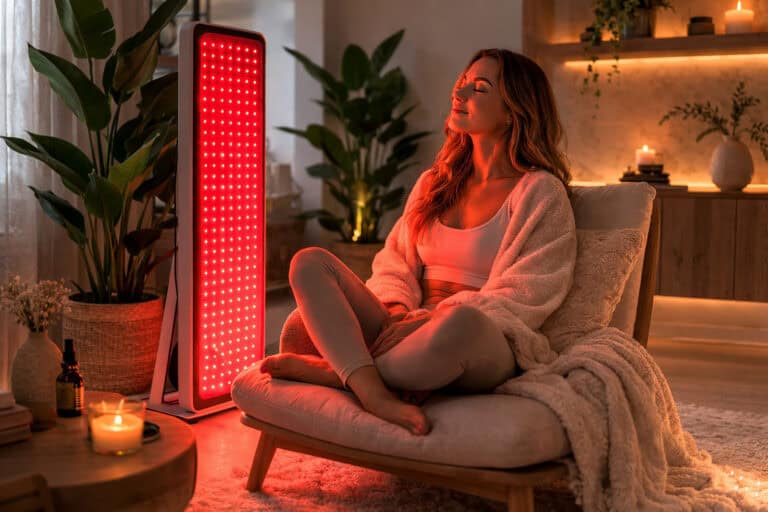
In a home setting, immune signaling is not something you can feel directly. People do not usually notice “cytokine modulation” during a session. What they notice instead is whether red light therapy fits into a routine they can actually maintain. A realistic setup may look like:
- placing a panel in a bedroom, office, or workout area where it is easy to use consistently
- using short, repeatable sessions rather than occasional marathon sessions
- pairing use with other recovery basics like sleep, hydration, and movement
- tracking goals that make sense, such as routine adherence, post-exercise comfort, or skin-related consistency
This observed-use perspective matters because red light therapy seems to work best when people treat it as a steady wellness input rather than a dramatic intervention. If the goal is to support a healthier recovery environment, consistency usually matters more than hype.
If you are still building a home routine, our guide on how to use red light therapy at home can help you think through placement, frequency, and practical setup.
What red light therapy is not
Because “immune support” is a powerful marketing phrase, this is where boundaries matter most. Red light therapy is not a substitute for diagnosis, treatment, vaccination decisions, medication guidance, or care for a serious infection or autoimmune issue. It is also not a general proof that more light equals more benefit.
A measured interpretation would be:
- PBM may influence signaling pathways involved in inflammation and recovery.
- Those effects are dose-dependent and context-dependent.
- Immune signaling is complex, and not all changes are automatically beneficial.
- Consumer devices vary widely in power, coverage, and design.
That is one reason product selection matters. The device should match the intended use case, body area, and routine. If you want a structured overview of form factors and tradeoffs, visit our Red Light Therapy Blog for supporting articles or go straight to our device buyer’s guide.
Why wavelength, dose, and timing can change the outcome

One reason the science can look inconsistent is that PBM is highly parameter-sensitive. Researchers often look at wavelength ranges, irradiance, energy density, treatment duration, frequency, and target tissue. A setting that appears helpful in one experiment may not translate directly to a different tissue, device, or health goal.
This is especially relevant for immune signaling because the body is constantly balancing defense, repair, and adaptation. A low-to-moderate dose may support beneficial signaling in one context, while too little or too much may be less useful. That is why generalized claims like “red light boosts the immune system” are scientifically weak. The better takeaway is that red light may help influence pathways tied to inflammation and recovery when the device and protocol are appropriate.
For the practical side of this, you may want to review red light therapy session duration and frequency so your expectations stay realistic.
Where people most commonly apply this idea in wellness routines

In everyday wellness use, people usually approach immune-signaling discussions through more familiar goals:
- Skin wellness: because localized inflammation and tissue renewal are part of the skin conversation
- Post-exercise recovery: because training stress involves inflammatory and repair signaling
- General stress recovery habits: where light is used alongside sleep and routine consistency
These are more grounded applications than grand claims about immunity. They align better with what major health organizations and clinical sources emphasize: red light therapy is promising in selected areas, but research quality and device consistency still vary. Cleveland Clinic notes that more research is needed to confirm effectiveness across uses, which is a healthy reminder to stay evidence-aligned rather than hype-driven.
Safety and expectation-setting for this topic
For most healthy adults using consumer devices as directed, red light therapy is generally discussed as a low-risk, noninvasive wellness tool. That said, sensible use still matters. Avoid staring directly at strong light sources unless the device is specifically designed for that use and the manufacturer provides clear guidance. People with eye concerns, photosensitivity issues, active medical conditions, or treatment questions should speak with a qualified clinician before starting a routine.
The biggest practical risk for many users is not severe harm but unrealistic expectations. If someone expects red light therapy to single-handedly correct immune issues, they are likely to be disappointed. If they view it as one input that may support signaling related to recovery and tissue health, they are closer to how the evidence is usually framed.
For more conservative guidance, visit How to Use Red Light Therapy Safely and our contact page if you want help finding the most appropriate educational starting point on Red Light Sage.
Frequently asked questions about red light therapy and immune signaling
Does red light therapy boost the immune system?
That is too broad to say confidently. A more accurate explanation is that red light therapy may influence immune-related signaling pathways involved in inflammation, stress response, and tissue recovery. “Boost” is usually too simplistic.
Can red light therapy reduce inflammation?
It may help modulate inflammatory signaling in some contexts, which is why PBM is often discussed in recovery and tissue-support research. But results depend on dose, device quality, body area, and the reason for use.
Is immune signaling the same as immune health?
No. Immune signaling is one part of immune function. It refers to the messages cells use to coordinate response and repair. A change in signaling does not automatically equal better overall immune health in every situation.
Should I use red light therapy when I am sick?
This is where caution matters. Red light therapy should not replace proper medical care. If you are dealing with an infection, significant symptoms, or an immune-related medical condition, get individualized guidance from a qualified clinician.
When this topic is most relevant for device shoppers
If you are shopping for a red light device, the immune-signaling conversation becomes useful when you want to understand why people use red light consistently for recovery-oriented goals. It helps you filter out overblown promises and focus on more grounded questions:
- Do you want localized support or wider body coverage?
- Will the device actually fit your routine and space?
- Are you using it for skin, post-workout recovery, or general wellness structure?
- Can you use it consistently enough to matter?
Those questions are usually more important than a sales page promising “immune enhancement.” If you are comparing options, start with our Best Red Light Therapy Devices (2026 Buyer’s Guide), then browse the benefits page for a broader view of how this topic fits into the overall wellness picture.
Final take: think modulation, not magic
Red light therapy and immune signaling is best understood as a modulation conversation. The research suggests red and near-infrared light may affect cellular energy, inflammatory mediators, and immune-related communication in certain contexts. That is meaningful, but it is not the same as a universal immune “boost.”
A smart takeaway is this: red light therapy may support a more balanced recovery environment when used consistently, appropriately, and alongside broader health habits. The strongest consumer approach is to stay conservative, choose a device that fits your actual routine, and judge results by realistic wellness goals rather than exaggerated promises.
Next step
Ready to compare formats and features? See our Red Light Therapy Buyer’s Guide →