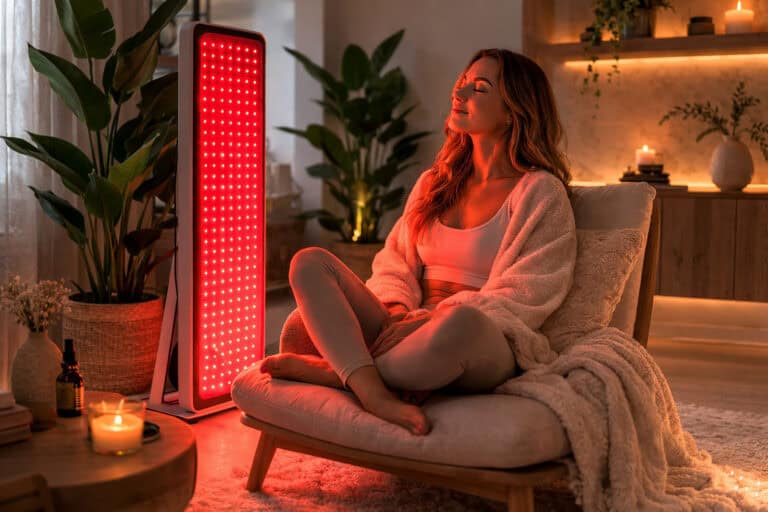
Red Light Therapy for Mood & Mental Health: Can Light Improve Depression and Anxiety?

Feeling low, anxious, or mentally foggy? 🌥️ What if simply bathing in gentle light could help lift your spirits? Scientists are discovering that red light therapy for mood may offer a natural way to balance brain chemistry, reduce stress hormones, and improve emotional well-being without drugs or harsh side effects. 🧠💡
In this article, we’ll explore how specific red and near-infrared wavelengths can influence key neurotransmitters like serotonin and dopamine, enhance brain energy metabolism, and even calm overactive stress responses — all grounded in peer-reviewed clinical research. ✨
If you’re new to this topic, start with our guide on red light therapy benefits or visit the Red Light Sage blog index for related posts on recovery, energy, and sleep.
☀️ How Red Light Therapy Impacts Brain Energy

One of the main reasons red light therapy can influence mood is its effect on mitochondria — the energy factories inside your cells. When red and near-infrared light (typically 630–660 nm and 810–850 nm) hits these cells, it’s absorbed by cytochrome c oxidase, a key enzyme in the energy pathway. That interaction helps your cells make more ATP (energy), which the brain desperately needs.
A brain with more cellular energy can regulate emotion, focus, and stress responses more efficiently. This is why many protocols aimed at cognitive or psychological benefits are called transcranial photobiomodulation — light used to modulate brain function.
For more background on this mechanism, see our deeper dive on how red light therapy boosts mitochondrial function.
🧬 Mood Chemistry: Serotonin, Dopamine, and the Stress Axis

Mood isn’t just “how you feel” — it’s the output of a complex system involving neurotransmitters (serotonin, dopamine), hormones (cortisol, melatonin), and your nervous system. Early studies on low-level light therapy suggest that improving cellular energy and blood flow in the brain may help:
- Support healthier serotonin activity (linked to calm and contentment)
- Improve dopaminergic pathways (linked to motivation and focus)
- Reduce overactivation of the HPA axis, your body’s stress response system
- Stabilize sleep-wake cycles, which has a direct effect on mood
Clinical groups such as Cleveland Clinic and Mayo Clinic consistently note that restoring circadian rhythm and reducing chronic stress load are two of the most reliable non-pharmaceutical levers for improving depression and anxiety.
Because red light therapy may touch several of these levers at once — energy, circulation, sleep, stress — it’s a promising adjunctive wellness tool. 🌿
📚 Current Research on Red Light Therapy for Mental Health

So what does the science actually say? We’re still early — most of the strongest data is on red light for pain, skin, and mitochondrial function — but several small human studies using transcranial photobiomodulation have reported:
- Improvements in self-reported depressive symptoms
- Better sleep quality and daytime alertness
- Enhanced prefrontal cortex activation (important for emotional regulation)
- Reduced markers of systemic inflammation, which is increasingly linked to depression
A 2022 review in journals indexed on PubMed noted that photobiomodulation appears to be safe, well-tolerated, and potentially useful as an add-on to existing treatments — but larger randomized trials are still needed.
If you want a broader foundation before trying protocols, visit our main page on red light therapy benefits or contact us directly via the contact page for future protocol breakdowns.
🌙 Resetting Circadian Rhythm for Emotional Stability

Your sleep and mood are inseparable. When circadian rhythm drifts off-track—too much blue light at night, not enough daylight in the morning—hormones like melatonin and cortisol become unbalanced. This hormonal chaos often shows up as irritability, brain fog, or even low-grade depression.
Evening red light exposure may help by signaling to the brain that it’s time to wind down, while still stimulating mitochondrial repair. Studies suggest that short evening sessions (10–20 minutes, around 630–660 nm) can improve sleep latency and next-day alertness. 🌅
That’s why pairing red light with a calm bedtime routine—stretching, journaling, or mindfulness—may deliver synergistic effects on both mood and sleep.
🕒 How to Use Red Light Therapy for Mood Support
Consistency matters more than intensity. Here’s a simple approach many home users find effective:
- Timing: Morning or early evening sessions work best for mood balance and circadian entrainment.
- Duration: 10–15 minutes per area; longer exposures don’t necessarily yield faster results.
- Distance: Keep the light 6–12 inches away from your face or forehead.
- Frequency: 4–5 sessions per week for at least four weeks to gauge response.
For stress reduction, many people combine red light therapy with deep-breathing techniques or short meditation sessions—enhancing parasympathetic activation. Remember, this isn’t about blasting light; it’s about nurturing balance. 🧘♀️
Want general usage guidance? Check out our resource on red light therapy benefits to understand how wavelength and timing influence different outcomes.
⚠️ Safety, Sensitivity, and When to Proceed Carefully
Red light therapy is considered very safe, with no known serious side effects when used within proper exposure limits. Still, a few considerations apply:
- Those with photosensitive conditions or on light-sensitive medications should consult a healthcare provider.
- Don’t stare directly into the LEDs—use eye protection if lights are bright or close to the eyes.
- Start with shorter sessions and increase gradually as your tolerance builds.
Unlike antidepressant drugs, there’s no withdrawal effect if you stop using red light. Benefits may fade slowly if therapy is discontinued, similar to exercise detraining. ⚡
For those exploring professional-grade or home devices, see our Top Red Light Therapy Devices 2025 Roundup for safe, science-based recommendations.
💖 Combining Light Therapy with Holistic Habits
Light alone can spark change—but pairing it with healthy lifestyle habits amplifies results. Consider integrating:
- Morning daylight exposure to reinforce circadian rhythm
- Mindfulness or journaling to track emotional progress
- Regular movement—yoga, walking, or strength work—to boost endorphins
- Balanced nutrition rich in omega-3s and antioxidants to support neurotransmitter synthesis
Red light therapy complements these habits by improving mitochondrial energy and reducing oxidative stress in the brain, giving your mood the physiological foundation it needs to thrive. 🌻
To explore the biological links between inflammation and emotional regulation, read our related post on red light therapy for inflammation and immune support.
🕰️ What Results to Expect and When
Because red light therapy works by gradually improving mitochondrial function and reducing inflammation, its benefits unfold over time. Most users report noticing:
- Better sleep and calmer energy within 1–2 weeks
- Reduced stress reactivity by week 3 or 4
- Noticeable uplift in mood and motivation by week 6–8
Everyone’s biology is unique, but consistency is key. Treat your sessions as you would daily meditation or stretching — a small, repeatable act that builds momentum over time. 🔁
To maintain steady progress, pair your red light routine with a set bedtime, morning sunlight exposure, and stress management habits.
⚖️ Red Light Therapy vs. Other Mood-Boosting Interventions
How does red light therapy compare with other common wellness tools for mental-health support?
| Approach | Main Mechanism | Pros | Considerations |
|---|---|---|---|
| Red Light Therapy | Improves mitochondrial energy and reduces neuro-inflammation | Non-invasive, few side effects, enhances sleep & cognition | Requires consistent use over several weeks |
| Exercise | Boosts endorphins & serotonin | Immediate mood boost, strong evidence for depression relief | Needs motivation and regularity |
| Bright Light Therapy | Influences melatonin & circadian rhythm | Clinically proven for Seasonal Affective Disorder | Can be overstimulating at night |
Rather than replacing other approaches, red light therapy complements them — providing cellular-level energy support that makes exercise, mindfulness, and sleep optimization even more effective. 🌞
❓ Frequently Asked Questions
How often should I use red light therapy for mood?
Most people start with 4–5 sessions per week for 10–15 minutes. After 6–8 weeks, you can scale down to maintenance (2–3 sessions weekly).
Can red light therapy replace antidepressants?
No. It may serve as a complementary tool, but you should never stop prescribed medications without medical supervision. Always consult your doctor before making changes to treatment.
Where should I shine the light?
For mood enhancement, direct the light near the face, forehead, or sides of the head (without staring into LEDs). Transcranial exposure helps reach mood-regulating brain regions.
Can I overuse it?
Yes, overexposure can cause diminishing returns or mild eye strain. Stay within safe parameters—short, consistent sessions yield the best results.
🌈 The Takeaway: Lighting the Path Toward Better Mood
Red light therapy is one of the most intriguing frontiers in holistic mental wellness. By energizing your brain at the cellular level, reducing inflammation, and helping synchronize your body’s internal clock, it can naturally enhance emotional resilience and day-to-day calm.
While research is ongoing, the evidence so far supports red light therapy as a safe, empowering self-care tool—especially when combined with good sleep hygiene, nutrition, and stress management. 🌿
Explore more science-backed guides on our Red Light Therapy Blog or connect with us on the contact page for future updates on mood and brain health research.