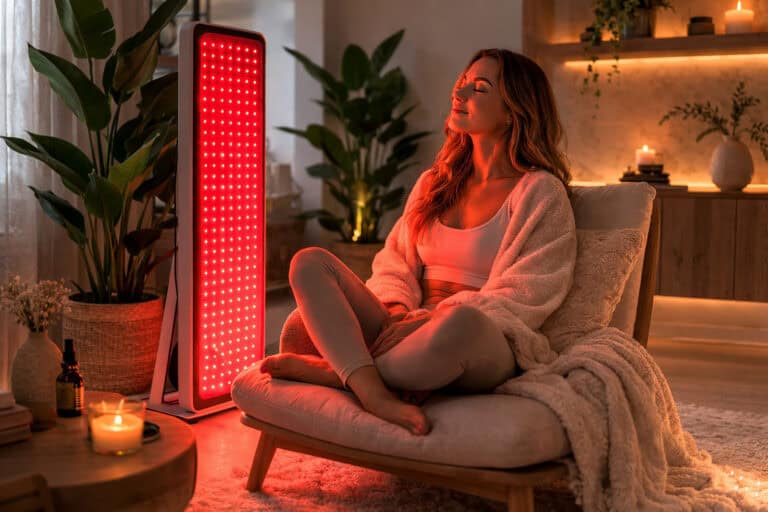
Red Light Therapy for Skin Health & Anti-Aging

✨ Red light therapy for skin health is one of the most researched and exciting uses of this non-invasive treatment. From boosting collagen to reducing fine lines and wrinkles, studies suggest that consistent sessions under therapeutic red and near-infrared wavelengths may help the skin look younger, healthier, and more radiant 🌟.
But how exactly does it work, and what does the science say? In this cornerstone guide, we’ll explore:
- 🔬 How red light therapy interacts with skin cells
- 💡 The role of collagen production in anti-aging
- 📊 Research-backed benefits for wrinkles, scars, and elasticity
- ⚖️ Safety considerations and best practices for home use
Let’s dive into the evidence and see whether this light-based therapy really delivers on its skin-rejuvenating promises.
🔬 How Red Light Therapy Works for Skin Health
Red light therapy (RLT), also called photobiomodulation, uses low-level wavelengths of visible red (around 630–660 nm) and near-infrared light (around 810–850 nm). These wavelengths penetrate into the skin and interact with mitochondria — the energy centers of your cells. By stimulating cytochrome c oxidase, red light can boost cellular energy (ATP production) ⚡.
Why does this matter for skin? Cells with more energy function more efficiently. In the skin, this often translates into:
- ✨ Enhanced repair and regeneration
- 🧬 Stimulation of fibroblasts to produce more collagen and elastin
- 💧 Improved circulation and nutrient delivery
- 🛡️ Reduced oxidative stress and inflammation
These combined effects may explain why red light therapy has become one of the most popular natural approaches to supporting skin vitality and slowing visible aging.

💡 Collagen Production: The Foundation of Anti-Aging
Collagen is the structural protein that gives skin its firmness, elasticity, and youthful glow. Unfortunately, collagen production naturally declines with age — starting as early as our mid-20s 😮. This decline contributes to sagging, wrinkles, and thinner skin over time.
Multiple studies show that red light therapy can help stimulate collagen synthesis in the skin’s dermal layer. By energizing fibroblast cells, RLT may increase both collagen and elastin fibers, creating stronger support structures beneath the surface. This can result in:
- 👩⚕️ Reduced appearance of fine lines and wrinkles
- 💎 Improved skin texture and smoothness
- 🌸 Enhanced firmness and elasticity
In one clinical trial published in PubMed, participants receiving regular red light treatments showed significantly improved skin complexion and collagen density compared to controls. This provides scientific support for its anti-aging potential.

📊 What the Research Says About Anti-Aging Results
Research on red light therapy for skin health is growing, with studies showing promising results in wrinkle reduction and improved skin elasticity. For example:
- 🧪 A study in the journal *Photomedicine and Laser Surgery* found that after 30 sessions, participants experienced a measurable reduction in wrinkle depth and increased skin elasticity.
- 📈 Another study published in *Dermatologic Surgery* reported improved facial texture and softness after consistent treatments with red light wavelengths.
- 🌟 Clinical observations also note improvements in scar healing, skin hydration, and overall tone.
These findings highlight that while RLT is not a “miracle cure,” it may be a safe and effective adjunct for individuals looking to improve the visible signs of aging without invasive procedures.
➡️ Want to learn how red light compares to other wellness practices? Check out our Red Light Therapy Benefits Guide.
🩹 Red Light Therapy for Scars and Wound Healing
Beyond wrinkles and fine lines, red light therapy has been studied for its ability to support wound healing and scar reduction. The improved circulation and cellular repair triggered by RLT may help:
- ⚡ Accelerate tissue regeneration after cuts or abrasions
- 🛡️ Reduce scar tissue formation by modulating inflammation
- ✨ Improve the appearance of existing scars (both surgical and acne-related)
Clinical evidence suggests that red light enhances fibroblast activity and collagen remodeling, which are both critical for skin recovery. This is why dermatologists and physical therapists sometimes recommend light-based therapies post-surgery or after injuries to encourage smoother healing outcomes.
🌸 Pigmentation, Acne, and Skin Tone Support
Red light therapy may also benefit skin conditions such as pigmentation imbalances and acne. Although most acne research has focused on blue light, red light plays a complementary role by reducing inflammation and supporting repair of damaged skin.
- ☀️ Hyperpigmentation: Some studies suggest RLT can help normalize melanin activity, potentially softening dark spots over time.
- 😌 Acne: Red light may calm the redness and swelling associated with breakouts, while supporting healthier skin barrier function.
- 🌟 Overall tone: Users often report a more even complexion and reduced blotchiness with regular use.
When combined with good skincare practices — hydration, sun protection, and healthy nutrition — red light therapy may help promote a clearer and more balanced skin appearance.
⚖️ Safety Considerations for Skin Health
One of the reasons red light therapy has gained so much popularity is its excellent safety profile when used correctly. Still, there are a few important points to keep in mind:
- 👓 Always follow device guidelines for distance and exposure time.
- 🙅♀️ Avoid looking directly into LEDs without proper eye protection.
- 📅 Consistency matters — short, regular sessions (10–20 minutes, 3–5 times per week) are generally more effective than long, infrequent ones.
- 🩺 If you have a skin condition, are pregnant, or take photosensitizing medications, consult your healthcare provider before starting.
According to the Cleveland Clinic, red light therapy is considered safe with minimal side effects, but professional guidance ensures the best outcomes.
🏠 At-Home Red Light Therapy Devices
In the past, red light treatments were available only in clinics and dermatology offices. Today, high-quality at-home devices make it possible to enjoy these benefits in your own daily routine. Popular options include:
- 💡 LED panels for full-face or body exposure
- 🎭 Red light therapy masks for targeted facial rejuvenation
- 📏 Handheld devices for spot treatments on scars or pigmentation
When choosing a device, look for:
- 📐 Wavelength range between 630–660 nm (red) and 810–850 nm (near-infrared)
- ⚡ Verified irradiance levels for effective skin penetration
- ✅ Safety certifications (FDA clearance or equivalent)
➡️ For a complete overview of choosing the right device, visit our Buyer’s Guide.
📅 How Often Should You Use Red Light Therapy for Skin?
Like most wellness practices, results from red light therapy depend on consistency. Research and clinical use suggest that short, regular sessions produce the best outcomes. For skin health, a common protocol includes:
- 🕒 Session length: 10–20 minutes
- 📆 Frequency: 3–5 times per week for the first 8–12 weeks
- 🔄 Maintenance: 1–2 times per week after visible improvements appear
Individual needs vary — some may notice subtle changes in a few weeks, while others see more dramatic improvements after several months. Patience and persistence are key 🔑.
🧴 Red Light Therapy + Skincare = Enhanced Results

Red light therapy doesn’t have to replace your current skincare routine — in fact, it can complement it beautifully. Pairing RLT with proven practices may amplify results:
- 💧 Hydration: Well-hydrated skin responds more effectively to red light exposure.
- 🌞 Sun protection: Always use sunscreen, since RLT does not protect against UV damage.
- 🍃 Topicals: Antioxidant serums (like vitamin C) or retinoids may enhance rejuvenation — just avoid irritation by spacing treatments if needed.
- 🥗 Lifestyle: Balanced diet, quality sleep, and stress management also play critical roles in skin vitality.
By integrating red light into a holistic skincare and wellness routine, you’ll maximize the potential for smoother, healthier, and more youthful-looking skin ✨.
❌ Myths vs ✅ Facts About Red Light Therapy
As with many popular wellness trends, myths can spread quickly. Let’s set the record straight:
- ❌ Myth: Red light therapy tans the skin.
✅ Fact: RLT is non-UV and does not darken or damage skin. - ❌ Myth: Results appear overnight.
✅ Fact: Visible improvements typically take weeks or months of consistent use. - ❌ Myth: More time under the light equals faster results.
✅ Fact: Overexposure doesn’t speed progress — it may actually irritate the skin. - ❌ Myth: It’s unsafe for home use.
✅ Fact: With certified devices and proper guidelines, at-home RLT is safe and effective.

❓ FAQs: Red Light Therapy for Skin Health
Here are some common questions people ask about red light therapy and skin wellness:
How long until I see results?
Most people notice subtle improvements within 4–6 weeks, with more noticeable changes around 8–12 weeks of consistent use.
Can red light therapy help with acne scars?
Yes — RLT may reduce redness and support collagen remodeling, improving the texture and appearance of scars over time.
Is red light therapy safe for all skin types?
Generally, yes. RLT is non-invasive and safe for most skin tones and conditions. Those with specific dermatological issues should consult a healthcare provider first.
Should I wear makeup during treatment?
It’s best to use RLT on clean, makeup-free skin so the light penetrates effectively.
🌟 Conclusion: Red Light Therapy for Skin Health & Anti-Aging
Red light therapy for skin health offers a safe, non-invasive, and science-backed approach to improving complexion, reducing wrinkles, and supporting long-term skin vitality. By stimulating collagen production, enhancing circulation, and reducing inflammation, RLT provides a powerful complement to traditional skincare practices 🧴✨.
While results vary depending on consistency, device quality, and individual skin type, clinical studies continue to confirm its role as an effective adjunct for anti-aging and skin rejuvenation. For those looking to support their skin naturally, red light therapy stands as one of the most promising tools available today.
➡️ Explore more science-backed wellness benefits in our Benefits Hub, or visit our Contact Page if you have questions about red light therapy.