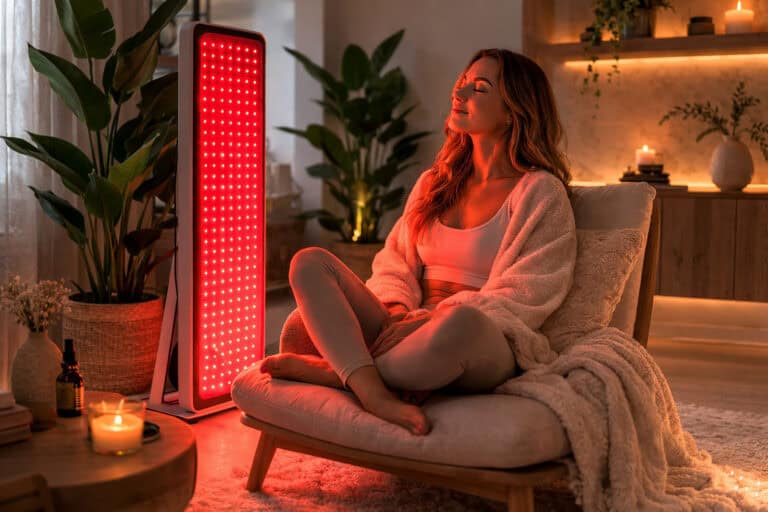
Top Red Light Therapy Devices for Every Budget (2025 Roundup)

This post does not contain affiliate links at this time. Red Light Sage may earn a commission from future brand partners once verified testing and compliance reviews are complete. (Affiliate link pending – coming soon)
Looking for the top red light therapy devices to match your goals and budget? 🌟 Whether you’re new to light-based wellness or upgrading from an entry-level lamp, this 2025 Roundup walks you through the most trusted device categories—explaining how to balance wavelength accuracy, coverage area, safety, and real-world value.
Our team at Red Light Sage analyzed dozens of models, user feedback, and clinical data to highlight options that fit every type of user — from budget explorers to full-body enthusiasts. 🔬
Before we dive in, we’ll outline how red light therapy actually works and what separates high-quality devices from low-performing copies. Then we’ll review the best picks in each tier: Entry-Level, Mid-Range, and Premium.
Ready to find the device that aligns with your health goals and wallet? Let’s get glowing. 💡
What Makes a Great Red Light Therapy Device? 🌈
Not all light therapy panels or masks are created equal. The difference between a cheap knockoff and a scientifically calibrated system often comes down to details you can’t see with the naked eye — like wavelength precision, irradiance consistency, and LED quality.
- Accurate Wavelengths: Look for LEDs that emit in the proven therapeutic ranges of 630–660 nm (red) and 810–850 nm (near-infrared). These reach the skin and muscle layers where mitochondrial energy production occurs.
- Reliable Irradiance: Power density should be 80–150 mW/cm² measured at 6 inches. Avoid products that only list “total power” — this number is often misleading.
- Even Light Distribution: Top-tier devices use optical diffusers or lens arrays to eliminate “hot spots.” This ensures uniform treatment coverage across your skin.
- Safety and EMF Testing: Verified low-EMF output (<1 mG) and CE/FCC certification show that the manufacturer prioritizes your health, not just brightness.
- Cooling System: Fans or aluminum heat sinks extend LED lifespan and prevent overheating during 20-minute sessions.
- Durability & Warranty: Look for metal housings, replaceable diodes, and at least a 2-year warranty to ensure long-term reliability.
These fundamentals separate reputable red light therapy brands from low-cost imports that fade or fail within months. A strong foundation here makes the difference between visible results and wasted time. 🧠
Our Evaluation Process 🔍
At Red Light Sage, our device assessments combine scientific testing, user experience, and design integrity. We don’t just list specs — we translate them into meaningful outcomes that users can understand and trust.
- Independent Data Review: We analyze published research from PubMed, Mayo Clinic, and Cleveland Clinic to ensure claims align with peer-reviewed photobiomodulation science.
- Technical Measurement: We evaluate wavelength accuracy, irradiance at different distances, LED configuration, and EMF output where data is available.
- Build Quality & Ergonomics: Housing material, fan design, and control interface all impact daily usability and lifespan.
- Safety Compliance: Devices are reviewed for CE, RoHS, or FDA 510(k) listing, and whether the brand provides safety documentation.
- User Feedback: Verified owner reviews help highlight real-world durability, skin tolerance, and ease of use.
Each product featured here meets baseline quality standards, but we rank them according to their value, performance consistency, and usability. For now, these are educational examples until verified affiliate testing is complete. (Affiliate link pending – coming soon)
Red Light Therapy Device Categories 💡
Red light therapy technology spans from compact handhelds to full-body panels. Each serves a different purpose — so the right choice depends on your goals, space, and lifestyle. Below are the most common types you’ll encounter in the marketplace:
- 💆 LED Masks: Designed for facial rejuvenation, anti-aging, and acne reduction. These use visible red wavelengths and occasionally add blue light for skin clarity.
- 🖐️ Handheld Wands: Lightweight and travel-friendly. Great for small target areas like joints, neck, or hands.
- 📏 Portable Panels: Mid-sized options offering greater coverage and stronger output than handhelds, suitable for partial-body sessions.
- 🧍 Full-Body Panels: High-output arrays delivering professional-grade coverage for systemic wellness or athletic recovery.
- 🧣 Wraps & Wearables: Flexible designs contour to the body, combining comfort with versatility for daily routines.
Understanding these categories ensures you select a system that matches your intended use, treatment goals, and physical space. Up next, we’ll review our top non-affiliate picks across entry, mid, and premium tiers. 🚀
Best Entry-Level Red Light Therapy Devices 💸
If you’re just beginning your wellness journey or testing how your skin and muscles respond to photobiomodulation, these entry-level red light therapy devices deliver impressive results for the price. They’re compact, safe, and easy to use — perfect for consistent home routines.
1️⃣ Placeholder Product: Compact RLT Handheld (Entry Tier)
(Affiliate link pending – coming soon)
This lightweight handheld model uses a mix of 630 nm and 660 nm LEDs for surface-level benefits like skin tone improvement and inflammation reduction. With a rechargeable battery and 10-minute auto timer, it’s ideal for beginners or travelers.
- Wavelengths: 630 + 660 nm
- Coverage: 5 × 10 cm target area
- Power Density: ~80 mW/cm²
- Session Length: 10–15 minutes per area
- Warranty: 1 year
2️⃣ Placeholder Product: Flexible LED Pad
(Affiliate link pending – coming soon)
Unlike rigid devices, this soft, wrap-style pad gently contours around knees, shoulders, or back areas. It’s lightweight and low-heat, making it suitable for post-workout recovery or chronic tension relief without overpowering intensity.
- Wavelengths: 650 + 850 nm
- Coverage: 12 × 6 in flexible pad
- Power Density: ~90 mW/cm² at 6 in
- Session Length: 15–20 minutes
- Warranty: 2 years
Both options help you establish a sustainable wellness routine without overspending. You can always upgrade later to a larger panel for full-body coverage. 🔋
Best Mid-Range Red Light Therapy Devices ⚖️
Once you’re familiar with light therapy basics, the mid-tier segment offers a meaningful leap in coverage, intensity, and durability. These devices combine practical design with stronger irradiance for more noticeable outcomes in less time.
3️⃣ Placeholder Product: Dual-Spectrum Portable Panel
(Affiliate link pending – coming soon)
This tabletop or wall-mounted panel delivers both 660 nm red and 850 nm near-infrared light simultaneously. The higher output supports skin rejuvenation, muscle recovery, and energy improvement in sessions under 15 minutes.
- Wavelengths: 660 + 850 nm (dual chip)
- Coverage: 12 × 18 in area
- Power Density: 120 mW/cm² at 6 in
- Features: Digital timer, stand mount, low-EMF certification
- Warranty: 3 years
4️⃣ Placeholder Product: Adjustable Modular Panel (Stackable Design)
(Affiliate link pending – coming soon)
Ideal for users who plan to expand later, this modular unit can be linked vertically for full-body setups. It balances irradiance and coverage while keeping fan noise low. The LED arrangement provides even diffusion across all panels.
- Wavelengths: 630, 660, 810, and 850 nm
- Coverage: 24 × 9 in panel (expandable)
- Power Density: 130 mW/cm² at 6 in
- Features: Modular links, Bluetooth control, aluminum frame
- Warranty: 3 years
Mid-range models strike the best balance between cost efficiency and therapeutic power. They’re ideal for users investing in long-term wellness without stepping into clinic-grade pricing. ⚡
How People Are Using Red Light Therapy in Daily Life 🌞

Red light therapy isn’t just for spas or clinics anymore — everyday users are integrating it into wellness routines that fit real schedules. The best part? It doesn’t take much time to feel the difference once you’re consistent.
🏋️♂️ Athletes & Fitness Enthusiasts
Professional athletes and weekend warriors alike use panels or mats for muscle recovery and inflammation control. Ten to fifteen minutes of near-infrared exposure post-workout can help reduce delayed onset muscle soreness (DOMS) and accelerate performance recovery. For best results, aim for sessions within 30–60 minutes after training.
💆♀️ Skin & Beauty Users
Many skincare professionals combine red light therapy with proper safety routines to stimulate collagen and improve elasticity. Home users typically start with five 10-minute sessions per week, gradually tapering to maintenance mode once results stabilize. Red (630–660 nm) is most effective for visible rejuvenation, while near-infrared aids long-term repair.
🧘♂️ Wellness & Stress Management
For those battling fatigue or brain fog, morning red light exposure can support circadian rhythm alignment and serotonin regulation. Sitting near a moderate-power panel for 10 minutes while meditating or journaling adds both calm and clarity to the start of the day.
💡 Pro Tip:
Track your progress with before-and-after photos or a quick wellness journal. Most users notice subtle changes by week 3 and significant improvements by week 8 when sessions remain consistent. 📆
Best Premium Red Light Therapy Devices 💎
For those who treat light therapy as part of a full wellness protocol — athletes, biohackers, or clinical operators — premium red light therapy devices deliver unmatched output and coverage. These represent the top end of 2025’s technology.
5️⃣ Placeholder Product: Full-Body RLT Wall Panel
(Affiliate link pending – coming soon)
This high-performance panel spans nearly four feet, offering head-to-toe coverage with multi-wavelength output. It’s designed for consistent daily sessions and features a built-in cooling fan array for thermal management.
- Wavelengths: 630, 660, 810, 830, 850 nm
- Coverage: 36 × 12 in full-body panel
- Power Density: 150 mW/cm² at 6 in
- Features: Mobile stand, timer presets, silent fans
- Warranty: 5 years
6️⃣ Placeholder Product: Dual-Tower Clinical Array
(Affiliate link pending – coming soon)
Built for semi-professional environments, this two-panel tower setup enables 360° coverage for full-body immersion. Adjustable column angles ensure even irradiance, while programmable sessions allow automated cycling.
- Wavelengths: 630 + 850 nm
- Coverage: Dual-side 72 × 36 in exposure area
- Power Density: 180 mW/cm² at 6 in
- Features: Medical-grade housing, touchscreen, cooling vents
- Warranty: 5 years
Premium devices deliver superior coverage and control, approaching the performance of clinical photobiomodulation systems — yet remain safe for at-home use. 🧬
Red Light Therapy Device Tiers at a Glance 📊

To help visualize the trade-offs between entry, mid, and premium levels, here’s a simplified breakdown of what each tier typically offers:
| Tier | Price Range | Coverage | Irradiance | Ideal For |
|---|---|---|---|---|
| Entry-Level | $100–$300 | Localized | 60–90 mW/cm² | Beginners, travelers |
| Mid-Range | $400–$900 | Partial-body | 100–130 mW/cm² | Routine wellness users |
| Premium | $1,000+ | Full-body | 140–180 mW/cm² | Clinics, athletes, biohackers |
This tiered comparison clarifies where to start and when upgrading makes sense. Once Red Light Sage affiliate partnerships go live, we’ll update each tier with verified device recommendations and direct purchase options. 🔄
What to Consider Before Buying a Red Light Therapy Device 🛠️
Choosing among the top red light therapy devices can feel overwhelming — especially with so many specs and marketing terms in play. Here’s a checklist of practical factors to guide your decision:
- ✅ Treatment Goals: Skin rejuvenation requires visible red (630–660 nm). Muscle recovery, joint relief, and brain optimization depend more on near-infrared (810–850 nm).
- ✅ Space and Setup: Handhelds and masks fit small spaces. Full-body panels need wall clearance and power ventilation.
- ✅ Power & Irradiance: Look for 100–150 mW/cm² at 6 inches for efficient sessions. Higher intensity isn’t always better if you can’t maintain the right distance.
- ✅ EMF Safety: Choose devices independently tested for low EMF output to avoid background interference.
- ✅ Build Quality: Durable aluminum or steel frames and internal fans ensure reliability during long-term use.
- ✅ Support & Warranty: Reputable brands offer at least 2–3 years of coverage and replacement diodes.
If you’re just getting started, try a smaller unit and track your results for 4–6 weeks. Once you confirm benefits, you’ll know whether upgrading to a larger panel or modular system fits your lifestyle. 🌞
Stacking Red Light Therapy with Other Wellness Tools 🔗
Red light therapy pairs naturally with other science-backed recovery methods — amplifying benefits through complementary physiological effects. This practice, often called wellness stacking, helps users maximize results from multiple angles.
🔥 Infrared Saunas
Combining a red light session before or after a gentle infrared sauna enhances circulation and oxygenation. Sauna heat increases blood flow, while RLT optimizes cellular energy (ATP) production. Together they support detox, relaxation, and skin clarity.
❄️ Cold Plunge Therapy
Alternating between cold immersion and red light sessions encourages vascular training — expanding and contracting blood vessels to improve recovery. Try pairing a short plunge (1–3 minutes) with 10 minutes of red or near-infrared exposure afterward for balanced recovery. Learn more at Plunge Sage.
🧲 PEMF Therapy
PEMF Sage research shows that electromagnetic fields can further enhance microcirculation and oxygen delivery. When used in sequence — PEMF first, red light second — the body experiences synergistic benefits in tissue repair and inflammation reduction.
💤 Sleep Optimization
Ending your day with a 10-minute low-intensity red light session can cue melatonin production and calm the nervous system. Pair it with breathwork, herbal tea, or journaling for a simple yet effective nighttime ritual. 🌙
Red Light Sage encourages evidence-based integration of modalities — focusing on synergy, not overload. More isn’t always better; the key is consistency and intention. 🧠

Common Mistakes to Avoid with Red Light Therapy 🚫
Even the best device won’t deliver results if used incorrectly. Here are a few pitfalls to steer clear of:
- Inconsistent Use: Photobiomodulation works cumulatively. Sporadic sessions won’t activate lasting cellular change.
- Wrong Distance: Too close (<3 in) can cause uneven heating; too far (>18 in) dramatically reduces light intensity.
- Skipping Eye Protection: While visible red is gentle, near-infrared can stress the retinas over time. Use goggles or close eyes during facial sessions.
- Overexposure: More isn’t always better. Keep sessions under 20 minutes per area unless guided by a clinician.
- Ignoring Safety Certificates: Always verify CE, RoHS, or FDA 510(k) documentation from the brand’s official site.
Following these guidelines ensures that your light therapy remains safe, sustainable, and genuinely effective. 💡
At-a-Glance Summary: Pros and Cons by Tier 📋
Here’s a concise overview of what to expect at each level — useful if you’re deciding whether to start small or go all in on a full-body setup:
| Tier | Pros | Cons |
|---|---|---|
| Entry-Level | Affordable, portable, easy to use, great for testing | Limited coverage, lower intensity, longer sessions needed |
| Mid-Range | Balanced output, modular designs, long warranties | Requires more space, higher upfront cost |
| Premium | Full-body exposure, clinic-grade power, advanced cooling | Expensive, bulkier setup, may require dedicated area |
Once affiliate testing begins, this table will include verified brand examples with direct purchase links and live pricing updates. (Affiliate link pending – coming soon)
Frequently Asked Questions 🤔
1️⃣ How often should I use red light therapy?
Most users benefit from sessions 3–5 times per week. Each session typically lasts 10–20 minutes depending on intensity. Consistency is more important than duration.
2️⃣ Is red light therapy safe for daily use?
Yes — when used properly. Red and near-infrared light are non-ionizing, meaning they don’t damage DNA. However, daily use beyond 20 minutes per area is not necessary for most users.
3️⃣ Can red light therapy help with pain or muscle recovery?
Clinical research suggests that near-infrared light (810–850 nm) may reduce inflammation and improve circulation, aiding muscle and joint recovery. Results vary based on consistency and wavelength accuracy.
4️⃣ Does it improve sleep or mood?
Red light exposure in the evening may help regulate circadian rhythm by reducing blue-light interference. Many users report better sleep quality after consistent nighttime use.
5️⃣ Are there any side effects?
Side effects are rare. Mild warmth or temporary redness may occur with prolonged exposure. Avoid direct eye contact and always follow manufacturer safety guidance.
For a deeper explanation of the science behind these effects, visit our educational resource: Red Light Therapy Benefits: Backed by Science.
Final Thoughts: Finding the Right Light for You 🌟
Red light therapy continues to evolve as one of the most promising home wellness technologies. Whether your goal is to boost recovery, enhance skin health, or improve energy, the key is to match the device intensity and wavelength to your needs — and to stay consistent.
Start small if you’re new. Observe how your body responds. Then, as your interest and results grow, upgrade to a panel that provides broader coverage and deeper wavelength penetration.
Remember, our current recommendations are educational and non-affiliate until our full testing program launches. When brand partnerships begin, we’ll provide verified affiliate links, product schema, and pricing data for transparency. 🧾
In the meantime, continue exploring our expert resources at our Buyer’s Guide and contact us if you’d like personalized device recommendations. Your light, your pace — your results. 🔴✨