Best Red Light Therapy Devices for Skin & Anti-Aging

Disclosure: This guide is designed as a commercial comparison page. At the time of publication, Red Light Sage does not yet have active affiliate relationships for the devices below, so outbound product links currently point to official brand pages for research purposes.
Best Red Light Therapy Devices for Skin & Anti-Aging
If your main goal is healthier-looking skin, smoother texture, and a more practical at-home red light routine, the best red light therapy devices for skin usually have three things in common: enough red-light coverage for the face and neck, flexible placement for consistent use, and straightforward controls that make daily sessions realistic. In other words, the right device is not always the biggest or most expensive one. It is the one you will actually use often enough to build a routine around.
Interest in red light therapy for skin has grown because photobiomodulation is being studied for visible skin-aging concerns such as texture, tone, and wrinkle appearance. Research reviews and controlled studies suggest that red and near-infrared light may support collagen-related pathways, cellular signaling, and skin appearance when used consistently, while remaining non-ablative and non-thermal compared with more aggressive cosmetic options. For readers who want the science background first, see our guides on red light therapy benefits, how red light therapy works at the cellular level, and red light therapy for skin health & anti-aging.
Below, we focus on devices that make sense for skin-focused home use in 2026: versatile panels, approachable entry-level picks, and premium options that can cover the face, neck, chest, and larger treatment areas.
Start with the bigger picture
If you want to compare this skin-focused roundup with broader home-use options, review our 2026 Buyer’s Guide.
How red light therapy fits a skin-focused routine
When people shop for skin benefits, they often assume they need a tiny “beauty” device. Sometimes that works, but many home users do better with a well-built panel because it can cover more than just the center of the face. That matters if your real target areas include the jawline, neck, chest, shoulders, or hands. A broader panel also gives you flexibility to use the same device for skin-focused sessions one day and general wellness or post-workout sessions the next.
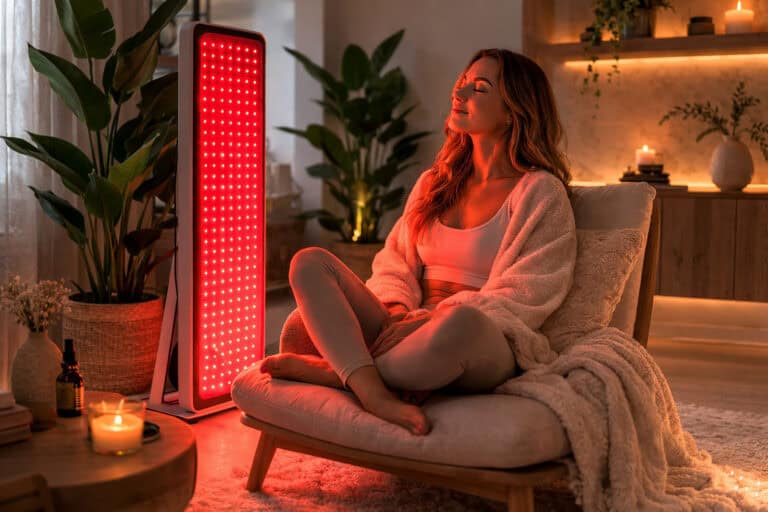
Skin-focused red light setups usually work best when placed in a predictable environment: a bathroom vanity, a bedroom corner, or a quiet self-care space where sessions can become part of a morning or evening habit. That is why adjustability, footprint, and mounting options matter almost as much as raw output. A strong device that never leaves the box is not better than a compact one that becomes part of your routine four or five days a week.
From a practical standpoint, most readers looking at skin and anti-aging goals should prioritize red wavelengths, easy positioning, timer controls, and enough surface area to treat more than a very small spot at once. Near-infrared can still be useful in mixed-output devices, but skin-focused buyers often care most about how comfortably and consistently the red-light portion fits into a visible-care routine rather than a deep-tissue recovery routine.

What the evidence actually suggests for skin and visible aging
The strongest way to think about red light therapy for skin is not as a miracle shortcut, but as a supportive routine that may improve visible signs of aging over time. A 2023 review on photobiomodulation and visible skin aging reported encouraging findings for skin rejuvenation and structural support, while a broader 2024 review described photobiomodulation as a non-invasive approach that may stimulate collagen-related processes and improve skin appearance in certain contexts. Earlier controlled clinical research also found improvements in complexion, skin feeling, and wrinkle-related outcomes using non-thermal light-based approaches. Readers who want to study the literature directly can review this PubMed review on visible skin aging, this NIH-hosted review on light and the skin, and this controlled trial on skin rejuvenation outcomes.
That said, results are rarely instant. Home users typically need consistency, sensible distances, and patience. Red light therapy should be thought of as one part of a broader skin routine that may also include sleep quality, sunscreen habits, gentle skincare, and overall recovery. This is especially important because visible skin changes are often gradual. Devices that make consistency easier deserve more weight in a roundup like this than flashy marketing claims.
For that reason, our rankings emphasize real-world usability first: treatment area, flexibility, simplicity, and skin-routine fit. We are not ranking devices by hype, celebrity positioning, or dramatic claims. We are ranking them by how sensible they are for home readers who want a reliable device for face, neck, chest, and visible skin-aging support.

What we prioritized in this skin-focused roundup
Because this is a skin and anti-aging roundup, we weighted devices differently than we would for a recovery or full-body performance guide. Here is what mattered most:
- Skin-routine compatibility: Can the device fit near a mirror, dresser, or self-care area without becoming a hassle?
- Coverage: Can it treat the face only, or also the neck, chest, hands, and other commonly overlooked areas?
- Ease of positioning: A panel that is easy to angle and place tends to be used more consistently.
- Simple controls: Timers and straightforward session controls matter for habit building.
- Brand clarity: We gave extra credit to brands that clearly publish wavelength and device information on official product pages.
We did not rank devices based on inflated promises, fake before-and-after framing, or unsupported disease language. We also did not treat manufacturer pages as scientific proof. Manufacturer pages are useful for dimensions, wavelength disclosures, warranty details, and format comparisons, but not as evidence for clinical outcomes.
If you are still deciding whether skin-specific use is your best entry point, our post on whether red light therapy is right for you can help frame expectations before you buy a device.
Editor’s pick: PlatinumLED BIOMAX
The PlatinumLED BIOMAX is our editor’s pick for readers who want a premium panel that can serve skin goals now without feeling limited later. It stands out because it gives you flexibility: you can use it for visible skin concerns, but you can also grow into larger-area sessions if your routine expands beyond face-first use. PlatinumLED’s official product pages emphasize broad spectral coverage and modular panel options, which makes the lineup appealing for buyers who want room to scale their setup over time.
For skin-focused users, the BIOMAX is attractive because it can comfortably cover the face, neck, and upper chest in a way that many very small beauty devices cannot. That broader coverage matters if your goals include visible skin tone, texture, or aging-related support across more than a single treatment zone. It also works well for users who want a “one main panel” setup rather than separate gadgets for different purposes.
The tradeoff is obvious: this is not the lightest or most minimal option. It makes more sense for someone building a dedicated home wellness corner than for someone who wants a tiny device to keep in a bathroom drawer. Still, for readers who want a durable premium anchor device, BIOMAX is one of the strongest skin-plus-versatility choices in the category based on its official specs and lineup design. See the official BIOMAX product details here, and read our deeper editorial breakdown in the PlatinumLED BIOMAX Review.

Best for: readers who want a premium panel for face, neck, chest, and long-term versatility.
Top pick for skin-focused versatility
Research the official model details here: View PlatinumLED BIOMAX →
Best premium minimalist pick: Joovv Solo
The Joovv Solo is a strong pick for readers who want a premium device with a cleaner, more streamlined experience. Joovv’s official product pages emphasize a polished ecosystem, recognizable form factor, and clearly published red and near-infrared wavelength information. For skin-focused buyers, that matters because a device that looks tidy and feels easy to integrate into a home can lower friction and increase consistency.
Compared with some larger and more complex panel systems, the Solo fits well for users who want targeted upper-body coverage without immediately jumping into a more elaborate modular layout. It can make sense for people whose main priorities are face, neck, and chest sessions in a dedicated spot, especially if they value a premium brand experience and predictable daily use.
The tradeoff is that Joovv often carries a premium-positioned price for the category. Buyers who want maximum flexibility per dollar may lean elsewhere. But if your priority is a clean premium setup and a device that feels approachable in a real home environment, the Solo remains one of the better skin-oriented choices. You can compare the official product details on the Joovv Solo page, then continue with our Joovv Solo Review.

Best for: premium buyers who want an elegant, simple panel for upper-body and facial routine use.
Clean premium option
See the official product page: View Joovv Solo →
Best flexible feature set: Mito Red Light MitoADAPT
The Mito Red Light MitoADAPT stands out for readers who like optionality. Official product materials emphasize multiple wavelengths and mode flexibility, which may appeal to users who want a device that can serve a skin routine while also handling broader wellness use cases later. That versatility makes it a practical middle ground between a simple starter panel and a more premium “buy once, scale later” setup.
For skin-focused use, the main advantage is not complexity for its own sake. It is the ability to tailor how the device fits into a broader home setup. Some buyers want a panel they can use for facial sessions now and then reposition for neck, chest, or other areas as their routine evolves. The MitoADAPT format makes sense for that kind of user.
It may be more device than a minimalist buyer needs, and some readers will prefer simpler control schemes. But for those who like feature-rich panels and do not mind a little learning curve, MitoADAPT is one of the better all-around candidates in a skin roundup. Review the official MitoADAPT series page and our Mito Red Light MitoADAPT Review for a deeper comparison.

Best for: shoppers who want a feature-rich panel that can grow with a broader home wellness routine.
Best for flexibility
Compare the lineup directly: View MitoADAPT Series →
Best value for skin-focused home use: Hooga HG Panel
The Hooga HG Panel earns the value spot because it makes red light therapy more approachable without forcing buyers into a tiny novelty device. Hooga’s official HG series materials emphasize simple operation, common red and near-infrared wavelengths, and practical home use. That combination is attractive for beginners who want to test whether red light therapy fits their skin routine before committing to a premium price tier.
For skin users, a value panel works best when it is still large enough to treat more than one small area at a time. The HG line makes sense for readers who want a straightforward panel for face, neck, and chest sessions without paying for a more advanced ecosystem. It is especially appealing for first-time buyers who want a real panel experience rather than a gadget that feels overly cosmetic or underpowered.
The main compromise is feature depth. A simpler panel may not have the same expandability or customization as premium models. Still, for a beginner who wants a clean entry point, Hooga is one of the easier recommendations in this category. Compare the official Hooga HG product information and our Hooga HG Panel Review.
Want the broader list too?
After comparing value picks here, see the full lineup in our best red light therapy devices buyer’s guide.
Best for: first-time buyers who want a straightforward skin-focused panel without premium pricing.
Best value pick
Review the official product info here: View Hooga HG Panel →
Best budget and small-space options: Bestqool and Rouge
If budget or space is your biggest concern, two brands deserve a look for different reasons. Bestqool is appealing for readers who want a lower-cost entry into red light therapy with smaller panel formats that still feel like real home devices instead of novelty tools. Bestqool’s official collection pages clearly position several compact options for home use, which can be useful if your plan is a vanity, desk, or shelf-based setup rather than a full wellness corner. Learn more on the official Bestqool red light collection page and our Bestqool Review.
Rouge, meanwhile, is a compelling choice for buyers who want a more design-forward, skin-friendly tabletop option. Rouge’s official product information highlights compact formats and broad wavelength disclosures in some of its lineup. For readers who expect to use the device near a desk, counter, or seated routine, that tabletop-friendly approach can be a real advantage. See the official Rouge tabletop details and our Rouge Red Light Review.
Between the two, Bestqool generally makes more sense for strict-budget buyers, while Rouge makes more sense for readers who want a compact premium feel in a smaller format. Neither is necessarily the top pick for someone who wants broad face-and-chest coverage from day one, but both can work well when space and routine simplicity matter more than maximum treatment area.

Budget research links
Which device fits your skin routine best?
Here is the simplest way to narrow your decision:
- Choose PlatinumLED BIOMAX if you want one premium panel that can support facial use now and broader wellness use later.
- Choose Joovv Solo if you want a premium, polished setup with a cleaner minimalist feel.
- Choose MitoADAPT if you like flexibility and want a panel that can do more than a narrow beauty routine.
- Choose Hooga HG if you want a sensible value panel and an easier entry point into at-home sessions.
- Choose Bestqool if budget matters most and you want a smaller panel-based start.
- Choose Rouge if you want a compact tabletop format with strong skin-routine appeal.
For many readers, the real decision comes down to placement. If your panel will live in a dedicated wellness area, a larger premium device makes more sense. If it will live beside a mirror or on a countertop, a smaller tabletop or compact panel may be the better long-term fit. That is why this roundup favors realistic home use over headline specs alone.
If you are comparing panel size against treatment goals, our posts on how to use red light therapy at home and session duration & frequency can help you build a more sustainable routine.

Practical setup tips for skin and anti-aging use
A skin-focused red light routine is easier to maintain when the device is always ready. That may mean leaving a panel mounted in a bedroom corner, placing a compact unit beside a bathroom counter, or keeping a chair positioned at a repeatable distance. Convenience matters because the benefits people are usually chasing here are gradual and consistency dependent.
It is also smart to think in terms of treatment zones rather than “face only.” Many readers notice that the neck, upper chest, and even hands are just as relevant in a visible-aging routine. A device with a little extra coverage can therefore be more useful than a very small facial-only format, even if your main reason for buying is skin support.
As always, use cautious expectations. Red light therapy may support skin appearance and routine-based self-care, but it is not a substitute for sun protection, skincare basics, or medical evaluation of a concerning skin issue. For safety-first reading, visit How to Use Red Light Therapy Safely and our guide to red light therapy side effects.

FAQ: red light therapy devices for skin
Is red light therapy actually worth trying for visible skin aging?
For some readers, yes. The most reasonable case for at-home use is that red light therapy may support visible skin quality over time when used consistently. The evidence is promising but not magical, so it makes the most sense for people who want a non-invasive, routine-based option rather than a dramatic overnight fix.
Do I need a face mask, or can a panel work better?
A panel can work very well for skin use, especially if you want to cover the face, neck, and chest in one setup. Masks can be convenient, but a good panel is often more versatile and useful across more body areas.
Should I buy a red-only device for skin?
Many skin-focused shoppers prefer devices with strong visible red-light emphasis, but mixed red and near-infrared panels can still make sense because they are more versatile overall. The right choice depends on whether you want a narrowly cosmetic device or a broader home-use tool.
How long does it usually take to notice anything?
Readers should expect gradual change, not instant transformation. Routine consistency, device placement, and realistic expectations matter more than chasing dramatic promises.

Final verdict
If you want the best red light therapy devices for skin, start by thinking about routine fit before brand hype. PlatinumLED BIOMAX is our best overall pick for readers who want premium flexibility and broader coverage. Joovv Solo is a strong premium minimalist option. MitoADAPT works well for feature-focused shoppers. Hooga HG is our easiest value recommendation, while Bestqool and Rouge both make sense for smaller-space buyers depending on whether budget or compact design matters more.
The best device is the one that makes consistency realistic in your home. That usually means a panel you can place comfortably, use repeatedly, and integrate into the same routine week after week.
For broader comparisons, continue to our Buyer’s Guide, browse the Red Light Therapy Blog, or reach out through our Contact page if you want help deciding which format fits your space best.
Ready to compare devices?
View PlatinumLED BIOMAX →
View Joovv Solo →
View MitoADAPT Series →
View Hooga HG Panel →