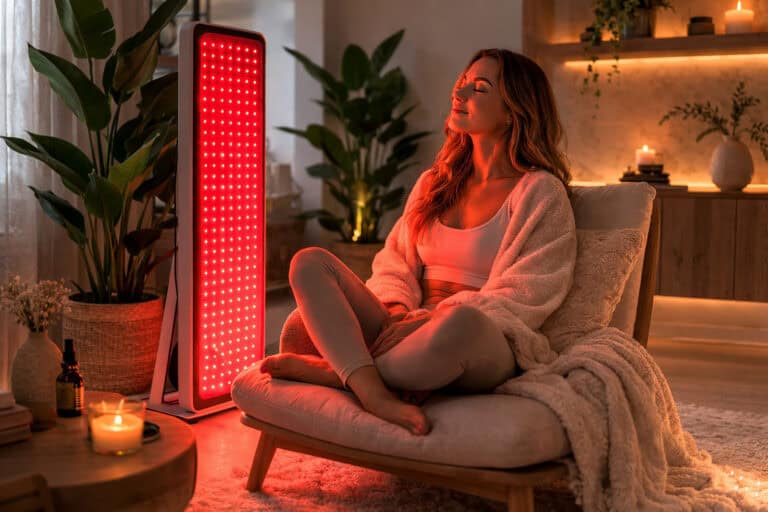
Best Red Light Therapy Panels for Home Use

Best Red Light Therapy Panels for Home Use
If you are comparing the best red light therapy panels for home use, the biggest challenge is not finding devices. It is filtering through marketing claims, flashy wattage language, and spec sheets that look impressive but do not always translate into a better at-home experience.
This roundup is designed to help you compare the main panel styles people actually use at home: premium modular systems, mid-range full-panel options, compact starter panels, and lower-cost entry choices. Instead of chasing hype, this guide focuses on what matters most for real-world home use: wavelength mix, coverage, adjustability, mounting flexibility, session convenience, and whether a panel fits your available space and routine.
In general, red and near-infrared light are being studied for photobiomodulation effects involving mitochondrial activity, ATP production, nitric oxide signaling, and tissue-level cellular responses, but expectations should remain realistic and condition-specific claims should be approached cautiously. [oai_citation:0‡PubMed](https://pubmed.ncbi.nlm.nih.gov/28748217/?utm_source=chatgpt.com)
If you are brand new to this category, start with our 2026 Buyer’s Guide to red light therapy devices. You may also want to review our science-based benefits page, browse the Red Light Sage blog, or contact us here if you want help narrowing the field.
Start with the full lineup
Need a broader comparison before choosing a panel? See our complete 2026 buyer’s guide →
What makes a good red light therapy panel for home use?
The best home panel is not automatically the largest or most expensive model. A strong home-use pick usually balances six practical factors:
- Coverage area: face-only, localized body use, half-body, or larger modular use
- Wavelength mix: visible red for more surface-level use and near-infrared for deeper tissue exposure
- Controls: ability to run red, near-infrared, or both depending on your goal
- Session convenience: timer, stand, door mount, app control, or modular expansion
- Physical footprint: whether the panel fits your bedroom, office, gym corner, or recovery space
- Budget realism: buying enough coverage for consistency without overspending on features you will not use
Many consumer panels cluster around red wavelengths in the low- to mid-600 nm range and near-infrared wavelengths around the 800–850 nm range, while some premium systems add more wavelength variety or more advanced controls. That does not automatically make a device better for every person, but it can change how versatile the panel feels in day-to-day use. [oai_citation:1‡PlatinumLED Therapy Lights](https://platinumtherapylights.com/products/biomax-rlt?srsltid=AfmBOopYMtx4UW6l-2fNLvdtAGA3Cw1xSNp7AmhZpGNkjPcIuw1qN2Ct&utm_source=chatgpt.com)
For most households, the smartest question is: How will this panel actually get used? A compact panel used five days a week can be more valuable than an oversized setup that is cumbersome to position and ends up collecting dust.
Another factor that often separates a good panel from a frustrating purchase is how easy it is to integrate the device into a normal home routine. In practice, consistency matters more than almost any technical specification. A panel that can be positioned quickly — for example on a door mount, tabletop stand, or wall bracket — is much more likely to be used regularly than a larger system that requires constant setup or adjustment. Many experienced users eventually create a small “wellness corner” in their home where the panel stays permanently installed, which removes friction from daily sessions.
Session distance is another practical consideration that many buyers overlook. Manufacturer specifications often list irradiance values measured very close to the panel surface, but real-world sessions typically occur at distances ranging from 6 to 18 inches depending on the device and body area. Because of this, coverage area and ease of positioning often matter more than chasing the highest theoretical output number on a spec sheet. A panel that comfortably treats the intended body area from a practical distance will usually provide a better user experience than a device that requires constant repositioning.
Heat output and fan noise can also influence how pleasant a device feels during routine use. Most modern panels include internal cooling fans, and while these are necessary for maintaining LED performance, quieter designs tend to be more comfortable when sessions are performed in bedrooms, offices, or relaxation spaces. Buyers planning to use red light therapy while reading, meditating, or winding down in the evening may especially appreciate panels designed with quieter cooling systems.
Mounting flexibility is another detail worth paying attention to before purchasing. Some panels ship with door hooks or stands, while others require separate mounting accessories. For many homes, a simple door mount offers the most versatile setup because it allows quick full-body or half-body exposure without taking up permanent floor space. Stand systems can be useful for gym areas or wellness rooms where the panel remains set up full time.
Finally, consider the long-term upgrade path of the device you choose. Some panel ecosystems allow users to link multiple units together as their setup grows. While beginners rarely need a multi-panel configuration, modular systems can make sense for households that plan to expand coverage later. Starting with a single panel and adding additional units over time can be a practical approach for people building a dedicated wellness routine gradually rather than investing in a large system all at once.
Why wavelength mix matters for home routines

One of the most useful ways to compare the best red light therapy panels for home use is to look beyond brand claims and understand how the panel distributes red and near-infrared output. Visible red light is commonly discussed for skin-focused routines and surface tissues, while near-infrared is often chosen when users want deeper-tissue exposure. In photobiomodulation research, light in these ranges is thought to interact with mitochondrial chromophores and downstream signaling pathways, including nitric oxide modulation and ATP-related responses. [oai_citation:2‡PubMed](https://pubmed.ncbi.nlm.nih.gov/28748217/?utm_source=chatgpt.com)
That is why many home panels are built around a dual-wavelength design. Simpler units often use 660 nm and 850 nm. More advanced models may include several additional wavelengths across the red and near-infrared range. The value of that broader spread depends on your preferences. Some people want simplicity. Others want more customization and spectrum variety.
From a practical standpoint, dual-wavelength panels are easier to understand and usually easier to compare. Multi-wavelength panels can be attractive for people who want a more configurable setup or plan to use one device for different body areas and routines over time.
How we evaluated the top home-use panels in this roundup

We did not rank these products by hype phrases like “medical grade” alone. Instead, we looked at the things that tend to matter most once a device is inside a home:
- Whether the panel supports localized or broader body coverage
- Whether red and near-infrared can be controlled separately
- Whether the panel includes a stand, door-hanging option, or modular path
- Whether the specs are clearly disclosed on official product pages
- Whether the device seems realistically suited to daily home routines
- Whether the panel offers a sensible value at its category level
This roundup includes both premium and value-oriented devices because “best” depends heavily on use case. Someone building a dedicated wellness room may want a modular system. Someone treating a compact apartment corner like a daily recovery station may be better served by a mid-size or tabletop-friendly device.
If you want the bigger-picture device landscape first, compare this roundup with our broader buyer’s guide. If you already know you want deeper product-level detail, we link throughout this page to our individual reviews.
Best overall premium pick: PlatinumLED BIOMAX

Why it stands out: The PlatinumLED BIOMAX line is one of the strongest premium home-panel options for people who want more than a simple two-wavelength setup. According to PlatinumLED’s official materials, the BIOMAX platform uses multiple wavelengths across red and near-infrared bands and allows independent control of the red and NIR arrays. [oai_citation:3‡PlatinumLED Therapy Lights](https://platinumtherapylights.com/products/biomax-rlt?srsltid=AfmBOopYMtx4UW6l-2fNLvdtAGA3Cw1xSNp7AmhZpGNkjPcIuw1qN2Ct&utm_source=chatgpt.com)
That broader spectrum approach is appealing for users who want one system that can handle a variety of routines instead of a narrowly targeted starter panel. It is also attractive for people who care about modularity and long-term expandability. If your goal is to build a more serious home setup over time, the BIOMAX family makes more sense than buying a tiny entry unit you will outgrow in a few months.
Best for: dedicated home wellness users, premium buyers, and people who want flexibility, scaling potential, and stronger overall system design.
Potential drawback: it is more device than many beginners need, and it sits in a more premium tier than budget-conscious shoppers may want.
Best for simplicity and premium design: Joovv Solo
Why it stands out: The Joovv Solo remains one of the cleaner, easier-to-understand premium panel options. Official Joovv materials list the Solo 3.0 with 660 nm red and 850 nm near-infrared wavelengths, 150 LEDs, and a moderate treatment size. [oai_citation:4‡Joovv](https://joovv.com/products/joovv-solo-3-0?srsltid=AfmBOor3FJDmdolstuFr64z-cevW096fbujMXU5PXHP8UUSLpoVADcX1&utm_source=chatgpt.com)
That spec profile makes it especially appealing to users who do not want a complicated spectrum story. If you want a panel that feels streamlined, recognizable, and easy to integrate into a home office, bedroom corner, or general wellness area, the Solo has strong appeal. The design language is polished, and the brand has long been associated with modular red light setups.
Best for: users who want a recognizable premium brand, simple wavelength structure, and a cleaner “plug into a routine” home experience.
Potential drawback: shoppers who prioritize wider wavelength variety or aggressive value pricing may find stronger alternatives elsewhere.
Best for advanced customization: Mito Red Light MitoADAPT

Why it stands out: Mito Red positions the MitoADAPT 4.0 series as a more configurable platform, and official product materials describe it as offering 8 wavelengths and multiple operating modes. [oai_citation:5‡Mito Red Light](https://mitoredlight.com/products/mitoadapt-series?srsltid=AfmBOoqIOSKsK8A6MOfoT6FZKFCCi7BnMzhcFOADoRAr2OHoys8rR5pm&utm_source=chatgpt.com)
That is meaningful for people who are not just shopping for a basic panel. If you want more control over how your sessions are structured, or you like the idea of using one device in different ways over time, the MitoADAPT line is one of the more interesting home-use options in this roundup.
It also fits users who already know they will stick with red light therapy for the long run. A more advanced control system can feel unnecessary for beginners, but for experienced shoppers it may be exactly the point.
Best for: users who want a configurable, more feature-rich panel rather than a simple entry-level device.
Potential drawback: the added versatility may come with a steeper learning curve and a higher “feature load” than some homes need.
Best value mid-range pick: Hooga HG series
Why it stands out: Hooga has built a strong reputation among shoppers who want a straightforward home panel without stepping into premium-system pricing. Official Hooga product pages for models like the HG500 list 660 nm and 850 nm wavelengths, separate red and NIR switches, and published irradiance figures, while smaller HG models offer a similar logic at a smaller footprint. [oai_citation:6‡Hooga](https://hoogahealth.com/products/hooga-500w-red-and-near-infrared-light-therapy-panel?srsltid=AfmBOooTgkGn_hs1OGOGJOFQByJL6suCveSeJAztkl_F40zYHe_At0FT&utm_source=chatgpt.com)
That makes Hooga one of the easiest recommendations for value-focused home users who still want a dedicated panel rather than a mask or handheld device. The controls are practical, the lineup is understandable, and the cost-to-usability ratio is often attractive.
Best for: budget-aware shoppers who still want a real home panel with sensible controls and enough output for regular use.
Potential drawback: it is less “premium system” oriented than some higher-end modular competitors.
Best budget-friendly starter panel: Bestqool BQ series

Why it stands out: Bestqool is worth considering if you want the most approachable entry into panel-based red light therapy. Official Bestqool materials for the BQ60 highlight 660 nm and 850 nm LEDs, a compact design, and published irradiance information, while the broader product collection includes both compact and expandable options. [oai_citation:7‡BestQool](https://www.bestqool.com/products/red-light-therapy-bq60?srsltid=AfmBOoqTS2KywSo3mO4dJ8jykOG4-PN5n3XC0lBcJZX4BCkSy81l3YWo&utm_source=chatgpt.com)
This is the kind of panel line that can work well for first-time buyers who want to test whether a regular at-home routine fits their lifestyle before committing to a larger investment. If your space is limited, or your goal is localized sessions for face, neck, shoulders, or a smaller body area, a compact Bestqool-style panel can be more realistic than going straight to a larger wall- or stand-based unit.
Best for: first-time users, apartment dwellers, and shoppers who want a smaller starting point.
Potential drawback: compact panels may feel limiting once you want faster broader-body coverage.
Best for broader spectrum variety: Rouge Care G4 panels
Why it stands out: Rouge Care’s newer G4 line is notable for breadth of wavelength coverage. Official Rouge product materials describe 8 wavelengths across visible red and near-infrared ranges, with G4 models such as the Rouge Pro and Rouge Tabletop built around that broader-spectrum concept. [oai_citation:8‡Rouge Care](https://rougecare.ca/en-eu?srsltid=AfmBOorMJE_ejumxMAm4ZtVSc_3DjygReonrk1epaTHHQTDqVRFtAQ14&utm_source=chatgpt.com)
That makes Rouge especially interesting for users who want a modern, spec-heavy panel with more granular spectrum positioning than the common 660/850 two-wavelength formula. It may also appeal to shoppers who like the idea of a more feature-rich ecosystem with app-related functionality and preset-style convenience in some models. [oai_citation:9‡Rouge Care](https://rougecare.ca/products/rouge-tabletop-g4?srsltid=AfmBOorJ7zqi_gqAFeFDGkRq72qCXjrCKLhwdMUaFIm5GU8MMF3meQPW&utm_source=chatgpt.com)
Best for: shoppers who want more wavelength variety and a modern, spec-forward panel lineup.
Potential drawback: some users may prefer simpler devices with less complexity and easier apples-to-apples comparison.
Which type of home panel is best for your goals?

Choosing the best red light therapy panels for home use becomes much easier when you match the device to the way you actually live.
Choose a premium modular panel if:
- You want broader body coverage
- You have a dedicated wellness or recovery area
- You plan to use the device for the long term
- You value expandability and more advanced controls
That profile usually points toward something like PlatinumLED BIOMAX, Joovv Solo, or MitoADAPT depending on how much complexity you want.
Choose a value-oriented mid-size panel if:
- You want consistent home use without premium pricing
- You need enough coverage for repeated localized sessions
- You care more about routine adherence than advanced tech features
That often points toward Hooga.
Choose a compact starter panel if:
- You are new to red light therapy
- You live in a smaller space
- You want to begin with face, neck, shoulder, or targeted-body use
- You prefer lower upfront cost
That usually points toward Bestqool or a compact Rouge option.
Across all categories, consistency matters more than chasing every premium feature. Cleveland Clinic notes that red light therapy is still an emerging area, with some promising uses but a need for more high-quality trials, which is a good reminder to keep expectations measured and routine-focused rather than miracle-focused. [oai_citation:10‡Cleveland Clinic](https://my.clevelandclinic.org/health/articles/22114-red-light-therapy?utm_source=chatgpt.com)
Frequently asked questions about home red light therapy panels

Are larger red light therapy panels always better?
No. Larger panels usually improve coverage and convenience, but they are not automatically the better choice for every home. A smaller device that fits your room and routine can be the smarter buy if it helps you stay consistent.
Do I need both red and near-infrared light?
Many users prefer panels that offer both because red and near-infrared are commonly selected for different tissue depths and use cases. A dual-mode panel also gives you more flexibility over time. [oai_citation:11‡BestQool](https://www.bestqool.com/blogs/learn/660-nm-vs-850-nm-red-light-wavelength?srsltid=AfmBOoq9ZJsDVHgUQjkmwGBKBsRz2VnwNtzx-Ov9DtB9kxFYVXRSYtss&utm_source=chatgpt.com)
Is more irradiance always better?
Not necessarily. Published output numbers are useful, but usability, distance from the panel, treatment area, and session consistency also matter. Higher output does not replace a sustainable routine.
Should beginners start with a budget panel?
Often, yes. A budget or mid-range panel can be a practical first step if you are still learning how often you will use the device and what coverage size feels realistic in your home.
Where should I learn the science before buying?
Start with our foundational guides on what red light therapy is, how it works at the cellular level, and how to use red light therapy at home.
Final verdict: the best red light therapy panels for home use

The best red light therapy panels for home use are the ones that fit your space, your budget, and your likelihood of actually using them. For premium buyers, PlatinumLED BIOMAX stands out as a strong overall choice. Joovv Solo remains appealing for a clean premium experience. MitoADAPT is a compelling option for users who want more control and configurability. Hooga offers some of the best value in the mid-range. Bestqool makes sense for lower-cost entry. Rouge Care is worth a look if broader wavelength variety is a priority.
There is no single perfect panel for every household. The best choice depends on whether you want simplicity, spectrum flexibility, compact size, stronger coverage, or a more expandable system.
For a wider comparison of masks, wearables, and full-body devices, visit the full 2026 buyer’s guide. You can also compare related options in our full-body roundup, our skin-focused device roundup, and our budget device roundup.
Compare before you buy
See the complete lineup of categories, device types, and use-case recommendations in our 2026 buyer’s guide →