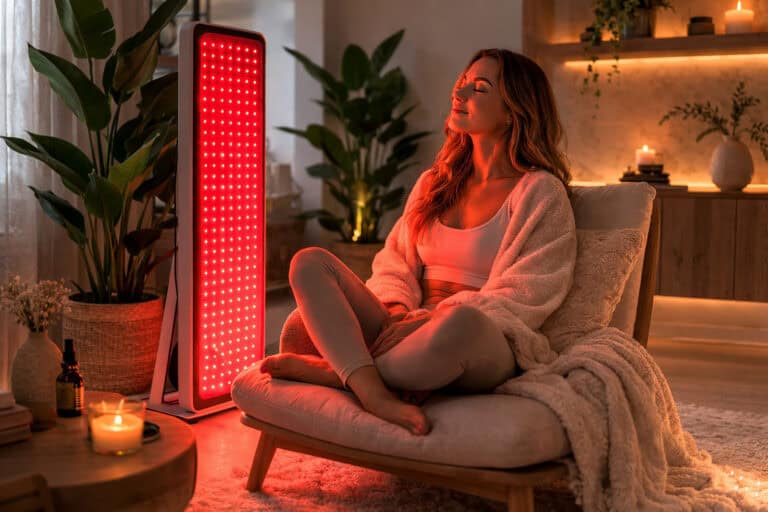
Red Light Therapy for Energy and Fatigue

Can Red Light Therapy Help with Energy and Fatigue?
Red light therapy for energy and fatigue is often discussed as a way to support daily vitality, recovery, and resilience without relying entirely on stimulants or complicated routines. The reason it gets so much attention is simple: photobiomodulation is being studied for how light in the red and near-infrared range interacts with cells, especially mitochondria, which are central to energy production. Research into these mechanisms is promising, but it is still important to keep expectations grounded. Red light therapy is not a cure for chronic fatigue, sleep deprivation, anemia, thyroid disease, depression, overtraining, or other medical causes of low energy.
What it may offer is supportive help in a broader wellness plan. Some people use it to build a steadier morning routine, support recovery after training, or reduce the “drag” that comes from poor consistency in sleep, exercise, and stress management. Mechanistic research suggests photobiomodulation may influence mitochondrial function and cellular signaling, while broader light research shows that timing and light exposure matter for alertness, sleep, and circadian rhythm. See the research background on photobiomodulation and mitochondrial signaling, the overview on red light therapy from Cleveland Clinic, and the review of light, circadian rhythms, sleep, and mood.
If you are new to the category, start with our red light therapy buyer’s guide for device context, then review our science-backed benefits page for the broader wellness picture.
Start with the big picture
If you want to compare formats, panel sizes, and practical home-use options, see our Best Red Light Therapy Devices (2026 Buyer’s Guide) →
Why “Low Energy” Usually Has More Than One Cause
Fatigue is rarely one-dimensional. For many people, the issue is not a single broken system but a stack of smaller stressors: inconsistent sleep, long workdays indoors, low physical activity, poor recovery, high mental load, irregular meal timing, and too much late-night screen exposure. That matters because red light therapy tends to fit best as a supportive habit, not a standalone fix.
In practice, people usually describe low energy in one of three ways:
- Morning sluggishness: waking up tired, slow to focus, or dependent on caffeine to feel functional.
- Midday energy dips: a noticeable crash in output, motivation, or mental sharpness.
- Recovery fatigue: feeling physically drained after training, long work periods, or stressful weeks.
That distinction helps shape expectations. If the core problem is sleep debt or a disrupted schedule, red light therapy is unlikely to “override” the effects of poor sleep. If the issue is post-exercise soreness and cumulative stress, it may fit more naturally into a recovery routine. If low energy comes with shortness of breath, fainting, weight changes, mood symptoms, severe daytime sleepiness, or persistent exhaustion, it is worth discussing those symptoms with a licensed clinician before assuming a wellness device will solve the problem.
How Red Light Therapy Is Thought to Work at the Cellular Level
The most common scientific explanation behind red light therapy for energy and fatigue centers on photobiomodulation. In simplified terms, red and near-infrared light are thought to interact with cellular components involved in energy production. A major hypothesis is that mitochondria, particularly cytochrome c oxidase, can respond to these wavelengths in ways that influence electron transport, signaling, and downstream cellular activity. The foundational review literature on this topic is one reason red light therapy keeps showing up in conversations about vitality and recovery.
That does not mean more light is always better. Photobiomodulation research has long emphasized a dose window, meaning too little may do nothing and too much may reduce benefit. This is one reason device setup, session length, distance from the panel, and consistency matter more than hype. The research overview on mechanisms and mitochondrial redox signaling in photobiomodulation discusses the role of mitochondria, nitric oxide signaling, and the broader cellular response in much more detail.
For a deeper science primer, you can also read How Red Light Therapy Works at the Cellular Level and Red Light Therapy and Mitochondrial Function.

Energy Support Is Not the Same as Treating Medical Fatigue
This distinction matters. In everyday wellness language, “more energy” often means feeling a little more recovered, a little less run down, or a little more consistent during the week. In medical language, fatigue can refer to a symptom tied to many conditions and should not be self-diagnosed through marketing language alone.
Cleveland Clinic notes that red light therapy remains an emerging treatment area and that many uses still need stronger clinical confirmation. That cautious framing is useful here too. While red light therapy may support cellular function and recovery, it should not be positioned as a guaranteed answer for persistent fatigue. Read their overview here: Red Light Therapy: Benefits, Side Effects & Uses.
A realistic way to think about it is this: red light therapy may help create conditions that support better energy, especially when low energy is linked to recovery strain, circadian disruption, or inconsistent routines. It is much less convincing as a “quick fix” for serious or unexplained fatigue.
Where It May Fit Best: Recovery, Physical Output, and Post-Exercise Fatigue
One of the more practical use cases for red light therapy and fatigue is recovery. A number of studies and reviews in sports and performance settings have explored whether photobiomodulation can reduce muscle fatigue, support subsequent performance, or improve post-exercise recovery markers. The literature is mixed rather than one-directional, which is exactly why grounded expectations are important.
Some reviews and trials suggest reduced fatigue or better recovery in certain contexts, while others show little to no effect depending on dosing, athlete population, training status, and protocol differences. That pattern tells us two useful things:
- There is enough signal to justify continued interest.
- There is too much variability to promise a universal result.
For readers whose “fatigue” mostly means heavy legs, slow recovery, or feeling under-recovered after training, this may be the most relevant lane to explore. For that context, the evidence base around performance and muscle fatigue is more practical than broad claims about general energy. See the review on photobiomodulation therapy and performance outcomes and the earlier meta-analytic work summarized in the PubMed record for acute effects of phototherapy on sports performance and muscular fatigue.

Why Circadian Rhythm Still Matters More Than Most People Think
If your energy is inconsistent, your light environment may be part of the problem. Human energy is tightly linked to circadian rhythm, and circadian rhythm is tightly linked to light timing. Morning light exposure, daytime activity, and lower light at night all help reinforce a more stable wake-sleep cycle. When that rhythm drifts, energy, mood, and alertness often drift with it.
This does not mean red light therapy is the same thing as bright light therapy used in circadian or mood-related protocols. They are different tools. But it does mean any conversation about “energy” should acknowledge the larger light environment. The review on effects of light on human circadian rhythms, sleep, and mood is a strong reminder that timing, intensity, and spectrum all influence how alert or tired we feel over a 24-hour cycle.
For many people, the best practical approach is to pair red light therapy with strong basics:
- get outdoor light early in the day when possible
- keep wake time relatively consistent
- avoid bright light overload late at night
- use red light therapy as part of a repeatable routine, not a random add-on
If sleep is a major part of your energy issue, also review Red Light Therapy for Sleep & Circadian Rhythm.

What About Mental Fatigue, Brain Fog, and Focus?
Some people are less interested in physical fatigue and more interested in cognitive energy: alertness, mental clarity, attention, and staying on task. This is another area where photobiomodulation research has generated interest, particularly with transcranial applications studied in research settings. Systematic reviews suggest there may be potential for cognitive support, but they also make clear that more high-quality randomized trials are still needed.
That means it is reasonable to say red light therapy is being studied for brain-related outcomes, but not reasonable to promise sharper focus for everyone. Mental fatigue is influenced by sleep quality, screen habits, stress, mood, medication effects, hydration, and overall health. A panel in the corner of your room cannot fully compensate for all of that.
Still, if your low energy shows up more as mental drag than muscle fatigue, the brain-health angle may be worth reading about. See the systematic review on transcranial photobiomodulation and human cognition, and browse our related post on Red Light Therapy for Brain Health & Focus.

What a Realistic Home Routine Looks Like
If you want to test red light therapy for energy and fatigue in a practical way, the goal is not to create a perfect biohacking schedule. The goal is to make it easy enough to do consistently for several weeks while paying attention to sleep, training load, and general wellbeing.
A simple home routine might look like this:
- Morning or early day: use your panel as part of a consistent wake-up routine.
- After training: use it during your recovery window if physical fatigue is your main issue.
- During work breaks: pair it with walking, hydration, and a screen reset rather than using it as an excuse to stay sedentary.
Most people do better when the session is attached to something they already do: morning coffee, post-workout cooldown, an afternoon reset, or part of a skincare or wind-down habit. Consistency beats intensity here.
Need a practical setup guide?
See our overview on how different red light therapy devices fit into a home routine →
Common Mistakes That Make Results Harder to Notice
People often say a device “did nothing,” but sometimes the setup was working against them from the start. Common problems include:
- using it inconsistently for only a few scattered sessions
- expecting stimulant-like effects within minutes
- ignoring poor sleep, late caffeine, or overtraining
- placing the device too far away or using it without a repeatable routine
- assuming every energy issue is a mitochondrial issue
There is also a psychological trap here: when someone buys a wellness device because they are exhausted, they often want a dramatic shift fast. Red light therapy is much more realistically described as a habit-based support tool. If it helps, many users notice it as a steadier baseline, better recovery, or less drag over time—not as a jolt.
For general use considerations, also review How to Use Red Light Therapy at Home and Red Light Therapy Session Duration & Frequency.

When Fatigue Deserves a Medical Workup Instead of More Wellness Hacks
There is a point where low energy should not be treated as a simple wellness optimization problem. If fatigue is severe, worsening, unexplained, or paired with other symptoms, it makes sense to talk with a qualified clinician. Red light therapy should not delay evaluation for common medical contributors such as sleep disorders, anemia, thyroid issues, medication effects, infections, depression, or cardiometabolic problems.
Use extra caution if you are trying to interpret fatigue in children, during pregnancy, after a recent illness, or alongside significant mood symptoms. Those are situations where professional guidance matters more than experimentation.
If your question is whether red light therapy is broadly safe for normal home use, the answer is usually framed as “appears safe when used as directed,” with the important caveat that long-term device-specific questions and misuse issues still matter. Cleveland Clinic’s summary is a useful starting point, especially their reminders about realistic evidence and proper use: read their safety overview here.
Who May Be the Best Fit for Red Light Therapy for Energy and Fatigue?
The best-fit user is usually someone looking for support rather than rescue. That may include:
- people trying to improve consistency in a morning wellness routine
- active adults focused on recovery and physical resilience
- people whose low energy is tied to routine drift, indoor living, or poor recovery habits
- users who are willing to track changes over weeks instead of hours
The worst-fit user is someone expecting the device to overcome chronic sleep loss, ongoing burnout, untreated medical fatigue, or severe lifestyle imbalance. In those cases, red light therapy may still have a place, but it is much less likely to be the lever that changes everything.
If you want more foundational reading before buying anything, browse the Red Light Sage blog or contact us through our contact page if you want us to prioritize a specific device comparison or educational topic.

Frequently Asked Questions
Does red light therapy give you instant energy?
Usually not in the way caffeine does. Any benefit is more likely to show up as better routine consistency, improved recovery, or a steadier sense of vitality over time rather than a dramatic immediate boost.
Can red light therapy cure chronic fatigue?
No. It should not be presented as a cure for chronic fatigue or as a replacement for medical care. Persistent or unexplained fatigue deserves proper evaluation.
Is red light therapy better in the morning or after exercise?
That depends on your goal. Morning use may fit people working on routine and daytime momentum, while post-exercise use may fit people more interested in physical recovery and reduced training-related fatigue.
Final Take: A Support Tool, Not a Shortcut
Red light therapy for energy and fatigue is most compelling when it is framed honestly. The mechanism story is interesting, the recovery literature is promising but mixed, and the broader light-and-circadian discussion is highly relevant to how humans actually feel day to day. Put together, that creates a reasonable case for red light therapy as a supportive wellness tool.
But the strongest results are still likely to come from the basics around it: better sleep timing, smart light exposure, sensible training load, hydration, movement, and routine consistency. Used that way, red light therapy may be worth exploring—especially for recovery-focused users and people trying to create a steadier daily rhythm.
For your next step, compare formats and use cases in our Buyer’s Guide, review the broader benefits page, or continue exploring the blog for more science-aligned educational posts.