Red Light Therapy for Metabolism & Weight Management

Can Red Light Therapy Support Metabolism?
Interest in red light therapy for metabolism has grown because photobiomodulation is being studied for how it interacts with mitochondria, cellular signaling, and energy production. That sounds promising, but it is important to keep expectations grounded. Red light therapy is not a shortcut for fat loss, and it should not be framed as a cure for obesity or a replacement for nutrition, movement, sleep, or medical care.
What it may do is support some of the systems that influence energy use and consistency: mitochondrial function, recovery from exercise, daily routine adherence, and overall wellness behaviors. Some research also explores whether specific light-based approaches can affect localized fat reduction or metabolic markers, but that evidence is still narrower and less definitive than many marketing claims suggest. For foundational background on photobiomodulation mechanisms, see What Is Red Light Therapy? and How Red Light Therapy Works at the Cellular Level.
In this guide, we will look at what metabolism actually means, where red light therapy may fit in, where the evidence is still limited, and how to think about realistic weight-management support in a home setting. For a broader overview of benefits, visit Red Light Therapy Benefits: Backed by Science.
Want the bigger picture?
If you are comparing education with devices, start with our red light therapy buyer’s guide →
What “Metabolism” Actually Means in Real Life
Metabolism is often used as shorthand for “how fast you burn calories,” but the concept is broader than that. It includes the chemical processes your body uses to create energy, maintain tissue, regulate temperature, support hormone signaling, and respond to activity, food intake, and recovery. In everyday terms, metabolism is shaped by many moving parts at once: body size, muscle mass, sleep quality, stress load, activity level, food intake, age, and overall health status.
That is why weight management rarely comes down to one tool. According to NIH and related federal resources on energy balance and weight management, long-term body-weight changes still depend heavily on sustainable patterns around diet quality, calorie balance, physical activity, and behavioral consistency. Red light therapy might fit into that picture as a supportive wellness practice, but it does not override the fundamentals of energy balance or erase the value of a sustainable routine.
From a home-use perspective, the practical question is not “Will this melt fat?” but “Can this help support the habits and biology that make healthy weight management easier to maintain?” That framing is much more realistic and much more useful.

Where Red Light Therapy May Fit Into a Weight-Management Routine
Red light therapy may be most useful when it is viewed as a supportive layer rather than a primary fat-loss intervention. For some people, the value is not a dramatic metabolic shift but better recovery, improved comfort after workouts, more routine consistency, or a calming evening ritual that complements sleep and stress management. Those indirect effects can matter, because a routine you can repeat is usually more valuable than a treatment that sounds exciting but does not fit your life.
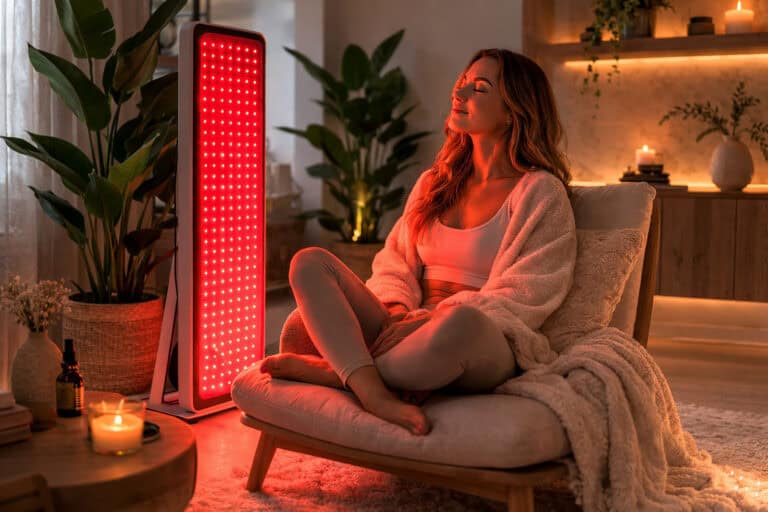
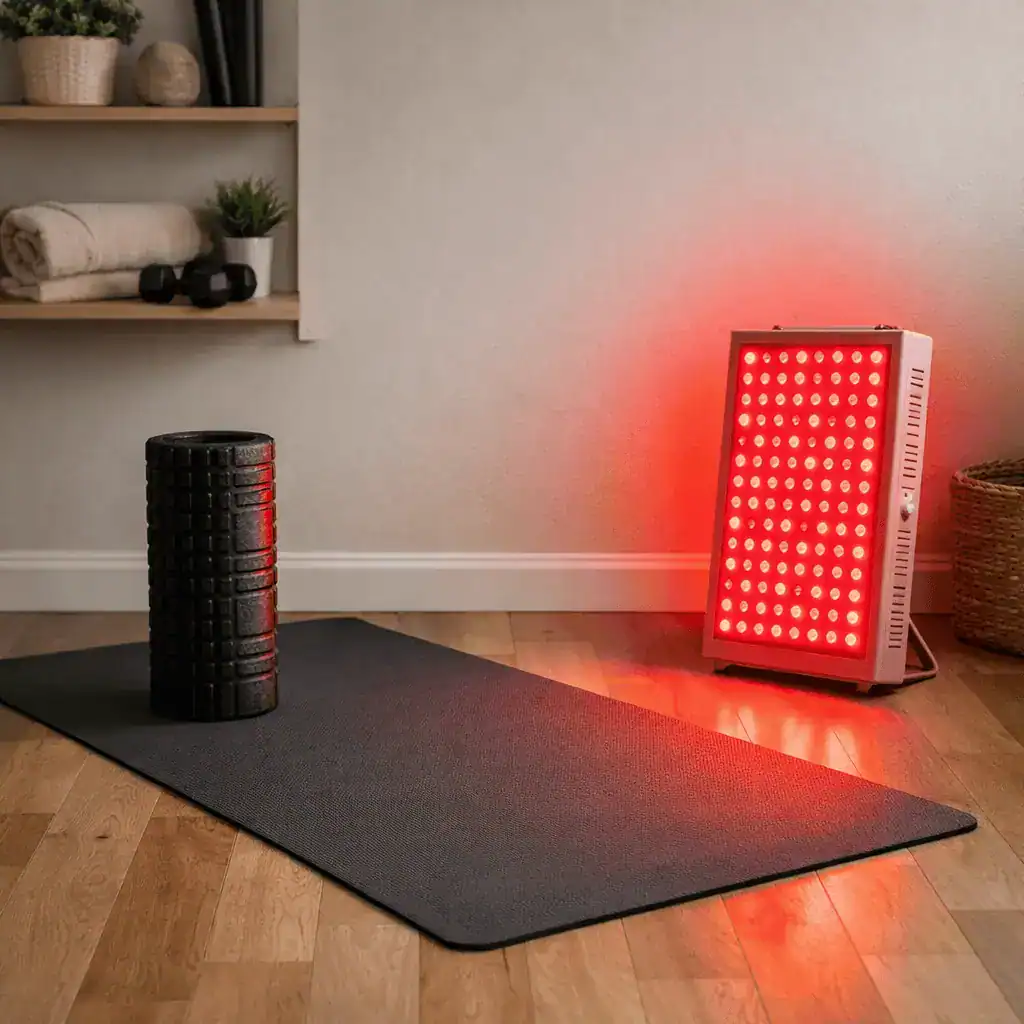
In practical home use, people often place a panel in a bedroom, office, or workout area so sessions are easy to repeat. A short morning session may pair well with light movement, while an evening session may fit into a wind-down routine. The best use case is usually the one that reduces friction. If a device is hard to set up, stored in a closet, or used only when motivation spikes, it is unlikely to help much with anything.
This is also where content about red light therapy for energy and fatigue can overlap with metabolism discussions. Better perceived energy, less soreness, or easier recovery may help someone stay active and consistent, even if the light itself is not directly causing major weight loss.
The Cellular Mechanism: Why Mitochondria Matter
One reason red light therapy keeps showing up in metabolism conversations is its connection to mitochondria. Photobiomodulation research commonly describes red and near-infrared light as interacting with cellular photoacceptors, especially within pathways tied to mitochondrial function. Reviews in the scientific literature discuss how this may influence ATP production, redox balance, and cellular signaling in certain contexts. That does not automatically mean a person will burn substantially more calories after using a panel, but it does provide a biologically plausible mechanism for why researchers remain interested.
Mitochondria are often described as the cell’s energy-producing structures. When a wellness intervention supports mitochondrial efficiency or signaling, the effect may show up more as tissue support, exercise readiness, or recovery quality than as dramatic scale changes. This distinction matters. The mechanism is interesting, but marketing often stretches “cellular energy” into promises the evidence does not justify.
For readers who want deeper mechanism coverage, our Red Light Therapy and Mitochondrial Function guide is the most relevant companion page.

Red Light Therapy for Weight Loss: What the Research Does and Does Not Show
Here is the cautious answer: research on red light therapy and body composition is interesting but mixed. Some studies and reviews have explored low-level light therapy for body contouring or localized fat-layer reduction, and some have reported modest changes under specific protocols. But those findings do not mean that a general home red light panel should be marketed as a proven standalone weight-loss solution.
A major distinction is the difference between localized aesthetic fat reduction and whole-body metabolic improvement. Those are not the same outcome. Even when a study suggests changes in circumference or localized fat appearance, that does not prove long-term weight loss, lasting metabolic change, or broad improvements in body composition without concurrent lifestyle changes.
That is why a conservative interpretation is best: red light therapy may have a role in a comprehensive wellness plan, but the strongest evidence for weight management still comes from sustainable diet quality, physical activity, muscle-preserving habits, sleep, and long-term adherence. Red light therapy is better thought of as a possible assistant than the main engine.

Indirect Ways It May Support Weight Management
Even if red light therapy does not directly produce major fat loss, it may still support weight management indirectly in several practical ways:
- Exercise recovery support: If you feel less beat up after training, it may be easier to stay consistent with walking, strength work, or conditioning.
- Routine building: A short daily session can act as a habit anchor alongside hydration, mobility work, or meal planning.
- Sleep and circadian support: Better wind-down habits may improve recovery and next-day energy, which can influence activity patterns and appetite regulation.
- Stress management: A calming evening setup may help some people shift into a more deliberate self-care routine instead of reactive late-night behaviors.
These outcomes are not guaranteed, and they vary by person. But this is often where at-home wellness tools earn their value: not by changing one biomarker dramatically, but by helping someone repeat healthier behaviors more consistently over time.
If recovery is a major part of your interest, see Red Light Therapy for Muscle Recovery. If sleep is the missing piece, read Red Light Therapy for Sleep & Circadian Rhythm.

Realistic Expectations for Home Users
Most home users should think in terms of supportive routine value, not dramatic transformation. A realistic expectation is that red light therapy may complement a health routine over weeks and months if you are also paying attention to movement, strength training, food quality, sleep timing, and overall consistency.
Unrealistic expectations usually sound like this:
- “I can use a panel and lose weight without changing anything else.”
- “Cellular energy automatically means faster fat burning.”
- “Aesthetic body-contouring data proves better whole-body metabolism.”
More realistic expectations sound like this:
- “This may support recovery and help me stay more consistent.”
- “This may fit into a better morning or evening wellness rhythm.”
- “This may support overall wellness, but I still need the basics in place.”
That mindset keeps red light therapy in the right lane and makes it easier to judge whether the habit is genuinely helping your lifestyle.
How to Use Red Light Therapy Practically in a Metabolism-Focused Routine
If your goal is better energy support or weight-management consistency, it helps to pair light sessions with existing anchors in your day. Good examples include:
- After waking, before a walk or mobility session
- Before or after a workout, when recovery is the main goal
- In the evening as part of a calming wind-down routine
- During a midday reset that replaces a sedentary slump
Keep the setup simple. A panel placed where you already spend time is more likely to be used than one stored away. Follow manufacturer guidance for distance, timing, eye-safety instructions, and session frequency. For broader practical setup guidance, read How to Use Red Light Therapy at Home and Red Light Therapy Session Duration & Frequency.
Need help choosing a device?
Compare panel styles, use cases, and home setups in our best red light therapy devices guide →
Important Limits, Caveats, and Who Should Be Cautious
Because this topic sits close to weight-loss marketing, caution matters. Red light therapy should not be presented as a cure for obesity, a substitute for evidence-based medical care, or a guarantee of improved metabolic health. People with complex health conditions, medication questions, pregnancy concerns, unusual light sensitivity, or condition-specific treatment plans should review safety considerations with a qualified clinician.
It is also wise to be skeptical of claims that rely on dramatic before-and-after photos, guaranteed inch loss, or exaggerated promises about “resetting metabolism.” Those claims often run far ahead of the evidence. If you want a broader discussion of safe use, visit How to Use Red Light Therapy Safely, and for additional context see Red Light Therapy Side Effects and Red Light Therapy Safety for Specific Populations.
What Actually Moves the Needle for Metabolism and Weight Management
For most people, the biggest metabolic levers are not glamorous:
- Maintaining or building muscle with resistance training
- Staying physically active throughout the week
- Improving sleep duration and regularity
- Choosing a sustainable eating pattern with appropriate calorie intake
- Reducing all-or-nothing cycles that break routine consistency
Where red light therapy may fit is in supporting the behaviors above. If it helps you recover better, feel more ready to move, or stick to a daily self-care rhythm, that can be meaningful. But those fundamentals remain the foundation. That is consistent with NIH-linked weight-management guidance and with the broader reality that body composition changes usually come from a repeatable system, not a single modality.

Frequently Asked Questions About Red Light Therapy for Metabolism
Can red light therapy directly increase metabolism?
It may support cellular energy processes that relate to metabolism, but current evidence does not justify claiming that a standard home red light panel will directly and dramatically increase calorie burn. It is better understood as a supportive wellness tool than a proven metabolic accelerator.
Can red light therapy help with weight loss?
Possibly in an indirect sense, if it supports recovery, consistency, or broader wellness habits. Some light-based studies have explored localized fat reduction or body contouring, but that is not the same as reliable, long-term weight loss. The strongest drivers of weight management still involve nutrition, movement, sleep, and adherence.
Is red light therapy better before or after exercise for this goal?
That depends on why you are using it. Before exercise may fit a readiness routine; after exercise may fit a recovery routine. The most effective timing is usually the one you can repeat consistently without overcomplicating your day.
What the Evidence Base Suggests So Far
Readers who want to go deeper can review scientific literature on photobiomodulation mechanisms and light-based body-contouring research. Helpful starting points include a review of proposed photobiomodulation mechanisms on PubMed, a broader review of mitochondrial and redox signaling in photobiomodulation on PubMed, a clinical review of low-level light therapy applications on PubMed, and a review focused on low-level laser therapy for fat-layer reduction on PubMed. For a reminder that sustainable weight management still depends on fundamentals, NIH-linked resources on weight-loss and maintenance strategies remain useful context.
The takeaway from that body of literature is not that red light therapy is irrelevant. It is that the most responsible interpretation is still a measured one: promising mechanisms, some targeted findings, and meaningful limitations.
Should you buy a device mainly for weight management?
Usually, no. A better reason to consider a device is if you are already interested in broader red light therapy use cases such as recovery, general wellness support, routine building, or home-use convenience. If weight management is your only goal, it makes sense to keep expectations conservative and make sure the basics of your health routine are stronger than the gadget layer.
Bottom Line
Red light therapy for metabolism is best viewed as a supportive wellness tool, not a stand-alone weight-loss solution. The science around photobiomodulation, mitochondria, and cellular signaling is interesting, and there are some targeted studies that justify continued research. But the evidence does not support overstated promises that a home panel will “fix” metabolism or produce effortless fat loss.
The most realistic use case is this: red light therapy may help support recovery, consistency, and broader wellness habits that make healthy weight management easier to sustain. That is a worthwhile role, but it is still a supporting role.
If you are building a practical home routine, keep the fundamentals first and use red light therapy as an optional layer around them. To explore device options, continue to the Best Red Light Therapy Devices (2026 Buyer’s Guide), browse more education in the Red Light Therapy Blog, or reach out through our Contact page.
Next step
Compare home-use options and practical setup considerations in our red light therapy buyer’s guide →