Red Light Therapy for Hormonal Balance

Interest in red light therapy for hormonal balance often starts with a practical question: can light exposure support the body’s natural rhythms in a meaningful way? The careful answer is that red light therapy is not a hormone treatment, and it should not be framed as a cure for endocrine problems. But it may support several systems that influence how balanced you feel day to day, including sleep quality, circadian timing, stress recovery, energy regulation, and overall consistency in wellness routines.
That distinction matters. Hormones operate through interconnected feedback loops involving the brain, glands, sleep-wake signals, nutrition, movement, and stress load. Red light therapy fits into that picture as a supportive wellness tool, not a replacement for medical care. Research in photobiomodulation has explored effects on cellular energy production, nitric oxide signaling, inflammation pathways, and tissue function, all of which may indirectly influence how well the body adapts to stress and recovery demands.
On this page, we’ll look at what people usually mean when they talk about hormonal balance, where red light therapy may fit, what the evidence can and cannot say, and how to use it at home with realistic expectations.
Start with the fundamentals
If you are comparing educational resources and device options, see our red light therapy buyer’s guide.
What “hormonal balance” usually means in everyday wellness conversations
In common use, hormonal balance usually refers to feeling more stable across several daily patterns:
- consistent sleep and wake times
- steady energy rather than major crashes
- manageable stress reactivity
- predictable recovery after exercise or demanding workdays
- healthy skin, appetite, and routine resilience
From a physiology standpoint, hormones are not one single system. They include cortisol, melatonin, insulin, thyroid hormones, reproductive hormones, hunger-related signaling, and other messengers working together. That is why broad promises around “balancing hormones” should be treated cautiously. A single tool rarely controls the whole picture.
What red light therapy may do is support conditions that help the body regulate itself more effectively. Better sleep habits, less friction around recovery, a calming evening environment, and improved routine consistency can all influence hormonal patterns indirectly. That makes red light therapy most useful when it is part of a broader routine rather than treated like a stand-alone fix.
How red light therapy may fit into this conversation
Red light therapy works by delivering specific wavelengths of visible red and near-infrared light to tissue. Researchers have studied how this light may interact with mitochondria, cellular signaling, circulation, and local tissue responses. A commonly discussed mechanism is support for mitochondrial energy production, especially through pathways associated with cytochrome c oxidase and ATP generation.

Why does that matter for hormonal balance? Not because red light “balances hormones” directly in a blanket sense, but because the endocrine system is tightly linked to energy availability, sleep quality, stress signaling, and recovery capacity. When those systems are under constant strain, people often notice that they feel “off.” Photobiomodulation may help support some of the biological background processes involved in adaptation and repair.
For a deeper science overview, read how red light therapy works at the cellular level and our explainer on red light therapy wavelengths.
Circadian rhythm may be the most relevant connection
One of the most reasonable ways to think about red light therapy for hormonal balance is through circadian rhythm support. Your circadian system helps organize when you feel alert, sleepy, hungry, physically ready, or mentally drained. It also influences the timing of hormone release, including melatonin and cortisol rhythms.
Bright blue-rich light at the wrong time of day can disrupt nighttime wind-down. Red light, by contrast, is often used in evening settings because it is less disruptive to melatonin than shorter-wavelength light. That does not mean every red light therapy device is a sleep device, but it helps explain why many people build sessions into morning consistency routines or evening wind-down habits.

If your schedule is irregular, your stress load is high, or you have difficulty transitioning out of “go mode,” then the biggest benefit may come from the ritual itself: same time, same place, same calm environment, and fewer disruptive light cues late at night. For more on this angle, visit red light therapy for sleep and circadian rhythm.
Stress resilience and recovery may matter more than direct hormone claims
When people say they suspect a hormone issue, they are often noticing symptoms that overlap with stress overload: poor sleep, energy swings, low resilience, exercise fatigue, irritability, or feeling wired late at night. Cortisol is part of this picture, but so are behavior patterns, light exposure, movement, and recovery habits.
Red light therapy may support a more recovery-friendly environment in several indirect ways:
- encouraging a consistent pause in the day
- supporting post-exercise recovery routines
- helping create a calm evening setup
- reducing the friction involved in starting a daily wellness habit

That does not mean red light therapy lowers cortisol in a guaranteed or clinically targeted way. It means it may support the broader conditions that help the nervous system shift out of constant overload. Our related guide on red light therapy for mood and mental health explores this relationship in more detail.
Skin, energy, and metabolism are part of the bigger picture too
Hormones influence the skin, appetite, body composition, and energy patterns, but those same areas are also affected by sleep, inflammation, exercise habits, and routine regularity. That is why it is easy to overinterpret cause and effect. A better approach is to ask whether red light therapy may support the systems connected to these visible day-to-day outcomes.

For example, red light therapy is being studied for skin wellness, tissue support, and exercise recovery. Someone using a device consistently may notice that they feel more “regulated” overall, but that perception can come from multiple overlapping improvements rather than a direct hormone effect. The body does not separate skin, sleep, stress, and recovery into neat compartments.
If those are your main goals, you may also want to read red light therapy for skin health and anti-aging, red light therapy for energy and fatigue, and our foundational red light therapy benefits page.
What the evidence actually shows — and what it does not
The current evidence base for photobiomodulation is strongest around broad mechanisms such as mitochondrial function, tissue support, localized circulation, and certain wellness or recovery applications. It is much weaker for sweeping claims that red light therapy can “fix hormones.” That kind of language is too broad and too confident.

What researchers have explored includes:
- photobiomodulation’s effects on cellular energy metabolism
- how light exposure may influence circadian biology and sleep timing
- possible support for tissue repair and inflammatory signaling
- performance and recovery outcomes in some settings
Useful background reading includes NIH and PubMed resources on circadian biology, sleep regulation, and photobiomodulation research, such as PubMed’s database of photobiomodulation studies, NIH educational material on circadian rhythms, PubMed Central articles on light-based mechanisms, and Cleveland Clinic’s overview of hormones and how they work.
The takeaway is simple: red light therapy may be a reasonable supportive practice, but it should not be sold as direct endocrine treatment.
What realistic home use looks like
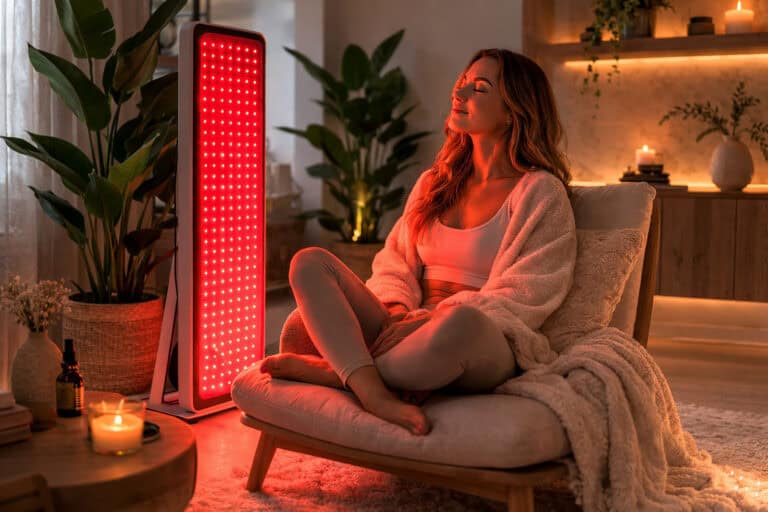
Most people benefit most when sessions are simple enough to repeat. A realistic setup might involve a panel in a bedroom corner, home office, or recovery space where it is easy to use without turning the routine into a project.

Useful routine patterns include:
- Morning use: paired with hydration, light movement, and a regular wake time
- Post-workout use: built into recovery after training days
- Evening use: part of a quiet wind-down routine away from bright overhead light
The key variable is often not “perfect protocol,” but consistency. If you are using red light therapy to support rhythm and recovery, occasional long sessions are usually less useful than a regular pattern you can maintain. For practical setup ideas, see how to use red light therapy at home and session duration and frequency guidelines.
Choosing a device?
Compare form factors, coverage area, and at-home practicality in our guide to the best red light therapy devices.
Who should be more cautious with this topic
If you are concerned about thyroid disease, severe fatigue, menstrual irregularity, fertility issues, sudden weight changes, or symptoms that feel new and persistent, it is best to treat that as a medical question first. Red light therapy may still have a role in a supportive routine, but it should not delay appropriate evaluation.
That is especially important because “hormonal imbalance” is often used online as a catch-all label for symptoms with many possible causes. Sleep loss, under-fueling, stress overload, overtraining, medication effects, and several medical conditions can all look similar at first.
For a more careful overview, visit red light therapy safety for specific populations and our page on red light therapy side effects. You can also use our contact page if you want help navigating the broader site.
How to tell whether your routine is helping
Because hormonal balance is such a broad concept, it helps to track practical markers rather than chasing vague promises. A supportive red light therapy routine may be worth continuing if you notice patterns like:
- more regular sleep timing
- less evening overstimulation
- better recovery after workouts
- greater consistency with self-care habits
- a steadier sense of daily rhythm

These are supportive, observational outcomes. They do not prove that hormone levels changed directly. But they can tell you whether the routine is serving your overall wellness goals in a realistic way.
Common misunderstandings about red light therapy for hormonal balance
Misunderstanding #1: It directly balances every hormone.
That is too broad. Red light therapy may support upstream factors like recovery, rhythm, and consistency, but it is not a universal endocrine intervention.
Misunderstanding #2: More light always means better results.
Not necessarily. Overcomplicating sessions can make the routine harder to sustain. Appropriate use matters more than excess.
Misunderstanding #3: Feeling calmer proves a medical effect.
A calmer evening routine can be helpful, but it does not automatically mean that a measurable hormone issue has been corrected.
Misunderstanding #4: It replaces sleep, nutrition, or medical care.
It does not. The strongest routines pair light exposure with stable sleep habits, adequate food intake, movement, and appropriate clinical follow-up when needed.
Bottom-line practical guidance
If your goal is to use red light therapy for hormonal balance in a smart, evidence-aligned way, the most practical approach is this:
- think in terms of rhythm, recovery, and consistency
- use red light therapy as a support tool, not a cure claim
- pair it with stable wake times, lower evening light exposure, and realistic routines
- seek medical evaluation when symptoms suggest more than general stress or lifestyle disruption

People often get the best long-term value from red light therapy when they stop expecting a miracle and start using it as a consistent environmental cue for better habits.
Final thoughts on red light therapy for hormonal balance
Red light therapy may support hormonal balance indirectly by helping with the systems that shape how regulated you feel: circadian rhythm, stress recovery, sleep habits, tissue support, and daily consistency. That is a useful role, but it is different from claiming direct hormone treatment.
The strongest approach is a grounded one: use red light therapy as part of an intentional routine, monitor whether it improves your day-to-day stability, and keep expectations aligned with the evidence. When symptoms are significant or persistent, let medical evaluation lead the way.
Explore the next step
Learn the basics on our benefits page, browse the Red Light Sage blog, or compare setups in the buyer’s guide.