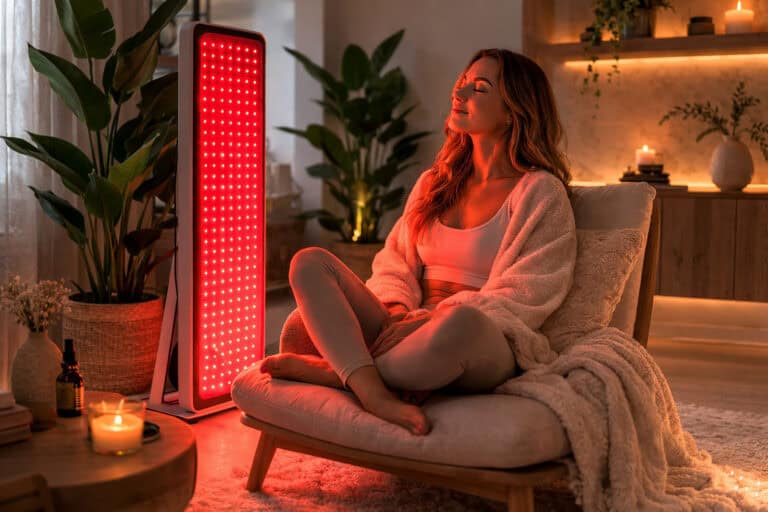
Red Light Therapy Session Duration & Frequency

Red light therapy session duration is one of the first questions people ask after buying a panel, mask, or small targeted device. Most people do not need a complicated protocol to get started. What they do need is a consistent, conservative routine that matches the device instructions, the body area being treated, and the reason they are using it.
That matters because red light therapy is not simply about “more light equals better results.” Photobiomodulation research has long emphasized that treatment effects depend on variables like wavelength, power density, exposure time, distance, and total dose, and that light can follow a biphasic response where too little may do very little while too much may be less helpful than a moderate dose. Cleveland Clinic also notes that red light therapy is still an emerging treatment area, and results vary depending on the device, the condition being targeted, and whether the device is used correctly.
For home users, the practical takeaway is simple: start modestly, stay consistent, protect your eyes when appropriate, and treat session length and weekly frequency as adjustable variables rather than fixed magic numbers.
Need a device before you build a routine?
Compare formats, sizes, and use cases in our best red light therapy devices guide →
Why session duration and frequency matter more than most beginners expect
At-home red light therapy feels simple on the surface: turn on the device, sit or stand in front of it, and wait. But the dose you receive is shaped by several moving parts:
- the wavelength or combination of wavelengths the device uses
- the strength of the light at your treatment distance
- how large the treatment area is
- how long you stay in front of the device
- how often you repeat sessions during the week
That is why two people can both say they use red light therapy “for 10 minutes” and still be doing very different things in practice. One may be standing 6 inches from a high-output panel on a single knee. Another may be sitting 18 inches from a lower-output panel using it for general wellness support across the upper body.
Cleveland Clinic specifically notes that wavelength affects how deeply light penetrates and that office devices and home devices may differ substantially in strength. Their LED therapy guidance also notes that regular treatments are usually required to see meaningful changes, which is why frequency often matters as much as individual session length.
In real-world home use, consistency usually beats occasional long sessions. A moderate schedule you can realistically follow for weeks is more useful than an aggressive plan you abandon after four days.
A conservative starting point for most home routines
If you are new to red light therapy, the safest editorial starting point is to think in terms of shorter sessions repeated consistently, not marathon sessions. Many users do well starting with a modest exposure window and then adjusting only after they understand how their skin, schedule, and device setup respond.
A practical beginner framework often looks like this:
- Start short: use the lower end of the manufacturer’s session recommendation
- Start fewer days per week: begin with a schedule you can repeat comfortably
- Keep your distance consistent: do not change distance every session if you are trying to evaluate whether a routine is working
- Change one variable at a time: adjust either duration or frequency first, not everything at once
This approach fits what the clinical literature and mainstream medical guidance suggest: red light therapy is promising in some areas, but protocols vary widely, results are not universal, and more is not automatically better. Cleveland Clinic also cautions that misuse, including overuse or failure to follow directions, can increase the chance of skin or eye irritation.

How session length often changes by use context
Not every red light therapy session has the same goal, so not every session needs the same structure.
Skin-focused routines
Skin-oriented use is often more frequent and more routine-based. People commonly build these sessions into a morning or evening skincare workflow, especially when using facial masks or smaller panels. Since Cleveland Clinic’s LED light therapy guidance notes that regular treatments are commonly needed for visible skin-related changes, shorter but repeatable sessions usually make more sense than occasional long exposures.
Targeted body-area routines
When using a panel on a knee, shoulder, lower back, or another localized area, users often focus on consistent placement and repeatable distance. The goal here is not to blanket the whole body but to deliver a measured, repeatable exposure to one region.
General wellness or full-body routines
Broader routines often need more planning because they involve a larger area and sometimes different body positions. Rather than making those sessions extremely long, many users get better compliance by dividing use into manageable blocks across the week.
The main idea is to match the routine to the objective, instead of copying someone else’s protocol from social media.
Why longer sessions are not automatically better
One of the easiest beginner mistakes is assuming that doubling session time will double the result. Photobiomodulation research does not support that kind of simplistic thinking. The field has repeatedly discussed a biphasic dose response, meaning a lower or moderate dose may be more useful than a higher one depending on the context.
In practical terms, that means:
- a session that is too short may not deliver much useful exposure
- a session that is too long may be unnecessary or harder to tolerate consistently
- a repeatable middle ground is often the most practical place to start
This is also one reason why experienced users often keep notes. If you change treatment distance, session duration, body area, and weekly frequency all at once, you will not know what actually improved the routine.

How often should you use red light therapy each week?
Frequency depends on the device format, the treatment area, and whether you are using red light therapy as part of a focused short-term plan or a broader maintenance routine. The safest general principle is that weekly consistency matters, but daily use is not mandatory for every person or every goal.
Cleveland Clinic notes that in-office light therapy often involves repeat appointments over several weeks and that some home devices also require repeated use over time. That reinforces the idea that red light therapy is usually a routine, not a one-off event.
A practical way to think about frequency is:
- Beginners: start with a manageable weekly rhythm and assess tolerance
- Routine users: use a stable weekly schedule before increasing exposure time
- Maintenance users: once a consistent baseline is established, some people reduce frequency while maintaining a routine
What you want to avoid is inconsistency: three long sessions one week, then nothing for two weeks, then an overly aggressive restart. That pattern makes it much harder to tell whether the device, the protocol, or the schedule is actually working for you.
Home setup factors that change how long a session should feel
Session duration is not just about the clock. It is also about how your home setup influences the dose and your ability to stick with the plan.
- Distance from the device: standing farther away generally changes the exposure compared with a closer setup
- Treatment area size: a full torso session is different from a small spot treatment
- Device type: masks, targeted wraps, handheld tools, and large panels are not interchangeable
- Body position: standing, sitting, or lying down can affect whether you keep the correct distance consistently
- Daily schedule: a protocol that fits your morning or evening is more likely to last
If your routine feels difficult to maintain, the answer is often to simplify it rather than intensify it. Many people get more practical value out of a shorter session they can repeat than a longer session they keep postponing.

Morning vs evening use: does timing change frequency decisions?
For many home users, the best time of day is the time they can follow consistently. Morning sessions often work well for people who want to anchor the habit to an established routine. Evening sessions may feel easier for users who prefer to wind down after work, exercise, or skincare.
Timing can matter practically even when the device output stays the same. A rushed session is more likely to involve inconsistent distance, uneven setup, or skipped eye protection. A calm session is more likely to become part of a sustainable routine.
When the goal includes sleep-support habits or circadian consistency, users often pair red light therapy with a broader low-stimulation nighttime environment. For foundational guidance on broader home routines, see how to use red light therapy at home. If your main interest is sleep-related wellness support, our red light therapy for sleep and circadian rhythm guide may also help you think through timing in a more targeted way.
Not sure which device format fits your schedule?
See our comparison-driven buyer’s guide to red light therapy devices →
Signs your session length or weekly frequency may need adjusting
Red light therapy is not supposed to feel like a challenge you “push through.” In most routine home use, adjustments are reasonable when:
- your skin feels more reactive than expected
- your eyes feel strained because you skipped proper protection
- your routine feels too long to maintain
- you keep changing device distance and cannot evaluate consistency
- you are layering red light therapy on top of too many other skincare or recovery interventions at once
Cleveland Clinic’s guidance is straightforward here: home devices should be used as directed, eyes should be protected, and anyone with concerns about skin conditions or appropriateness of treatment should consider speaking with a qualified clinician. Their LED guidance also flags added caution for some medications and certain eye or skin histories.
If you are mainly concerned about general precautions, medication issues, or whether a device is appropriate for your situation, visit our red light therapy safety page and our guide to safety for specific populations.
A simple 4-step framework for building a realistic red light routine
Step 1: Read the manufacturer’s instructions first.
Use the recommended distance and session window for your specific device before you experiment.
Step 2: Pick a routine you can actually repeat.
Attach the session to an existing habit like morning skincare, post-workout recovery, or an evening wind-down routine.
Step 3: Stay consistent for long enough to evaluate it.
Do not rewrite your protocol every other day. Consistency makes the routine easier to assess.
Step 4: Adjust gradually.
If you change anything, change one variable first: distance, duration, or weekly frequency.

This slower, structured approach fits the broader evidence base. Cleveland Clinic describes red light and LED light therapy as promising but still developing, and the recent review literature continues to emphasize the importance of treatment parameters and adherence rather than assuming there is one universal protocol for everyone. A 2024 review in older adults, for example, described photobiomodulation as promising while also reporting good compliance and safety across the studies it reviewed.
Common mistakes people make with red light therapy frequency and duration
- Copying protocols from influencers: device power, treatment distance, and goals may be completely different
- Using the device too close without checking instructions: distance changes matter
- Increasing both time and frequency too quickly: this makes it harder to evaluate tolerance
- Expecting instant results: Cleveland Clinic notes that repeat treatments are commonly needed and that home devices may produce subtler changes than in-office equipment
- Ignoring eye protection: especially with brighter devices or longer sessions
- Using red light therapy as a substitute for diagnosis: persistent symptoms or suspicious skin issues still deserve medical evaluation
If you want a broader scientific grounding before fine-tuning your routine, visit what red light therapy is and what the evidence currently shows.
Frequently asked questions about red light therapy session duration and frequency
Should I use red light therapy every day?
Not necessarily. Some people build daily use into a simple skincare or wellness routine, while others do better with fewer sessions per week. The more useful question is whether your schedule is consistent, tolerated well, and aligned with the device instructions.
Is a longer session better than a shorter one?
Not automatically. Photobiomodulation literature has repeatedly discussed a biphasic dose response, so more exposure is not always more effective. A conservative, repeatable routine is usually a better starting point than very long sessions.
How long does it take to notice anything?
That depends on the use case, the device, and how consistently you use it. Cleveland Clinic notes that repeated treatments are often required and that home devices may produce subtler changes than in-office devices.
Can I use red light therapy too often?
Yes, overuse or misuse is possible, which is one reason it makes sense to start conservatively and follow device instructions. Cleveland Clinic specifically warns that misuse could increase the chance of damage to skin or eyes and that long-term safety data for devices remain limited.

Red light therapy session guidelines: keep them simple, conservative, and consistent
The best red light therapy routine is usually not the most aggressive one. It is the one you can repeat safely, evaluate honestly, and adjust gradually. Session duration matters. Weekly frequency matters. But the bigger pattern is consistency, not intensity.
For most home users, the smartest path is to:
- follow the device instructions first
- start with a conservative schedule
- keep treatment distance consistent
- adjust one variable at a time
- use eye protection when appropriate
- keep expectations realistic
If you are comparing devices before committing to a routine, review our best red light therapy devices guide. For science-backed fundamentals, visit the benefits page. You can also browse the full Red Light Sage blog or contact us with editorial questions.