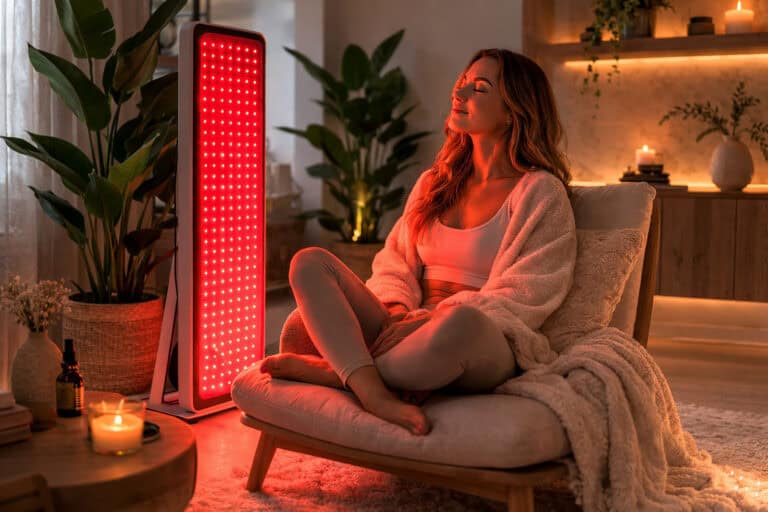
Red Light Therapy for Sleep & Circadian Rhythm

Red light therapy for sleep is getting more attention as people look for practical ways to support deeper rest, steadier evening routines, and healthier circadian rhythm patterns without relying entirely on stimulants by day and sedating habits by night. While red light therapy is not a cure for insomnia or a replacement for medical care, it may support a more calming pre-bed environment, reduce the disruptive effects of bright light exposure at night, and fit into a more consistent wind-down routine.
Your circadian rhythm is the body’s internal timing system. It helps regulate when you feel alert, when you feel sleepy, and how your hormones and recovery patterns shift across a 24-hour cycle. Sleep quality is influenced by many factors, including stress, light exposure, work schedules, device use, evening habits, and overall nervous system state. That means the question is not just whether red light therapy “works,” but how it may fit into a broader sleep-supportive routine.
On this page, we’ll look at what the evidence suggests, how red light therapy may interact with evening biology, what realistic home use looks like, and how to avoid common mistakes. If you are still comparing devices for home routines, see our best red light therapy devices buyer’s guide for a broader overview.
Build a Better Evening Routine
If you want to compare home setups before creating a sleep-focused routine, explore our red light therapy buyer’s guide →
Why sleep and circadian rhythm matter so much
Sleep is not just about getting enough hours. Good sleep depends on timing, consistency, environment, and how well your body transitions from daytime alertness into nighttime recovery. Circadian rhythm helps coordinate that shift. It influences melatonin timing, core body temperature patterns, energy levels, and the normal ebb and flow of alertness across the day.
When that rhythm gets disrupted, several problems can show up at once:
- difficulty falling asleep at a reasonable hour
- frequent waking during the night
- grogginess in the morning
- afternoon crashes and poor focus
- a “tired but wired” feeling in the evening
Modern life often works against healthy circadian signaling. Bright overhead lighting at night, screens close to bedtime, inconsistent sleep schedules, late meals, and high stress can all make it harder for the body to interpret that nighttime is actually beginning. This is why environmental light matters so much. The National Institute of General Medical Sciences explains circadian rhythms as foundational timing systems that help organize sleep and wake patterns, hormone release, and other biological functions.
From a home-use perspective, red light therapy may be most useful when it supports the transition into an evening environment that feels calmer, dimmer, and more predictable.
How red light therapy may fit into evening biology
Red light therapy usually refers to visible red wavelengths, often paired with near-infrared in many consumer devices. The science around photobiomodulation often focuses on how light may interact with cells, particularly through mitochondrial signaling and energy-related pathways. For sleep discussions, though, there is another layer: the lighting environment itself.
Exposure to bright blue-enriched light at night is generally considered more disruptive to natural sleep timing than dimmer, warmer light environments. A soft red light setting may be less likely to interfere with the body’s wind-down process than bright white light late at night. That does not automatically mean every red light therapy session improves sleep, but it helps explain why timing and context matter.

Some proposed mechanisms discussed in photobiomodulation research include:
- support for mitochondrial ATP-related processes
- cell signaling changes that may influence recovery
- possible support for microcirculation
- a more calming, low-glare evening light environment compared with harsh overhead lighting
If you want a deeper mechanism primer first, our guide on how red light therapy works at the cellular level explains the underlying biology in more detail.
It is important to keep expectations realistic. Red light therapy is better understood as a tool that may support sleep routines and circadian alignment rather than a stand-alone solution for every sleep problem.
What the research suggests about red light therapy for sleep
The current research is still developing, and study designs vary. Some studies have explored whether red light exposure or photobiomodulation may influence sleep quality, recovery, or fatigue-related measures in certain groups. The broader sleep literature also strongly supports the importance of light timing and nighttime light exposure in shaping circadian outcomes.
For example, the NCBI overview of circadian rhythm physiology describes how light cues help regulate the body’s internal clock. Meanwhile, the Cleveland Clinic’s circadian rhythm overview highlights the role of light exposure, daily timing, and habits in sleep health. These sources do not treat red light therapy as a miracle sleep fix, but they do support the idea that light environment and routine consistency matter.
There is also research interest in how light-based interventions may affect recovery and nighttime patterns, especially when compared with more disruptive evening light exposure. A practical takeaway is this: if your current nighttime routine includes bright overhead lighting, scrolling on a phone in bed, and no consistent wind-down period, introducing red light therapy into a calmer schedule may help more than the device alone.
In other words, the context may be doing part of the work. That does not diminish the value of the tool. It simply means the best results usually come from pairing it with habits that respect circadian timing.
Who may find red light therapy for sleep most useful
Not everyone is struggling with the same sleep issue. Some people need help winding down mentally. Others have inconsistent schedules, long workdays, or too much evening screen exposure. Some simply need a repeatable ritual that tells the body the workday is over.

Red light therapy for sleep may fit especially well for people who:
- want a structured evening wind-down routine
- spend late hours under bright indoor lighting
- feel mentally overstimulated at bedtime
- prefer non-pharmaceutical wellness tools
- already use red light therapy and want to time sessions more intentionally
At home, this often looks simple: a dim room, a consistent session time, reduced device use afterward, and a short buffer between the session and sleep. The goal is not to chase a dramatic immediate effect. The goal is to create a stable pattern that supports better sleep behavior over time.
People with more complex sleep concerns, significant insomnia, shift-work disruption, or suspected medical sleep disorders should not rely on a home device alone. Those situations may call for professional evaluation.
A practical home routine for using red light therapy before bed
The most useful approach is usually modest and repeatable. Instead of treating the session like a performance hack, think of it as part of your evening environment. Many people do well with a short session in the 30- to 90-minute window before bed, followed by lower light exposure and reduced stimulation.
A realistic routine might look like this:
- Turn off harsh overhead lights.
- Use your panel in a quiet, comfortable room.
- Keep the session duration moderate and consistent.
- Avoid jumping back into bright screens immediately afterward.
- Follow with a calm habit such as reading, stretching, or journaling.
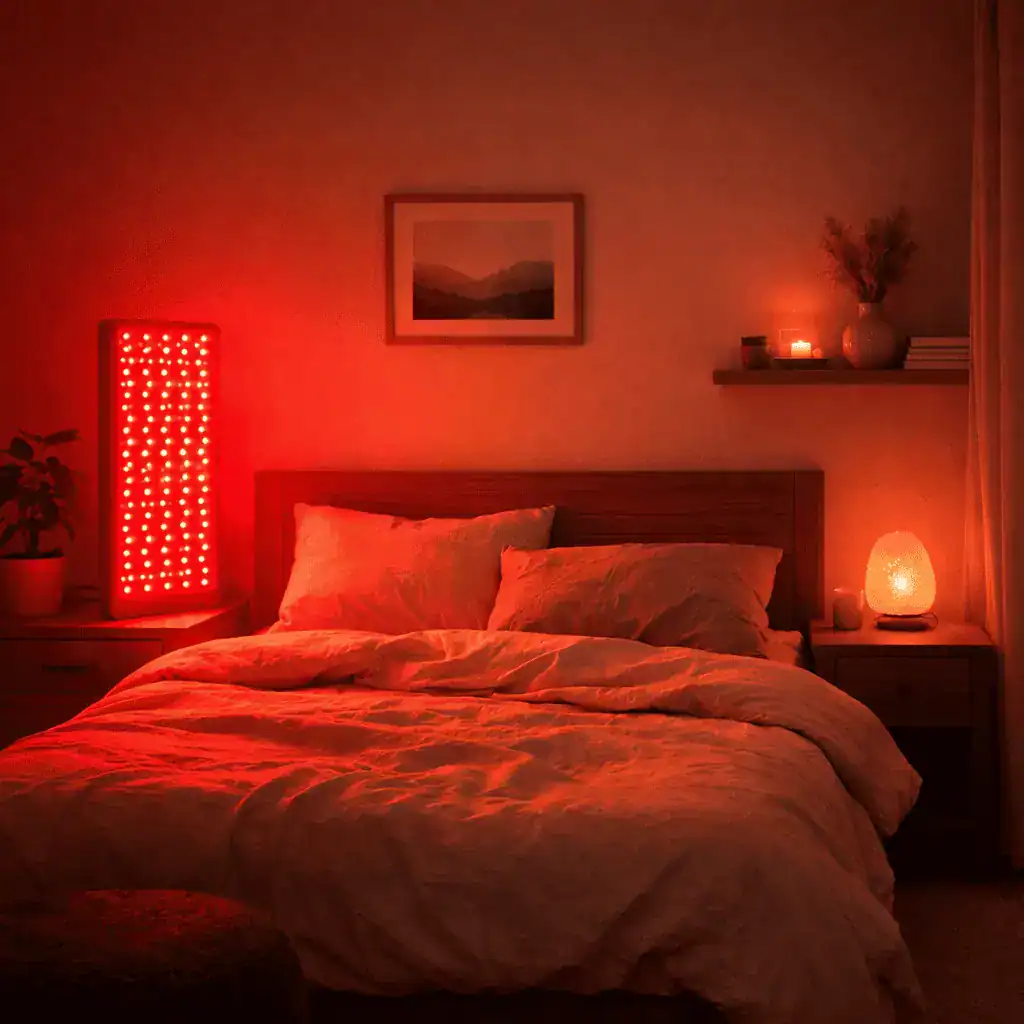
For many home users, the routine matters as much as the device. Using red light therapy while multitasking under bright ceiling lights, answering work emails, or doomscrolling is unlikely to support a strong circadian signal. The cleaner the transition from session to bedtime, the more coherent the routine becomes.
If you are new to home use, our articles on how to use red light therapy at home and session duration and frequency can help you build a more consistent setup.
Timing, brightness, and consistency are more important than “hacks”
Many people search for a single perfect number: the ideal minute count, the exact bedtime, or the one setting that guarantees sleep. In reality, better results usually come from consistency. A moderate session done regularly in a calming environment tends to make more sense than highly variable use.
Three principles usually matter most:
- Timing: Use it early enough that you can finish the session and still preserve a calm run-up to sleep.
- Environment: Keep surrounding light low and warm when possible.
- Consistency: Try to use the same general timing on most nights.
The Mayo Clinic’s sleep guidance consistently emphasizes stable routines, limiting stimulating habits before bed, and protecting the sleep environment. That broader framework fits very well with how red light therapy is most reasonably used for nighttime support.
It is also wise to avoid assuming that longer is always better. More exposure is not automatically more helpful. The sleep-supportive use case is generally about gentle consistency, not maximum intensity.
Common mistakes people make when using red light therapy for sleep
One reason some people feel disappointed is that they expect the device to overcome every other poor sleep habit. That is a tough standard for any wellness tool. Red light therapy may support sleep best when it is part of a larger system.
Common mistakes include:
- using bright room lighting during and after the session
- doing a session and then returning to stimulating screen use
- changing the timing every night
- expecting immediate dramatic results after one or two sessions
- ignoring overall sleep hygiene and stress load

Another mistake is confusing red light therapy with general red ambient lighting. They overlap in the sense that both can create a less harsh nighttime environment, but they are not exactly the same. A therapy panel is a targeted light device, while a dim bedside lamp with warm or red tones is more about the room environment. In practice, many people may benefit from both: a deliberate session, then a low-light bedroom routine afterward.
To understand where expectations often go wrong, you may also find our article on red light therapy myths and misconceptions helpful.
Sleep support is also about stress and nervous system state
Sleep problems are not always just “light problems.” They are often stress problems, schedule problems, or overstimulation problems too. Someone can have perfect blackout curtains and still struggle because their evenings are packed with work, caffeine, late-night problem solving, or a mind that never fully downshifts.

That is why red light therapy for sleep may be most valuable as part of a nervous-system-friendly routine. For example:
- a 10- to 20-minute session in dim light
- slow breathing or gentle stretching
- no work messages afterward
- cooler room temperature
- same bedtime most nights
This approach does not promise a cure. It simply aligns with how the body tends to respond to rhythm, predictability, and lower stimulation in the evening. People who also want to think through broader recovery routines can browse the Red Light Sage blog for related guides.
Safety, limitations, and when to be cautious
Red light therapy is often presented as very simple, but it still deserves careful use. Follow the manufacturer’s instructions for distance and session guidance, avoid improvising with unverified devices, and pay attention to comfort. More is not always better, especially if you are sensitive to light or feel overstimulated by late-evening exposure.
People with specific eye concerns, unusual light sensitivity, or complex medical situations should take extra care and may want professional guidance first. Our overview of how to use red light therapy safely covers broader safety considerations, and the post on contacting Red Light Sage offers a place to reach out if you want us to prioritize future safety-related guides.
It is also worth remembering that persistent sleep problems can have many causes, including sleep apnea, medication effects, anxiety disorders, depression, pain, shift work, or circadian rhythm disorders. If sleep issues are severe, ongoing, or affecting daytime function in a major way, self-experimentation should not replace medical evaluation.
How to evaluate whether your routine is actually helping
The best way to judge red light therapy for sleep is not by chasing a dramatic “wow” moment. It is by looking at patterns over a few weeks. Ask practical questions such as:
- Am I falling asleep a little more easily?
- Is my bedtime becoming more consistent?
- Do I feel calmer in the hour before bed?
- Am I reducing bright light and screen time after the session?
- Do I wake feeling slightly more stable and less scattered?
You can track a few simple markers in a notebook or sleep app:
- bedtime and wake time
- estimated time to fall asleep
- number of awakenings
- morning energy
- evening stress level

What you are really looking for is trend improvement, not perfection. Many wellness tools work best when they reinforce good behavior. Red light therapy may be one of those tools for people who respond well to routine and environmental cues.
Choosing the right home setup for a sleep-focused routine
If your main goal is a calmer evening routine, the “best” setup is not always the biggest or most intense device. It is usually the device you will use consistently, in a comfortable location, without turning the process into a hassle. Convenience matters. If setting up your panel feels like a chore, you are less likely to use it regularly.
For sleep-focused use, consider:
- whether the device fits easily in your bedroom or wellness corner
- how easy it is to run a short nightly session
- whether brightness and placement feel manageable in the evening
- whether the routine feels calming rather than activating
If you are still comparing options, our buyer’s guide to red light therapy devices is the best place to start, and our red light therapy benefits page gives broader context around recovery, skin, and general wellness use cases.
Compare Devices for Home Use
If you want a setup that fits your room, schedule, and nightly routine, review our top red light therapy device picks →
Final thoughts on red light therapy for sleep and circadian rhythm
Red light therapy for sleep makes the most sense when it is used as part of a larger circadian-friendly routine. It may help support a calmer evening environment, reduce the harshness of nighttime light exposure, and give structure to the transition from daytime productivity into nighttime recovery. But it is not a magic switch, and it works best when paired with consistent habits.
The most practical mindset is to treat it as a supportive tool. Use it consistently, keep your evenings dimmer and calmer, and pay attention to sleep timing rather than chasing instant results. Over time, that combination may support better rhythm, steadier wind-down habits, and a more intentional nighttime routine.
If you want to go deeper next, explore our science-backed benefits page, compare options in the buyer’s guide, browse the blog, or contact Red Light Sage with questions you’d like us to cover in future guides.