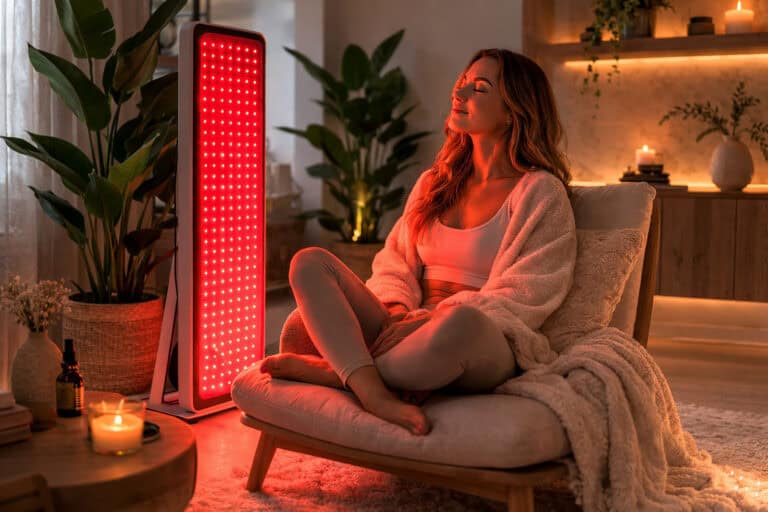
Red Light Therapy vs Infrared Therapy

When people compare red light therapy vs infrared therapy, they are usually trying to answer one practical question: are these two names describing the same thing, or two different tools? The honest answer is that they are related, but not identical. Both involve light energy, both are commonly used in home wellness settings, and both are often discussed in the same breath. But they work at different wavelengths, interact with tissue differently, and are usually chosen for different wellness goals.
Red light therapy typically refers to visible red wavelengths and often near-infrared wavelengths used in photobiomodulation devices such as panels, wraps, and targeted tools. Infrared therapy is a broader term. It may refer to near-infrared light used in wellness devices, but it can also refer to far-infrared heat used in saunas, heating pads, lamps, and other heat-based systems. That distinction matters because red light therapy is generally discussed as a light-based cellular support tool, while many forms of infrared therapy are used mainly for warming tissue and creating a heat response.
This guide breaks down the differences in simple terms: wavelengths, visibility, heat output, depth, common use cases, and which category may make more sense depending on what you are trying to support at home. For broader background, start with what red light therapy is, then compare it with the deeper mechanism discussion in how red light therapy works at the cellular level.
Choosing between device categories?
See our editorial overview of leading home-use options in the Best Red Light Therapy Devices (2026 Buyer’s Guide) →
What Red Light Therapy Usually Means
Red light therapy generally refers to the use of specific visible red wavelengths, often alongside near-infrared wavelengths, delivered by LEDs or lasers in a controlled way. In consumer wellness settings, the most common devices are LED panels, portable targeted devices, flexible wraps, masks, and full-body systems. The aim is not usually to create intense heat. Instead, the focus is on exposing tissue to light energy in wavelengths that are being studied for cellular signaling and general wellness support.
Most conversations around red light therapy center on photobiomodulation. That term describes the interaction between light and biological tissue, especially in relation to cellular energy production, signaling pathways, and tissue response. If you are new to the science vocabulary, our guide to red light therapy wavelengths explains why wavelength selection matters so much more than simply whether a device “looks red.”
In practice, red light therapy is often chosen by people who want support for routines involving skin appearance, recovery, consistency, general vitality, or structured wellness sessions at home. It is usually lower-heat, more targeted, and more dependent on wavelength quality and distance from the device than traditional heat-focused tools.
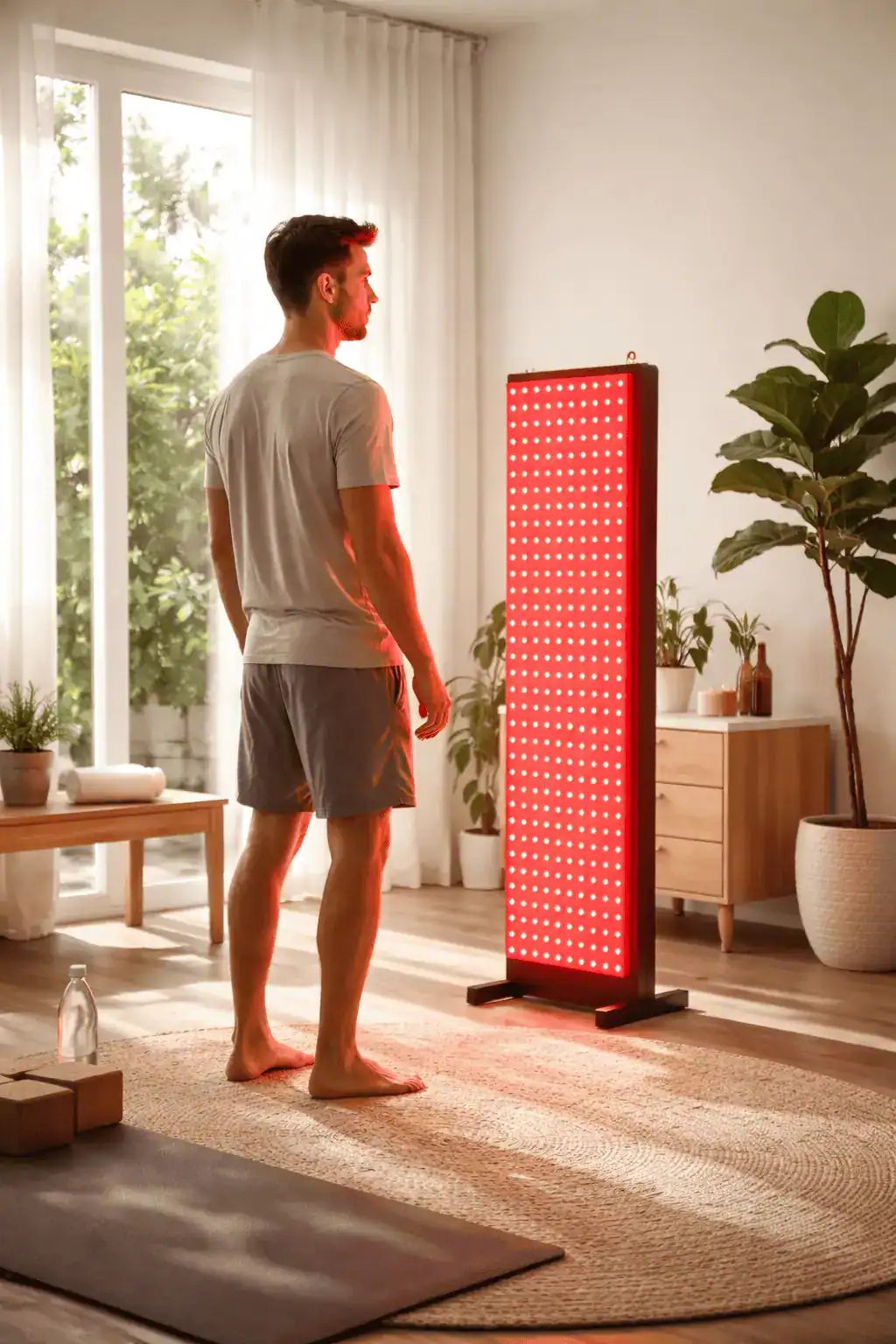
What Infrared Therapy Usually Means
Infrared therapy is a broader umbrella term. Infrared light exists beyond the visible red portion of the spectrum, so you cannot see it in the same way you see red light. Within wellness products, “infrared therapy” may refer to several different categories:
- Near-infrared: often included in red light therapy devices and discussed in photobiomodulation.
- Mid-infrared: less common in consumer wellness discussions.
- Far-infrared: commonly associated with warming systems, infrared saunas, heating pads, and heat-oriented recovery tools.
This is why the phrase can be confusing. Some brands use “infrared therapy” to describe a light-based device that overlaps heavily with red light therapy. Others use it to describe a heat-based product designed primarily to warm the body. So when comparing red light therapy vs infrared therapy, the first step is always to ask: which part of the infrared spectrum are we talking about, and is the device meant for light exposure or for heat?
That one distinction prevents most consumer confusion. Near-infrared can live inside the red light therapy category. Far-infrared usually belongs to a different category altogether because the user experience, tissue interaction, and expected goals are different.
Visible Red vs Near-Infrared vs Far-Infrared
The clearest way to understand the difference is by separating the spectrum into three practical buckets:
- Visible red light: you can see it. It is often discussed for surface and near-surface applications, especially where skin-facing exposure is involved.
- Near-infrared light: invisible to the eye, but often included in red light therapy systems. It is commonly discussed as reaching deeper tissue than visible red.
- Far-infrared: typically experienced as radiant warmth or heat rather than as a direct visible light treatment.
That means a red light therapy panel may actually emit both visible red and near-infrared wavelengths. Meanwhile, an infrared sauna may emit far-infrared energy and create a very different session experience focused on warming the body. Both are “light-related” technologies in a broad physics sense, but from a user perspective they can feel like entirely different tools.
The wavelength choice changes the delivery style, target depth, and sensation. Red and near-infrared devices are commonly used with timed exposure and set distances. Far-infrared systems are more often described in terms of heating time, sweat response, and full-body warmth. That is why these categories should not be used interchangeably without context.

One of the Biggest Differences Is Heat
Many people expect any infrared product to feel hot. That expectation is one of the fastest ways to misunderstand red light therapy. A red light therapy device may feel slightly warm during use, especially a large panel placed close to the body, but its main purpose is generally not to deliver strong heat. The session is usually based on light exposure rather than a sweating or heating experience.
By contrast, many far-infrared tools are explicitly designed to warm tissue or create a gentle heating environment. That can make them feel more intuitive to people who already associate heat with relaxation and recovery. But the presence of heat does not automatically mean the device is doing the same job as a red light therapy panel.
So a practical shorthand is this:
- Red light therapy: usually light-first, heat-secondary.
- Far-infrared therapy: usually heat-first.
If your main expectation is “I want to feel warmth,” you may be thinking more about infrared heat therapy than classic red light therapy. If your main expectation is “I want a structured light exposure routine,” you are probably closer to the red light therapy category.
How the Two Approaches Interact with the Body
Red light therapy is typically discussed through the lens of photobiomodulation. In simple terms, researchers study how specific wavelengths of light may interact with cells, including mitochondrial function, nitric oxide signaling, and tissue-level communication pathways. This is why discussions of red light therapy often focus on consistent sessions, wavelength accuracy, irradiance, and distance from the device.
Infrared heat therapy, especially far-infrared, is more often discussed in terms of thermal effects. The body experiences warmth, local circulation changes, and a general heat response. That makes it useful for people who prefer a soothing, heat-oriented routine. But it is not the same mechanism profile commonly discussed with red and near-infrared photobiomodulation.
There can be overlap. Some devices combine visible red and near-infrared light. Some consumers casually call all of them “infrared.” But from an educational standpoint, it is better to separate cell-signaling light therapy from heat-based infrared therapy whenever possible.

Common Home Wellness Use Cases
People are often not choosing between abstract technologies. They are choosing between routines. Here is how the categories are commonly approached in home settings:
Red light therapy is often chosen for:
- skin-focused wellness routines
- post-workout recovery sessions
- daily or near-daily structured consistency
- targeted exposure for smaller body areas
- full-body panel sessions without sauna-style heat
Infrared heat therapy is often chosen for:
- whole-body warming
- heat-based relaxation routines
- sauna sessions
- warming muscles before or after movement
- people who enjoy a more obvious sensory response during use
This is why product selection depends so much on the user’s goal. Someone looking for a compact home panel for regular light sessions may not want a heat-heavy environment. Someone who loves sauna routines may prefer the full-body warming feel of far-infrared tools. One is not universally “better.” They are simply better matched to different preferences.

How Device Type Changes the Experience
The device itself tells you a lot about whether you are looking at red light therapy or a broader infrared therapy product. Panels, masks, belts, wraps, and targeted LED tools usually belong to the red light therapy conversation. Infrared saunas, heated mats, and warming systems usually belong to the infrared heat conversation.
That distinction matters because setup, session time, room requirements, and total cost can vary a lot. A panel may fit in a bedroom, office, or gym corner and support short, repeatable sessions. A heat-based infrared system may require dedicated space, longer session planning, and a different style of recovery routine.
If you are comparing actual device categories, our best red light therapy panels for home use guide can help you visualize the panel-based side of the category. You can also browse the full Red Light Sage blog for practical explainers on setup, frequency, and use cases.
Need help narrowing your options?
Compare device styles, sizes, and intended use cases in our editorial Buyer’s Guide →
Which One Is Better Depends on the Goal
When consumers ask which is better, the better question is: better for what? A red light therapy panel may be the stronger fit if you want precise wavelength-based sessions, lower-heat use, and a device that fits into a regular home wellness habit. Infrared heat therapy may be the stronger fit if you care more about warmth, a sauna-like experience, or a general feeling of heat and relaxation.
There is also a third possibility: some people use both categories at different times. They may use red and near-infrared light for structured sessions, and separately use heat-based tools for relaxation or warming. That is not necessary for everyone, but it helps explain why the terms often overlap in everyday conversation.
What matters most is not marketing language. It is understanding whether the device is delivering targeted light exposure, heat exposure, or a combination of both. Once that is clear, the category becomes much easier to evaluate realistically.

What to Look for Before You Buy
If you are shopping the red light category, focus on factors like wavelength transparency, device size, treatment area, irradiance information, recommended session distance, and whether the device includes both red and near-infrared output. If you are shopping an infrared heat product, focus more on heating style, comfort, space needs, and whether the experience matches your daily routine.
Here are a few practical questions to ask before buying either type:
- Do I want light exposure, heat exposure, or both?
- Will I use this in short daily sessions or longer dedicated sessions?
- Am I targeting a small area or a full-body routine?
- Do I have the space for the device style I am considering?
- Do I prefer a low-maintenance plug-in panel or a larger recovery setup?
If you are still in the early stage, the safest path is to learn the basics first. Our pages on red light therapy benefits and contacting Red Light Sage are good next stops if you want either foundational education or a way to reach out with editorial questions.
What the Research Suggests Without Overpromising
Research on photobiomodulation has explored topics such as mitochondrial function, circulation-related signaling, skin-facing applications, recovery, and circadian-related timing. That does not mean every device performs the same way, or that every marketing promise is supported equally. The evidence base is broad, but consumers still need to separate carefully designed light devices from vague claims.
Infrared heat research is different because it often examines thermal responses, comfort, circulation-related effects, and heat exposure rather than the narrower wavelength-and-dose questions more typical in photobiomodulation. This is another reason why “red light therapy” and “infrared therapy” should not automatically be treated as interchangeable phrases.
For readers who want authoritative background reading, these sources are useful starting points:
- PubMed for photobiomodulation and wavelength-specific research
- PubMed Central for free full-text research articles
- Cleveland Clinic for patient-friendly health education
- Mayo Clinic for general wellness and medical context
At Red Light Sage, the safer editorial takeaway is simple: red light therapy and infrared therapy overlap in some areas, but they are not the same category in every context. The more specific you are about wavelength and device design, the more useful the comparison becomes.

Frequently Asked Questions About Red Light Therapy vs Infrared Therapy
Is red light therapy the same as infrared therapy?
No. Red light therapy is usually a more specific category centered on visible red and often near-infrared wavelengths used in photobiomodulation devices. Infrared therapy is a broader umbrella that may include near-infrared light but also far-infrared heat-based tools.
Does infrared therapy always feel hot?
Not always. Near-infrared used in some light therapy devices may not feel strongly hot. But many far-infrared products are designed around warmth and a heat-based session experience.
Is near-infrared part of red light therapy?
Often, yes. Many red light therapy devices combine visible red and near-infrared wavelengths in the same panel or system. That is one reason people confuse the categories.
Which is better for home use?
That depends on whether you want a light-based routine or a heat-based routine. Panels and targeted devices usually fit users looking for structured light sessions. Heat-oriented infrared systems fit users who prefer warmth and sauna-style comfort.
Final Takeaway
The simplest way to understand red light therapy vs infrared therapy is this: red light therapy is usually a more precise wavelength-based light category, while infrared therapy is a broader term that can include both near-infrared light and far-infrared heat. They overlap, but they are not always the same thing in practice.
If you want low-heat, repeatable sessions built around light exposure, red light therapy is usually the clearer fit. If you want a warming experience and heat-based relaxation, far-infrared products may make more sense. And if you are evaluating home devices, the best next step is to compare the real category of the product rather than relying on broad marketing language alone.
Continue your research with our Buyer’s Guide, review the science-focused Benefits page, browse more explainers in the blog, or contact Red Light Sage with editorial questions.