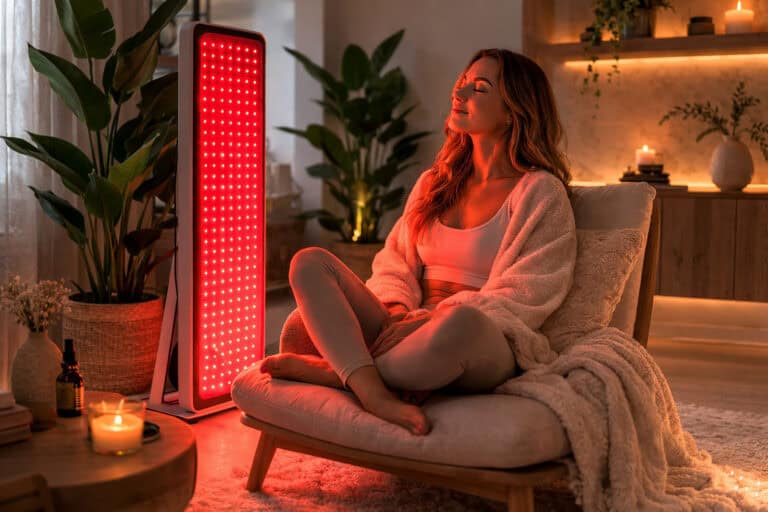
PlatinumLED BIOMAX Review

PlatinumLED BIOMAX Review: A Powerful Full-Body Panel With Advanced Controls
The PlatinumLED BIOMAX line has become one of the better-known names in the home red light therapy category because it combines strong output, a multi-wavelength design, and more user control than many entry-level panels. In this PlatinumLED BIOMAX review, the goal is not to make medical promises or hype the device as a miracle tool. Instead, this review looks at what home users usually care about most: coverage, setup, ease of use, daily practicality, spectrum design, and whether the BIOMAX feels like a serious long-term purchase rather than a novelty device.
According to PlatinumLED’s official BIOMAX materials, the series uses a multi-band red and near-infrared setup with independently controlled red and NIR arrays, plus separate control over blue light on supported models. The company also highlights wavelengths including 630nm, 660nm, 810nm, 830nm, 850nm, and 1060nm as part of the BIOMAX spectral design, with digital dimming controls for the red and near-infrared channels and modular expansion across larger setups. Official BIOMAX specifications and the brand’s BIOMAX FAQ are the right place to confirm the current version details for any specific model size.
For many shoppers, the real question is simple: does this feel like a panel built for consistent home use? In many cases, yes. The BIOMAX is best understood as a premium home panel system for users who want more than a compact skincare light but are not necessarily shopping for a clinic-only setup. It is especially relevant for people comparing premium home panels in our Buyer’s Guide to the best red light therapy devices or our roundup of the best red light therapy panels for home use.
Compare before you buy
Want to see where this panel fits in the bigger market? Review our full device buyer’s guide →
Who the PlatinumLED BIOMAX Is Really For
The BIOMAX line sits in the upper part of the home-use market. It is not the cheapest way to get started with red light therapy, and it does not really try to be. Instead, it appeals to buyers who want a stronger wall-mounted or stand-mounted panel system with enough output and treatment area to support a more serious at-home routine.
That makes it a better fit for users who think in terms of systems rather than gadgets. If you want a device for occasional face-only use at a bathroom counter, a smaller tabletop unit may feel easier and more proportionate. If you want a panel that can support face, torso, back, legs, or broader recovery-oriented sessions in a dedicated space, the BIOMAX makes more sense.
Typical good-fit buyers include:
- home users building a dedicated wellness corner
- people who want stronger coverage than a compact desktop panel can provide
- users interested in both red and near-infrared exposure in one device
- shoppers who value advanced controls and modular upgrade paths
- people willing to spend more upfront for a long-term home setup
It is less ideal for someone who wants ultra-portable use, very low-cost entry, or a tiny device to tuck into a drawer. The BIOMAX footprint, mounting choices, and power orientation all signal that this is meant to stay in place and become part of a repeated home routine.
Why the BIOMAX Spectrum Design Gets Attention
One reason the BIOMAX line is so frequently compared against other premium panels is its broader wavelength strategy. PlatinumLED states that the BIOMAX series uses multiple red and near-infrared wavelengths, including 630nm and 660nm in the red range plus 810nm, 830nm, 850nm, and 1060nm in the near-infrared range, with a separate blue-light channel on the current BIOMAX product page. PlatinumLED’s product page and FAQ both describe this multi-wavelength positioning.
That matters because red light therapy shoppers often compare devices not just on size, but on how thoughtfully they cover the visible red and near-infrared ranges most commonly discussed in the literature. Research reviews on photobiomodulation generally focus on wavelength, dose, irradiance, and treatment consistency as meaningful factors when interpreting outcomes, rather than treating all light devices as interchangeable. PubMed photobiomodulation reviews consistently reflect that nuance.

From a practical buying perspective, a broader spectrum does not automatically mean “better results” for every person. But it can mean a panel is designed to cover more use cases and user preferences without forcing you into a single narrow use profile. That is part of the BIOMAX appeal. It feels engineered for the buyer who wants a more complete system rather than a simple beauty-light accessory.
Controls and Daily Use Experience
The BIOMAX line stands out because it gives users more control than many budget panels. PlatinumLED says BIOMAX models allow independent dimming of red and near-infrared output from 0% to 100%, which is useful for people who want to customize session feel, distance, or intensity according to comfort and routine design. The official product page highlights those independent channel controls directly.
In real home use, that kind of control matters more than many first-time buyers realize. A device can look impressive on paper, but if it feels harsh at close distance, inconvenient to position, or awkward to adapt across different body areas, it may end up used less often. A panel like the BIOMAX can support more experimentation with placement and intensity, which may help users create a routine they can actually stick with.
Examples of practical control benefits include:
- lowering output when treating closer facial areas
- adjusting the session feel for evening routines
- using different intensity preferences for localized vs broader exposure
- building a gradual ramp-up routine for new users
This does not turn the BIOMAX into a medical device for self-treatment decisions. It simply makes the panel more adaptable, and that flexibility is one of the strongest arguments in its favor.
Coverage, Placement, and Setup Practicality
Coverage is where premium panels start to separate themselves. A BIOMAX panel is not just about raw brightness. It is also about how much of the body you can realistically cover in one session and how easily you can position the device for repeated use. That matters for people who want broader torso exposure, back sessions, leg coverage, or a more efficient full-body-style routine.
PlatinumLED markets the BIOMAX family in multiple sizes and also promotes modular expansion, which can matter for users who start with one panel and later want a larger system. The BIOMAX product range is designed around that scalability concept.

In practical terms, buyers should think about:
- whether they have dedicated wall or stand space
- how often they will move the unit
- whether the intended treatment zone is face-only, half-body, or broader
- if they want a single panel now but the option to expand later
- how close the panel will sit to furniture, outlets, and walking space
The BIOMAX is best in a setup where you can approach it intentionally. A home office corner, wellness room, spare room wall, or home gym makes more sense than a cramped temporary location. If you have no clear spot for it, a smaller panel may be the more realistic purchase.
What Users Can Reasonably Expect From a BIOMAX Panel
Red light therapy is often marketed with overly broad promises, so it helps to set realistic expectations. Cleveland Clinic describes red light therapy as an emerging treatment area that shows promise for concerns such as wrinkles and other skin-related applications, while also noting that more research is still needed. Cleveland Clinic’s overview of red light therapy uses that cautious framing, and that is the right lens for evaluating any home device.
With a device like the BIOMAX, what people usually notice first is not a dramatic overnight transformation. More often, the appeal is that the panel supports a repeatable routine. Home users tend to value:
- a premium feel and stronger presence than compact devices
- the ability to cover more surface area efficiently
- a more structured wellness ritual
- better consistency because the setup feels purposeful and permanent
What you should not expect is guaranteed symptom resolution, disease treatment, or identical results across all users. Session distance, frequency, skin tone, body area, device positioning, and overall consistency all shape the experience. The BIOMAX may support a strong home routine, but it is still a home wellness device rather than a cure-all.
Common Use Cases: Skin, Recovery, and General Wellness Routines
The BIOMAX line tends to attract buyers who want one panel for multiple routine categories instead of a single-purpose device. Because the brand combines red and near-infrared output, it can appeal to users interested in visible-light skin-focused routines as well as deeper-tissue-oriented wellness framing.

Common home-use patterns include:
- skincare routines: especially for buyers interested in noninvasive at-home support for overall skin appearance and texture
- post-workout use: as part of a broader recovery ritual that may include stretching, hydration, and rest
- morning energy routines: as part of a structured home wellness habit
- general full-body use: for people who want broader coverage than compact spot devices provide
Cleveland Clinic notes that LED light therapy is generally considered noninvasive, though not appropriate for everyone and still worth discussing with a healthcare professional when personal risks or medications are involved. Their LED light therapy overview is useful context for setting expectations conservatively.
If your main goal is skin-oriented use, you may also want to compare this device against the products featured in our best red light therapy devices for skin and anti-aging roundup. If your main priority is broader coverage and room presence, BIOMAX usually compares more naturally against other larger panel systems.
How BIOMAX Compares With Smaller and Budget-Friendly Panels
The simplest way to think about the BIOMAX is this: it is usually not the panel people buy when they want the cheapest acceptable option. It is the panel people buy when they already believe they will use red light therapy regularly and want a more capable setup from the beginning.
Compared with smaller or budget panels, the BIOMAX typically offers:
- broader treatment coverage
- more advanced channel control
- a more premium system feel
- better suitability for dedicated home placement
- more scalability if you later want a larger setup
On the other hand, smaller devices can still win on convenience, cost, storage, and portability. That is why value depends on buyer type. A person who uses a small device daily may get more practical value from it than a person who buys a premium BIOMAX and rarely turns it on.
That is also why comparison shopping matters. If you are still deciding whether premium output and broader coverage are worth the extra cost and footprint, see our budget red light therapy device roundup and our home panel comparison guide before choosing a direction.
Still comparing panel categories?
See the broader lineup in our best red light therapy panels for home use →
Pros and Cons of the PlatinumLED BIOMAX
Every premium panel has tradeoffs. The BIOMAX earns attention for good reasons, but it is not perfect for every shopper.
Pros
- strong brand recognition in the premium home panel category
- multi-wavelength red and near-infrared design
- independent red and NIR dimming controls
- larger-panel orientation that supports broader coverage
- modular ecosystem appeal for users who may expand later
- good fit for committed home users building a dedicated routine
Cons
- higher commitment than compact beginner devices
- requires more space and setup planning
- may be more panel than casual users need
- premium-category pricing can be hard to justify for uncertain buyers
- larger systems are less convenient to move or store
The key question is not whether the BIOMAX is “good” in isolation. It is whether its strengths line up with your actual habits, space, and budget. For the right user, it can feel like a worthwhile upgrade. For the wrong user, it can feel oversized and underused.
Safety, Setup Caution, and Smart Buying Considerations
Before buying a premium panel, it helps to remember that more power and more coverage do not eliminate the need for careful use. Cleveland Clinic notes that LED light therapy is generally safe, but it is still wise to understand the device instructions, your skin sensitivity, your eye-safety practices, and whether you take medications or have conditions that could make light exposure a concern. Their overview of LED light therapy is a useful high-level reference.

Smart buying questions include:
- Do you have space for the panel and any stand or mounting system?
- Will you actually use a larger device consistently?
- Are you buying for face-only use when a smaller unit might be enough?
- Do you value advanced controls enough to pay for them?
- Are you comfortable following the brand’s instructions for distance, timing, and setup?
Buyers should also separate scientific evidence from manufacturer marketing. Official product pages are helpful for dimensions, control features, wavelength claims, and accessories, but they should not be treated as independent proof of broad health outcomes. That is why Red Light Sage keeps scientific framing conservative and points readers to broader educational resources like our science-backed benefits page.
Frequently Asked Questions About the PlatinumLED BIOMAX
Is the PlatinumLED BIOMAX good for full-body use?
It can be a strong option for broader home use compared with smaller spot-treatment devices, especially in the larger panel sizes. Whether it feels truly “full-body” depends on the exact model, how you position it, and whether you want single-session broad coverage or are comfortable rotating body areas.
Is the BIOMAX better than a budget red light therapy panel?
It may be better for users who want more output, more control, and a more permanent home setup. It is not automatically better for casual buyers, small-space users, or people who mainly want a lower-cost entry point.
Does the BIOMAX use both red and near-infrared light?
Yes. PlatinumLED says the BIOMAX line includes multiple red and near-infrared wavelengths, with independent digital control over red and NIR channels. Always confirm the exact model details on the current official product page before purchasing.
Is PlatinumLED BIOMAX a good beginner device?
It can be, but only for a beginner who already knows they want a larger premium panel and has space for it. Many true beginners may find a smaller device easier to fit into their routine.
Our Verdict: Is the PlatinumLED BIOMAX Worth Considering?
The BIOMAX is worth serious consideration for home users who want a premium red light therapy panel with meaningful coverage, broader spectrum positioning, and stronger control options than many entry-level alternatives. Its appeal comes less from flashy branding and more from the fact that it is built like a system for repeated home use.
The strongest reasons to consider it are its multi-wavelength design, premium category presence, independent channel dimming, and suitability for a dedicated room or home wellness corner. The biggest reasons to hesitate are cost, size, and the reality that a large premium panel only makes sense if you will use it consistently.
If your goal is a serious home panel that can anchor a broader routine, the BIOMAX deserves its place on the shortlist. If your goal is just to experiment with red light therapy at the lowest possible barrier, there are simpler options that may fit better.
Conclusion and Next Steps
In the end, the PlatinumLED BIOMAX is best viewed as a premium home red light therapy panel for buyers who want coverage, flexibility, and a more permanent setup. It is not the lightest, cheapest, or simplest path into the category, but it can make sense for users who want a system they can grow into and keep using over time.
If you are comparing premium panels, the smartest next step is to place the BIOMAX side by side with similar category options, then match the device to your room, routine, and budget rather than buying on brand familiarity alone.
For broader comparisons, browse our Red Light Sage blog, revisit our buyer’s guide, or contact Red Light Sage if you want help deciding which device style fits your home setup best.