Red Light Therapy for Eye Health: Is It Safe and Effective?

👁️ Red light therapy is often praised for its skin, sleep, and recovery benefits—but what about its impact on your eyes and vision? Many users wonder if shining red or near-infrared light near the face could pose a risk to sensitive ocular tissues. Others have read emerging studies suggesting it might actually improve retinal health.
In this guide, we’ll explore the science, safety, and practical use of red light therapy for eye health, separating fact from fiction and showing you how to protect your eyes while still reaping the benefits of light-based wellness.
For an overview of the best at-home light therapy panels, see our 2025 Buyer’s Guide.
🔬 How Red Light Interacts with the Eyes
Red and near-infrared light—especially in the 600–850 nm wavelength range—is known to penetrate human tissue and trigger cellular activity known as photobiomodulation. When light enters the eye, it interacts with the retina and photoreceptor cells, potentially influencing mitochondrial function and oxidative balance.
According to PubMed studies, certain low-intensity red light exposures may enhance ATP production in retinal cells, supporting energy metabolism and resistance to stress. However, excessive or improperly directed light can cause discomfort or temporary sensitivity—especially if the device lacks proper diffusion or wavelength control.
In short: red light isn’t inherently dangerous to the eyes, but like any bioactive therapy, it must be used with care and within the right dosage window.

📚 What the Research Says
Emerging evidence from studies in the National Institutes of Health (NIH) database shows that controlled red light exposure at around 670 nm can improve mitochondrial function in aging retinal cells, potentially aiding in conditions like age-related macular degeneration (AMD).
In one notable trial, participants exposed to 3 minutes of 670 nm light daily for two weeks showed measurable improvements in color contrast sensitivity and overall retinal energy metabolism. This suggests a potential protective or restorative effect—though more large-scale studies are needed.
That said, experts caution against direct, prolonged, or high-intensity exposure to the eyes. Always choose medical-grade devices that have been tested for ocular safety and avoid staring directly into LEDs.
🛡️ Safe Red Light Therapy Practices for Eye Health
To enjoy the benefits of red light therapy without risking discomfort or retinal stress, follow these safe usage tips recommended by clinical sources and device manufacturers:
- ✅ Use approved wavelengths: Stick to 630–670 nm or 810–850 nm for balanced penetration and safety.
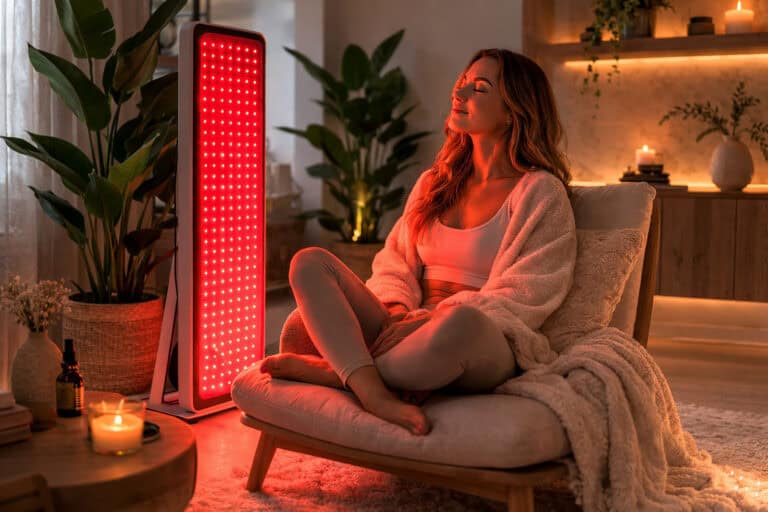
- 😎 Protect your eyes: Wear lightly tinted protective eyewear or simply keep eyes closed during facial sessions.
- ⏱️ Keep sessions short: 5–10 minutes per area is sufficient for most home panels.
- 📏 Maintain safe distance: 12–18 inches from the light source is generally ideal.
- 🩺 Consult your eye care provider: Especially if you have retinal disease, diabetes-related eye conditions, or photosensitivity.
For more safety guidelines and practical setup tips, visit our Red Light Therapy Benefits page.
👓 When Red Light Therapy Might Help Vision

While research is still early, certain studies show that red light exposure can improve visual performance in aging adults by re-energizing sluggish mitochondria in retinal cells. This process can support:
- 🧠 Enhanced contrast sensitivity and depth perception
- 🔋 Improved energy metabolism in retinal tissue
- 🧬 Reduced oxidative stress and inflammation
- 🌅 Better adaptation to dim lighting environments
For most users, this doesn’t mean “vision correction,” but rather a subtle enhancement in visual comfort and clarity. The benefits are most evident with consistent, short daily sessions over several weeks.
According to recent data published in PubMed, older adults experienced up to a 20% increase in contrast sensitivity following two weeks of low-level red light exposure—without adverse effects. These results suggest that red light therapy could play a supportive role in maintaining ocular energy balance as we age.
🚫 Who Should Avoid Red Light Therapy for Eyes
Though generally safe when used properly, red light therapy may not be suitable for everyone. Exercise caution or avoid usage entirely if you fall into any of the following categories:
- ⚕️ Individuals with active retinal diseases or ongoing ophthalmic treatments (e.g., laser therapy).
- 💊 Users on medications that cause photosensitivity (certain antibiotics, acne treatments, or SSRIs).
- 🔦 People with history of eye surgery or implants, unless cleared by a professional.
- 👶 Children or pregnant individuals, due to limited safety data.
When in doubt, consult your optometrist or ophthalmologist before starting light therapy. They can help you determine whether red light exposure is appropriate for your specific eye health profile.
For broader safety discussions—including full-body and facial usage—see our detailed guide: Red Light Therapy Safety: What You Need to Know.
💡 Choosing a Safe Red Light Device
Not all light therapy devices are created equal. When your goal includes facial or periorbital exposure, device safety and calibration matter. Look for panels or masks that specify ocular safety testing and low flicker rates.
✅ Features to prioritize include:
- Wavelengths between 630–670 nm and/or 810–850 nm.
- Adjustable intensity or dimming controls.
- Built-in diffusion layers to reduce glare.
- Manufacturer data on irradiance levels (mW/cm²).
For example, several top-rated devices in our 2025 Red Light Device Roundup include certified safety ratings and optional eye protection accessories.
Remember: you should never feel pain, glare, or eye fatigue during or after red light therapy. If you do, stop and reassess your setup distance or intensity level.
🛍️ Recommended Red Light Panels (Eye-Safe Options)
This section contains affiliate links. We may earn a commission at no cost to you.
Here are two trusted brands that offer high-quality, eye-safe red light therapy panels suitable for home use:
- Joovv Solo 3.0 — FDA-registered, clinically tested wavelengths, and optimized diffusion for facial treatments.
- Platinum LED BIO Series — Delivers balanced 660 nm and 850 nm light with adjustable intensity and medical-grade build quality.
Both brands provide optional eye protection goggles and clearly publish irradiance data—key indicators of trustworthy engineering. You can also check our contact page if you have questions about which model suits your home setup best.

❌ Common Myths About Red Light and Eye Safety
Because red light therapy devices emit visible light, it’s easy to assume they might harm your eyes like staring into the sun—but this is a misconception. Here’s the truth behind the most common myths:
- Myth #1: “Red light therapy damages the retina.” — ✅ False. Clinical studies show that controlled 670 nm light can actually support retinal metabolism when used properly.
- Myth #2: “You must wear blackout goggles.” — ⚠️ Not necessarily. Gentle exposure with eyes closed is often sufficient; goggles add comfort but aren’t always required.
- Myth #3: “Any red light device is safe for the eyes.” — 🚫 False. Safety depends on irradiance levels, diffusion, and wavelength calibration.
Always rely on device-specific safety data and evidence-based guidelines rather than marketing claims. The goal is balance—stimulate, not strain, the eyes.
🧑⚕️ What Experts Recommend
Eye specialists generally agree that red light therapy can be safe when used responsibly. The key factors are wavelength, exposure duration, and user awareness.
Dr. Glen Jeffery of University College London, a leading researcher in photobiomodulation, found that brief daily exposure to 670 nm light may help rejuvenate declining mitochondrial activity in aging retinas. His work, published in peer-reviewed studies, supports cautious optimism while stressing the need for standardized dosimetry.
Clinicians also remind users that light intensity matters. Devices built for full-body sessions are often too strong for the delicate ocular region, so it’s best to use low-irradiance settings or diffused light masks specifically intended for facial use.
🧾 Quick Recap: Eye-Safe Red Light Checklist
- 🔴 Use wavelengths between 630–670 nm or 810–850 nm.
- ⏲️ Limit exposure to 5–10 minutes per area.
- 😎 Keep eyes closed or wear tinted eyewear during sessions.
- 📏 Stay 12–18 inches from the panel or wand.
- 🧴 Choose certified, medical-grade devices only.
Following these basic guidelines ensures you get the restorative benefits of red light therapy while keeping your vision fully protected.
For more insights on how light therapy affects overall wellness, explore our Red Light Sage Blog Index for all science-backed articles.

❓ Frequently Asked Questions
Is red light therapy safe for my eyes?
Yes—when used correctly. Low-level red or near-infrared light (≤10 mW/cm²) is generally considered safe. Avoid staring directly at LEDs and follow manufacturer guidelines.
Can red light therapy improve vision?
Some early research suggests it may enhance contrast sensitivity and mitochondrial function in aging eyes. However, it does not correct refractive errors like nearsightedness or astigmatism.
Do I need special goggles?
Protective eyewear is optional for most facial devices. If you feel discomfort or use high-intensity panels, wear lightly tinted glasses or keep eyes closed during sessions.
Can I use red light therapy after cataract surgery?
Consult your ophthalmologist first. Post-surgical tissues are more sensitive to light and may require a longer healing period before safe exposure.
🌟 The Bottom Line
Red light therapy offers exciting potential for supporting ocular energy balance and visual health—but it’s not risk-free. Used responsibly, it can complement traditional eye-care routines, helping to sustain mitochondrial vitality and reduce oxidative stress over time.
Always remember: more light is not better light. Stick with safe intensities, limit exposure duration, and consult a trusted eye-care professional before experimenting with any new therapy near your eyes.
✨ For science-backed product picks, practical guides, and ongoing research updates, visit our Red Light Sage Home Page and stay informed on every wavelength of wellness.