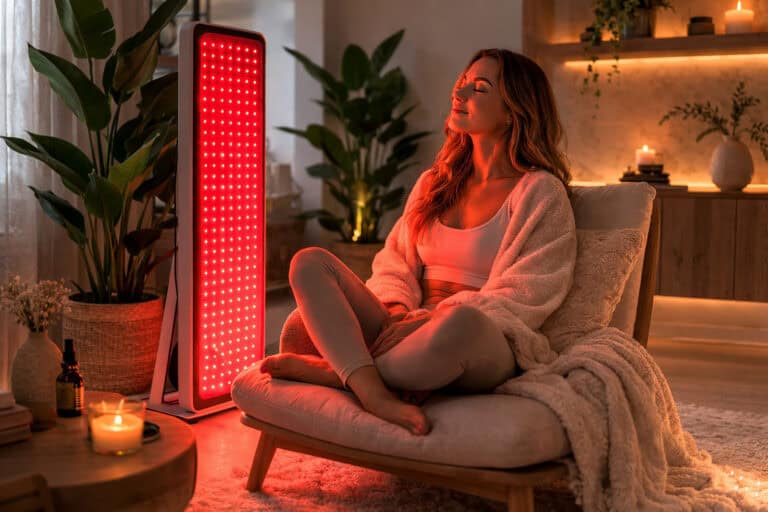
Mito Red Light MitoADAPT Review

Mito Red Light MitoADAPT Review
This Mito Red Light MitoADAPT review looks at one of the more feature-rich panel systems currently on the market. Instead of offering a simple two-wavelength, one-button experience, the MitoADAPT 4.0 series is positioned as a highly configurable platform with eight listed peak wavelengths, multiple sizes, touchscreen controls, Bluetooth app compatibility, and eleven possible operating modes. According to Mito Red’s official product page, the line starts with the targeted MIN 4.0 at $549 and scales up to large multi-panel full-body arrays. [oai_citation:0‡Mito Red Light](https://mitoredlight.com/products/mitoadapt-series?srsltid=AfmBOorsyJO_nLMEd_UNfcZmnYYFHrsNpF-IgdRsMVJJ4sVyX1xnMJo0)
The core question for buyers is not whether the MitoADAPT has plenty of features. It clearly does. The real question is whether those features make practical sense for your routine, space, and budget. A simple panel can be easier for beginners. A more configurable panel can be more appealing for users who want broader wavelength coverage, app controls, and the option to move from targeted sessions to larger full-body setups over time. That is where this review focuses: real-world fit, not hype.
At a high level, photobiomodulation is generally described in the medical literature as the use of red and near-infrared light to influence cellular processes, with research commonly discussing mitochondrial signaling, ATP-related activity, and downstream effects that may vary by protocol and target tissue. The evidence base is promising in some categories, but it is still protocol-sensitive and not a magic shortcut. [oai_citation:1‡PubMed](https://pubmed.ncbi.nlm.nih.gov/38309304/?utm_source=chatgpt.com)
Compare the bigger picture
Before choosing one premium panel line, compare it against the site’s broader recommendations in our Best Red Light Therapy Devices (2026 Buyer’s Guide) →
What the MitoADAPT 4.0 actually is
The MitoADAPT 4.0 is not a single device. It is a panel family. Mito Red lists six main purchase configurations on the official product page: the MIN 4.0, MID 4.0, MAX 4.0, MID + MAX bundle, 2x MAX bundle, and 2x MID + MAX bundle. The smallest model is intended for targeted use, while the larger bundles move into half-body and full-body coverage. [oai_citation:2‡Mito Red Light](https://mitoredlight.com/products/mitoadapt-series?srsltid=AfmBOorsyJO_nLMEd_UNfcZmnYYFHrsNpF-IgdRsMVJJ4sVyX1xnMJo0)
That matters because many buyers talk about a device line as if every version performs the same in practice. They do not. A targeted panel used on a desk or bathroom counter creates a very different ownership experience than a tall body panel on a stand. The MIN version is a much more approachable entry point, while the larger MAX-based setups are better understood as home wellness furniture: they take space, planning, and more deliberate use.
Mito Red also emphasizes that the MitoADAPT line uses its patent-pending TruDual™ chip design and offers eleven possible modes. The company describes the system as combining red and near-infrared circuits in multiple ways rather than forcing users into one fixed full-spectrum output every time. [oai_citation:3‡Mito Red Light](https://mitoredlight.com/products/mitoadapt-series?srsltid=AfmBOorsyJO_nLMEd_UNfcZmnYYFHrsNpF-IgdRsMVJJ4sVyX1xnMJo0)
That flexibility is the product’s headline advantage. It is also the reason this line can feel either impressive or excessive, depending on the buyer. If you enjoy experimenting and tracking routines, the extra control may feel useful. If you want a straightforward panel that you can turn on without thinking, the MitoADAPT may feel like more interface than you need.
The specs that matter most
On paper, the MitoADAPT 4.0 series is a strong spec-driven product. Mito Red lists the following peak wavelengths across the line: 590nm, 630nm, 660nm, 670nm, 810nm, 830nm, 850nm, and 940nm. The company also states that the panel can run in 100% red, 100% NIR, or blended patterns depending on mode selection. [oai_citation:4‡Mito Red Light](https://mitoredlight.com/products/mitoadapt-series?srsltid=AfmBOorsyJO_nLMEd_UNfcZmnYYFHrsNpF-IgdRsMVJJ4sVyX1xnMJo0)
Here is the practical translation:
- Broad wavelength coverage: more variety than basic two-wavelength panels.
- Multiple panel sizes: easier to match the device to your room and goals.
- Touchscreen and app controls: useful for users who want presets, logging, or repeatable routines.
- Expandable ecosystem: suitable for people who may eventually want a larger setup.
Mito Red’s compare-model table lists the MIN 4.0 at 12" x 9" x 2.5" with 72 lens / 144 chip LEDs, the MID at 27" x 12" x 2.5" with 216 lens / 432 chip LEDs, and the MAX at 36" x 12" x 2.5" with 288 lens / 576 chip LEDs. The listed power consumption rises from 130W on the MIN to 460W on the MAX, while the larger array options reach 770W and 1540W. [oai_citation:5‡Mito Red Light](https://mitoredlight.com/products/mitoadapt-series?srsltid=AfmBOorsyJO_nLMEd_UNfcZmnYYFHrsNpF-IgdRsMVJJ4sVyX1xnMJo0)
Those numbers do not automatically tell you outcomes, but they do help frame what kind of commitment this is. The larger you go, the more this becomes a dedicated home setup rather than a casual gadget that disappears into a drawer after a few weeks.

Modes, controls, and why they matter
The biggest differentiator in this Mito Red Light MitoADAPT review is not just the wavelength list. It is the control structure. Mito Red says the MitoADAPT 4.0 offers eleven modes, a built-in touchscreen control panel, and Bluetooth app support for session tracking and subjective feedback logging. [oai_citation:6‡Mito Red Light](https://mitoredlight.com/products/mitoadapt-series?srsltid=AfmBOorsyJO_nLMEd_UNfcZmnYYFHrsNpF-IgdRsMVJJ4sVyX1xnMJo0)
From a user-experience standpoint, this can be a real advantage. Many people do not necessarily want to guess how long they used a panel, which setting they preferred, or whether they are actually staying consistent week to week. App connectivity and stored usage history can make a routine more structured. For people who enjoy data and habit formation, that is valuable.
At the same time, extra modes can create decision fatigue. Some buyers end up spending more time comparing settings than actually building a consistent routine. A simpler panel can sometimes produce a better ownership experience precisely because there are fewer choices to overthink.
Mito Red even recommends cycling through modes as users gather experience and session data, which reinforces the idea that the MitoADAPT is aimed at engaged tinkerers rather than purely passive users. [oai_citation:7‡Mito Red Light](https://mitoredlight.com/products/mitoadapt-series?srsltid=AfmBOorsyJO_nLMEd_UNfcZmnYYFHrsNpF-IgdRsMVJJ4sVyX1xnMJo0)
That does not make the product better for everyone. It makes it better for a certain type of buyer: someone who likes configurable tools, values a more advanced interface, and expects to use the device often enough to justify learning its system.
How the MitoADAPT fits into a real home routine
In a real home, panel ownership comes down to friction. Where will it live? How quickly can you start a session? Can you use it before work, after exercise, or as part of an evening wind-down without dragging equipment around?
The MIN 4.0 is the easiest entry point for small spaces. Mito Red includes a tabletop stand with the MIN, which makes it the most natural fit for a desk, vanity, counter, or compact wellness corner. The larger models require more planning, and Mito notes that the single floor stand is sold separately while multi-panel customers may use bundles and stands designed for those configurations. [oai_citation:8‡Mito Red Light](https://mitoredlight.com/products/mitoadapt-series?srsltid=AfmBOorsyJO_nLMEd_UNfcZmnYYFHrsNpF-IgdRsMVJJ4sVyX1xnMJo0)
That means your decision should be based on use pattern, not just ambition:
- Choose MIN if you mainly want face, neck, knee, shoulder, or other targeted sessions.
- Choose MID if you want a better half-body option without going fully all-in on space and budget.
- Choose MAX or arrays if you specifically want broader body coverage and have a stable place to keep the setup.
A panel that is slightly smaller but easy to use every day can outperform a larger setup that becomes inconvenient. That is one of the most overlooked truths in at-home wellness equipment.

Science context without overclaiming
Any serious review should separate device features from clinical certainty. The MitoADAPT can legitimately be described as a configurable, broad-spectrum, consumer red light panel system. What it cannot honestly be described as is a guaranteed solution for every goal a buyer might have.
Photobiomodulation research commonly discusses red and near-infrared light in relation to mitochondrial activity, cellular signaling, and nitric oxide-related pathways, but outcome quality depends heavily on wavelength selection, dose, treatment distance, frequency, and the specific use case being studied. [oai_citation:9‡PubMed](https://pubmed.ncbi.nlm.nih.gov/38309304/?utm_source=chatgpt.com)
Cleveland Clinic describes red light therapy as an emerging treatment showing promise in areas such as wrinkles, redness, scars, and other skin concerns, while also noting that more clinical trials are needed to confirm effectiveness across uses. [oai_citation:10‡Cleveland Clinic](https://my.clevelandclinic.org/health/articles/22114-red-light-therapy?utm_source=chatgpt.com)
That balanced framing is the right mindset for evaluating the MitoADAPT. Its versatility may help users tailor sessions more precisely than a simpler panel. But no amount of interface sophistication changes the basic rule that light therapy is still protocol-dependent and best approached with realistic expectations.
In other words, the MitoADAPT gives you more tools. It does not remove the need for patience, consistency, or common sense.

Where the MitoADAPT stands out
The strongest case for the MitoADAPT is that it appears to offer more configuration options than many mainstream consumer panels. Mito Red highlights eight wavelengths, eleven modes, low-EMF and flicker-free design language, third-party testing, app compatibility, and professional manufacturing certifications including ISO 13485 and MDSAP at the facility level. [oai_citation:11‡Mito Red Light](https://mitoredlight.com/products/mitoadapt-series?srsltid=AfmBOorsyJO_nLMEd_UNfcZmnYYFHrsNpF-IgdRsMVJJ4sVyX1xnMJo0)
Those claims matter because premium panel buyers often care about four things:
- Coverage — do I have enough panel for the body area I care about?
- Control — can I select a routine that matches how I actually use the device?
- Build confidence — does the company present testing and manufacturing information clearly?
- Expandability — can I grow into a larger setup later?
On those points, the MitoADAPT is compelling. It looks especially appealing for advanced home users who are comparing beyond entry-level panels and want a device line that feels more like a system than a single SKU.
It also helps that the sizing ladder is logical. The jump from targeted use to half-body and then to full-body coverage is easy to understand, which simplifies comparison shopping within the line.
Tradeoffs and potential downsides
This would not be a useful Mito Red Light MitoADAPT review without a sober look at tradeoffs.
First, complexity. Eleven modes and app-based controls may be excellent for some users, but they also create more opportunities for overthinking. If your best habit is a simple, repeatable habit, a simpler panel may actually be the better ownership fit.
Second, cost. The MitoADAPT line moves well beyond entry-level pricing once you leave the MIN and especially once you consider stands or multi-panel arrays. Official pricing listed by Mito Red ranges from $549 for the MIN to $4,596 for the largest listed bundle. [oai_citation:12‡Mito Red Light](https://mitoredlight.com/products/mitoadapt-series?srsltid=AfmBOorsyJO_nLMEd_UNfcZmnYYFHrsNpF-IgdRsMVJJ4sVyX1xnMJo0)
Third, space requirements. A larger full-body panel setup is not an impulse purchase for a small apartment or busy hallway. You need placement, wall clearance, and a routine that makes the device feel accessible rather than intrusive.
Fourth, feature-value mismatch. Some buyers pay for versatility they never use. If you expect to leave the device in one favorite mode all year, you may not fully benefit from what makes the MitoADAPT different.
Compare similar devices
See how this panel category stacks up against other larger at-home options in Best Full-Body Red Light Therapy Devices →
Who this panel is best for
The MitoADAPT is a stronger fit for some buyers than others.
Best for:
- People who want more than a basic red + NIR panel
- Users who value app logging, mode selection, and repeatable control
- Buyers deciding between targeted, half-body, and full-body options within one ecosystem
- Home wellness enthusiasts who do not mind a learning curve
Less ideal for:
- Beginners who want the simplest possible device
- People with very tight budgets
- Users who do not want to think about settings at all
- Small-space owners who are drawn to large panels but do not have a realistic placement plan
If your goal is a highly configurable home panel and you appreciate technical control, the MitoADAPT makes sense. If your goal is pure simplicity, the appeal may be lower.

Skin, recovery, and daily routine considerations
One reason the MitoADAPT may stand out to buyers is that it tries to bridge several common home-use goals in one platform. Mito Red’s own mode descriptions reference use cases related to skin-focused settings, deeper NIR-focused settings, circulation-oriented combinations, full-body recovery, and mood or sleep-rhythm support language. Those are manufacturer use-case descriptions, not proof of personal results. [oai_citation:13‡Mito Red Light](https://mitoredlight.com/products/mitoadapt-series?srsltid=AfmBOorsyJO_nLMEd_UNfcZmnYYFHrsNpF-IgdRsMVJJ4sVyX1xnMJo0)
That said, the overall concept is easy to understand. Some users want a panel primarily for facial and skin routines. Others care more about post-workout recovery or broader full-body use. A panel family that allows you to stay inside one ecosystem while changing the format and routine can be attractive.
From a routine standpoint, the best ownership model is usually boring in a good way: same place, similar time of day, minimal setup friction, and enough comfort that use becomes automatic. For a lot of people, consistency matters more than endlessly optimizing settings.
If you are exploring skin-oriented use specifically, Mayo Clinic consumer education and Cleveland Clinic articles both frame LED and red light use conservatively, with more confidence around certain skin-related applications than around sweeping whole-body marketing claims. [oai_citation:14‡Cleveland Clinic](https://my.clevelandclinic.org/health/articles/22114-red-light-therapy?utm_source=chatgpt.com)

Build quality, confidence signals, and official details
When you cannot personally test every panel in a category, one of the most useful things you can evaluate is how clearly a company presents its specifications and manufacturing information. Mito Red does a relatively thorough job here by listing model dimensions, wavelength peaks, LED counts, power consumption, stated irradiance figures, and facility certifications directly on the product page. [oai_citation:15‡Mito Red Light](https://mitoredlight.com/products/mitoadapt-series?srsltid=AfmBOorsyJO_nLMEd_UNfcZmnYYFHrsNpF-IgdRsMVJJ4sVyX1xnMJo0)
The brand also highlights a 60-day trial period, a 3-year warranty callout, third-party testing language, and ETL certification references on the page. Those details do not guarantee satisfaction, but they are meaningful confidence signals compared with low-information listings that reveal very little about the product. [oai_citation:16‡Mito Red Light](https://mitoredlight.com/products/mitoadapt-series?srsltid=AfmBOorsyJO_nLMEd_UNfcZmnYYFHrsNpF-IgdRsMVJJ4sVyX1xnMJo0)
For buyers who want to inspect the official model lineup and configuration details themselves, the product series page is here: Mito Red’s official MitoADAPT 4.0 series page.
That transparency is one of the reasons the MitoADAPT deserves a serious look in the premium consumer panel category, even for buyers who may ultimately choose a different device family.
Final verdict
The short version of this Mito Red Light MitoADAPT review is that the product line looks best suited for buyers who want versatility, configurability, and ecosystem scaling. Its strongest selling point is not that it is merely powerful. It is that Mito Red has packaged a broad wavelength list, multiple size choices, touchscreen controls, app support, and mode flexibility into one coherent family. [oai_citation:17‡Mito Red Light](https://mitoredlight.com/products/mitoadapt-series?srsltid=AfmBOorsyJO_nLMEd_UNfcZmnYYFHrsNpF-IgdRsMVJJ4sVyX1xnMJo0)
That makes it easier to recommend to advanced shoppers than to total beginners. If you enjoy premium features and you are likely to use them, the MitoADAPT is a strong contender. If you know you want an easier, simpler ownership experience, then some of what makes this line impressive may be unnecessary for you.
So is it worth considering in 2026? Yes. Especially for users who want a premium panel with more room to customize and grow. The bigger caution is simply to buy the size and complexity level you will realistically use, not the one that sounds most exciting on a spec sheet.
Bottom line
The MitoADAPT 4.0 line appears to be one of the more thoughtfully built premium panel families in the current consumer market, with a clear emphasis on customization, mode control, and scalable home use. Its official specs, model ladder, and interface options make it easy to see why it attracts experienced panel shoppers. [oai_citation:18‡Mito Red Light](https://mitoredlight.com/products/mitoadapt-series?srsltid=AfmBOorsyJO_nLMEd_UNfcZmnYYFHrsNpF-IgdRsMVJJ4sVyX1xnMJo0)
The best buyer for this line is someone who wants a configurable system and will actually use that configurability. The less ideal buyer is someone who really just wants a straightforward panel with minimal decision-making. Either way, the smartest move is to compare it against the broader field before committing.
For more context, browse the full Red Light Therapy Blog →, review the science-first Red Light Therapy Benefits page →, or reach out through Contact Red Light Sage → if you want help narrowing down which panel format makes the most sense for your routine.