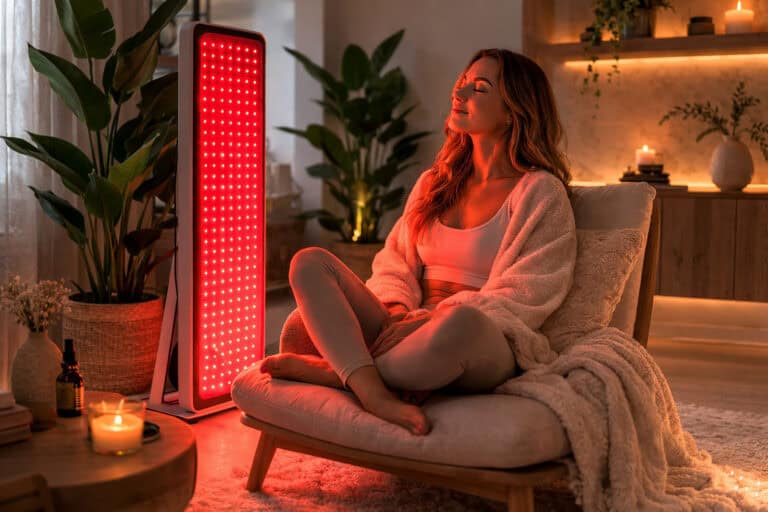
How to Use Red Light Therapy at Home

How to use red light therapy at home is one of the most important questions for beginners because results usually depend less on doing “more” and more on using the device consistently, at the right distance, for the right amount of time. At-home red light therapy is generally discussed as a form of photobiomodulation, where red and near-infrared light are being studied for how they interact with cellular energy pathways, signaling, circulation, and skin-related processes. Research and clinical interest are promising, but the evidence still varies by use case, device quality, wavelength, and treatment protocol, so realistic expectations matter from the start. PubMed Central overview, Cleveland Clinic overview
This guide is built for practical home use. We’ll cover where to place your device, how far away to stand or sit, how long a session should last, how often to use it, what to track, and what mistakes to avoid. If you are still learning the basics, start with what red light therapy is before building a routine.
Start with the full buyer’s guide
If you want help choosing a panel or comparing common device types, see our Red light therapy buyer’s guide →
What home red light therapy is actually trying to do
At home, the goal is usually to create a repeatable routine that exposes a target area of the body to the device’s light output in a controlled way. Mechanistic reviews commonly describe photobiomodulation in relation to mitochondrial activity, nitric oxide signaling, reactive oxygen species signaling, and downstream cellular responses rather than as a one-size-fits-all “healing” shortcut. That is why protocol matters: the same device may feel underwhelming if you stand too far away, use it inconsistently, or expect instant results after a few sessions. Mechanisms review in PubMed Central, nitric oxide signaling review
For most home users, red light therapy makes the most sense when it is treated like a wellness habit: simple setup, short repeatable sessions, and a clear reason for use such as skin-focused routines, post-workout recovery support, or a broader consistency-based self-care plan. If you want a deeper technical explanation, read how red light therapy works at the cellular level.

Choose a dedicated place for the device
The easiest way to stay consistent is to remove friction. Put the device where it naturally fits into a routine you already have. That might be:
- a bedroom corner for evening sessions,
- a bathroom or vanity area for skin-focused use,
- a home office for short breaks, or
- a home gym for recovery-focused sessions.
Try to avoid moving the device around the house every day. Frequent setup changes usually lead to skipped sessions. A dedicated location also makes it easier to keep a stable distance from the panel and repeat the same protocol from session to session. Before buying or placing anything permanently, think through outlet access, wall clearance, chair or standing space, and whether the panel height matches the body area you want to expose most often.

Start with the device manual, not guesswork
Home users often skip the most practical step: reading the manufacturer’s instructions for distance, recommended exposure time, eye guidance, and mounting or placement. Even when two devices look similar, their power output, beam angle, treatment area, and recommended use can differ. A stronger panel used too closely for too long is not automatically better. In photobiomodulation, dose and distance are part of the protocol, and more exposure is not always more useful. Mechanistic literature regularly discusses biphasic dose response, meaning the response can depend on the amount of light delivered. PMC discussion of dose and mechanism
If you are shopping rather than using a device already in your home, compare options through the best red light therapy devices guide and then keep your actual routine aligned with the selected device’s instructions.
Distance, angle, and body position matter more than many beginners expect
Once you begin using a device, keep the target area facing the panel as directly as possible. Angled exposure is common in real homes, but it often reduces consistency. A few practical rules help:
- Keep the treatment area reasonably centered in front of the panel.
- Use a repeatable distance each session instead of drifting closer and farther.
- Stay still enough to give the area a consistent dose.
- For larger areas, reposition methodically instead of randomly turning side to side.
For face-focused routines, people often sit comfortably and keep the panel at roughly face level. For legs, back, or broader body areas, standing panels or wall-mounted units are often easier to use consistently than tabletop devices. If you want help choosing which formats tend to work best in home settings, browse the Red Light Sage blog for device comparisons and educational posts.

Start with moderate session length and frequency
A sustainable beginner routine usually beats an aggressive routine that lasts four days and then disappears. Many home users do best by starting with shorter, moderate sessions several times per week, then adjusting only after they know the device, the setup, and their comfort level. The exact number of minutes should follow the device’s instructions, but a useful beginner mindset is to avoid the urge to “stack” long sessions just because the technology seems gentle.
Consistency usually matters more than occasional marathon sessions. For many home routines, a realistic pattern is to schedule red light therapy the same way you schedule skincare, stretching, or post-workout recovery: a small recurring appointment with yourself. If you want a deeper breakdown of timing strategy, read red light therapy session duration and frequency.

Build the routine around real life, not ideal life
The best home routine is the one you can repeat on busy days. That usually means pairing sessions with an existing habit:
- after a morning shower,
- before skincare,
- after training,
- during an afternoon work break, or
- as part of an evening wind-down routine.
Keep the process simple. Place a chair, timer, and power outlet nearby. Avoid creating a setup that requires dragging furniture, moving mirrors, or unplugging other devices every time. A home protocol should feel easy enough that missing a day does not turn into missing two weeks.
If you are focused on broader wellness education before committing to a device routine, the cornerstone red light therapy benefits page is the best next read.

Safety basics for home users
Home red light therapy is often marketed as effortless, but safe use still matters. Start with the device’s instructions first, then use common-sense home practices:
- Do not stare into bright light unless the device guidance explicitly says that is appropriate.
- Use any provided eye guidance or protection when recommended.
- Keep cords, stands, and mounting hardware stable.
- Do not use damaged devices or frayed power components.
- Do not use a stronger or longer session as a substitute for medical advice.
Cleveland Clinic notes that red light therapy is promising for some uses but that more research is still needed, and Mayo Clinic dermatology guidance also emphasizes that over-the-counter devices may differ in effectiveness and safety. Cleveland Clinic, Mayo Clinic Press
For a full discussion of precautions, read how to use red light therapy safely, and if you have unique health considerations, review red light therapy safety for specific populations.
What to track so you can tell whether the routine is helping
Beginners often judge a device too quickly because they expect an immediate dramatic feeling. A better approach is to track a small set of practical markers for several weeks, depending on your goal:
- session frequency,
- distance from the panel,
- body area treated,
- time of day,
- skin routine pairing,
- workout recovery notes, or
- general consistency and comfort.
Keeping notes helps you distinguish between a protocol issue and a device expectation issue. It also helps you avoid changing three variables at once. If you switch the device location, time of day, duration, and target area all in the same week, you will not know what actually made the difference.
Common beginner mistakes that make home use less effective
- Using the device inconsistently. A solid three- to five-day rhythm often beats a burst-and-forget approach.
- Standing too far away. This is one of the easiest ways to underuse a panel without realizing it.
- Changing protocols too often. Stay with one approach long enough to judge it fairly.
- Using red light therapy as a replacement for basics. Sleep, movement, recovery, and skincare habits still matter.
- Buying based only on marketing claims. Learn the fundamentals of wavelengths, treatment area, and intended use first.
If you want to understand device specs before you buy, review red light therapy wavelengths explained. That post gives helpful context for comparing panels, masks, and broader full-body formats.

When home use makes sense and when it does not
Home red light therapy often makes the most sense for people who want a convenient, repeatable wellness routine and are willing to stay consistent. It may be less appealing for people who know they do not stick with at-home devices, need medical evaluation for a specific condition, or expect consumer devices to deliver the same experience as a supervised clinical setting.
Consumer interest has grown because at-home devices can be integrated into normal routines, but clinic-based or dermatologist-guided care may still be more appropriate for some skin or health concerns. Cleveland Clinic and Mayo Clinic both frame light-based care with this kind of caution: potential uses exist, but it is important to match the tool to the goal and avoid overpromising outcomes. Cleveland Clinic LED light therapy, Mayo Clinic dermatologist guidance
Need help deciding?
If you are unsure whether an at-home device fits your goals, compare formats and tradeoffs in our guide to the best red light therapy devices →
Frequently asked questions about how to use red light therapy at home
How often should beginners use red light therapy at home?
Beginners usually do best with a moderate schedule they can actually maintain. Follow the device instructions first, keep the distance and target area consistent, and avoid increasing time too quickly. Long-term consistency is usually more useful than occasional overly long sessions.
Should I use red light therapy in the morning or at night?
Either can work. Morning may fit better for energy, skincare, or routine-building, while evening may fit better for wind-down habits. The best time is usually the one that helps you stay consistent without turning the session into a hassle.
How close should I stand to a red light therapy panel?
That depends on the device’s output and instructions. In general, distance matters because it changes how much light reaches the target area. Pick a repeatable position based on the manufacturer’s guidance rather than guessing each session.
Can I use red light therapy every day at home?
Some home users do, but daily use is only sensible when it matches the device guidance and your routine remains comfortable and sustainable. More is not automatically better, so avoid assuming that longer or more frequent sessions guarantee better results.
Final thoughts on building an effective home routine
The simplest answer to how to use red light therapy at home is this: choose the right location, follow the device instructions, keep the distance stable, use moderate session timing, and stay consistent long enough to judge the routine fairly. Home use works best when it feels practical, not complicated.
For most people, the winning formula is not a perfect protocol on paper. It is a repeatable setup that fits real life. Start small, track what you are doing, and let consistency do the heavy lifting.
Explore your next step
Compare device types in the buyer’s guide, review broader education in the blog, or contact Red Light Sage if you want help finding the right starting point.