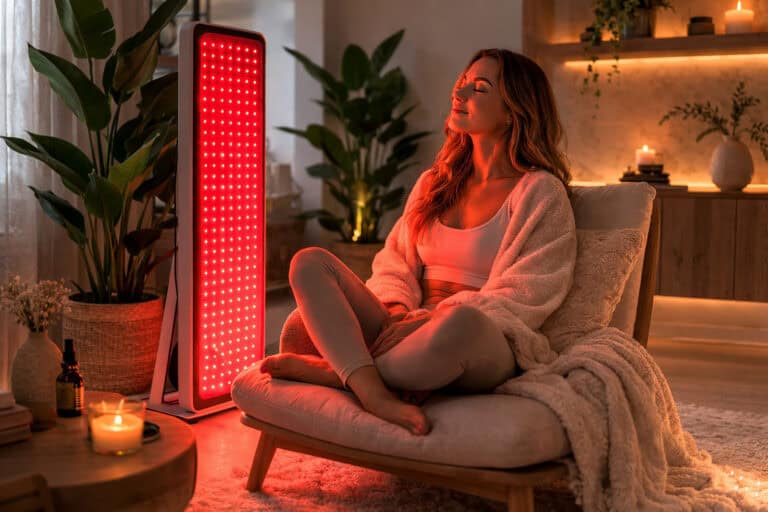
Best Budget Red Light Therapy Devices

Best Budget Red Light Therapy Devices for Smarter Home Use
Finding the best budget red light therapy devices is less about chasing the absolute cheapest panel and more about finding a model that gives you enough coverage, sensible wavelengths, reliable controls, and a realistic daily-use experience without jumping straight into premium pricing. For many people, a budget-friendly device is the best way to learn how red light therapy fits into a morning routine, a post-workout setup, a skincare habit, or a small home wellness corner.
Most entry-level buyers do not need a giant full-body wall panel on day one. They usually need a device that is simple to position, easy to use consistently, and priced low enough that the purchase still feels rational if they are experimenting. That makes smaller tabletop panels, compact half-body units, and well-designed starter panels especially important in this category.
In this guide, we compare practical value-focused options, explain what “budget” should actually mean in this niche, and highlight where spending a little more may improve durability, convenience, or treatment flexibility. We also recommend reading our broader Best Red Light Therapy Devices (2026 Buyer’s Guide) if you want to compare this roundup against higher-tier devices before deciding.
Start with the bigger picture
If you want to compare budget picks with mid-range and premium options, visit our complete 2026 buyer’s guide →
What Actually Matters in a Budget Red Light Therapy Device
Budget red light therapy shopping gets confusing because product pages often stack long feature lists that sound advanced but do not always improve real-world use. The fundamentals matter more. A strong entry-level device should first give you wavelengths that are commonly used in photobiomodulation discussions, often in the red and near-infrared ranges. Reviews of photobiomodulation mechanisms commonly discuss how red and near-infrared light interact with endogenous photoacceptors and influence cellular signaling pathways, including mitochondrial activity and ATP-related processes, although results can vary by dose and treatment context PubMed review on photobiomodulation mechanisms and NIH/PMC overview of proposed PBM mechanisms.
Second, budget devices should offer usable coverage for the part of the body you actually plan to treat. A cheap panel that is too small for your intended use can feel underpowered simply because you end up repositioning it constantly. Third, basic convenience features matter more than buyers expect. A built-in timer, a stable stand, separate red and near-infrared controls, and straightforward placement can make the difference between occasional use and a habit you maintain for months.
Finally, budget value is not just about sticker price. It also includes warranty support, reasonable build quality, and how well the device fits a real room. A lightweight tabletop panel may be better value than a larger panel if you live in a smaller space, want simple setup, or expect to move the device often between a desk, bedroom, or workout area.

That practical lens matters because the evidence base for light therapy is highly parameter-dependent. Reviews repeatedly note that wavelength, dose, timing, distance, and treatment schedule all influence outcomes, which is another reason a simple device you will actually use correctly may outperform a more complex device you rarely turn on review of light parameters and photobiomodulation complexity.
How We Evaluated Affordable Options
For this roundup, we treated “budget” as a value category rather than a race to the bottom. We favored devices that keep cost within reach while still offering enough coverage and usability for normal home routines. That means we looked for the following:
- Sensible wavelength design rather than gimmicky spec overload
- Use-case clarity for targeted sessions, small-area work, or starter routines
- Reasonable treatment convenience including timers, switches, or stand options
- Practical home fit for desks, vanities, bedrooms, apartments, and small gyms
- Good starting value for people who are testing consistency before upgrading
We did not treat budget devices as full substitutes for large multi-panel systems. Instead, we asked a simpler question: does this device make sense for a person who wants a credible starting point without overspending? In many cases, that makes smaller panels attractive for facial routines, localized recovery, neck and shoulder sessions, or rotating use across several body areas.
If your goal is broad full-body coverage, you will usually outgrow the budget tier faster. In that case, our Best Full-Body Red Light Therapy Devices roundup will be more aligned with your needs. But for entry-level buyers, compact panels can still be a rational first purchase, especially when consistency matters more than device size.
Best Overall Budget Pick: Hooga HG300
The Hooga HG300 stands out as one of the most straightforward budget-friendly entry points because it keeps the feature set simple while covering the fundamentals well. According to Hooga’s official product page, the HG300 uses 660nm red and 850nm near-infrared wavelengths, includes 60 single-chip LEDs, offers separate red and near-infrared power switches, and includes a built-in timer with a foldable tabletop stand official Hooga HG300 specifications.
Why does it work so well in the budget category? It is approachable. This is the kind of panel that makes sense for a desk, bedside table, bathroom counter, or small home gym shelf. It is not pretending to be a premium modular system. Instead, it gives first-time buyers a reasonable starting point for targeted use on the face, neck, shoulders, arms, knees, or a localized recovery area after training.
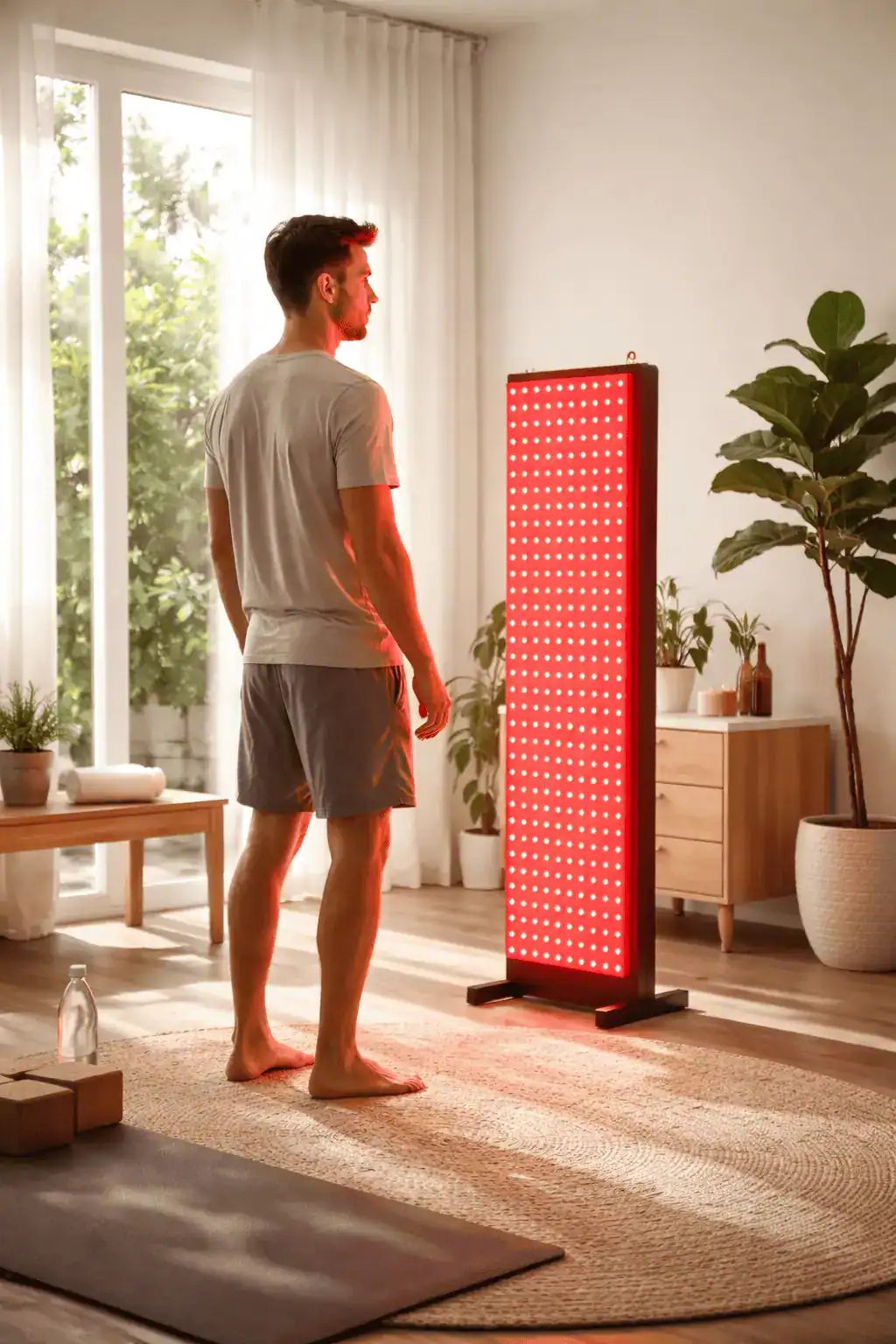
Best for: first-time buyers, skincare routines, small-space users, and people who want a low-friction device for targeted sessions.
Home fit: apartments, vanities, desk corners, bedroom dressers, and compact wellness stations.
Why we like it: clear controls, approachable size, reasonable core wavelengths, and a price category that feels easier to test without overcommitting.
If you want a deeper look at how this brand fits into the broader market, see our Hooga HG Panel Review.
Best for Feature Value: Bestqool Pro300
The Bestqool Pro300 is a strong candidate for shoppers who want more feature density while still aiming at the value end of the market. Bestqool’s official page describes the Pro300 as using four wavelengths—630nm, 660nm, 850nm, and 940nm—and positions it as a flexible panel with modular potential for users who may want more expandability later official Bestqool Pro300 specifications.
That broader wavelength mix may appeal to buyers who like the idea of a more layered setup, but the real reason it makes this list is practical value. If you want more than a minimalist starter panel, the Pro300 can feel like a step up without pushing immediately into higher premium territory. It is still best understood as a compact home panel, not a full-room system, but it offers a bit more flexibility for people who enjoy comparing modes and setup options.

Best for: buyers who want a budget-conscious panel with a more feature-rich spec sheet.
Home fit: users who can dedicate a stable shelf, tabletop stand area, or workout corner to regular sessions.
Tradeoff to remember: spec lists can look impressive, but consistency and setup convenience still matter more than marketing language. If the panel feels too cumbersome for your space, even a better-looking spec sheet may not translate into better long-term use.
For more context on how budget panels stack up, you can also review our dedicated Bestqool Red Light Panel Review.
Best for Small Spaces and Targeted Sessions: MitoMIN 2.0
The MitoMIN 2.0 makes sense for buyers who want a compact, highly manageable panel from a brand that also serves higher-tier segments. Mito Red Light lists the MitoMIN 2.0 with 660nm red and 850nm near-infrared wavelengths, 60 LEDs, a built-in timer, a 60-degree beam angle, and a small 12" x 9" footprint that is easy to work into tight spaces official MitoMIN 2.0 specifications.
This kind of device is rarely the right answer for broad body coverage, but it can be excellent for focused routines. It suits people who want to sit close to the device at a desk, use it during a short skincare window, rotate it between joints or muscle groups, or keep something lightweight enough to move without turning setup into a project.
That matters because budget buyers often overestimate how much panel size they need and underestimate how much they value convenience. A device that is easy to place and easy to repeat may end up giving a better real-world experience than a larger entry-level panel that feels awkward in a bedroom or office.
Best for: highly targeted use, small apartments, desk sessions, and buyers who prioritize simplicity over coverage.
Home fit: minimalist setups, office corners, bathroom counters, and shelf-based routines.
See our broader brand-specific analysis in the Mito Red Light MitoADAPT Review for additional comparison context across the category.
Best Portable Budget Option: Rouge Nano
The Rouge Nano is one of the more interesting portable entries for shoppers who care about mobility more than coverage. Rouge Care’s official page lists the Nano with 660nm red and 850nm near-infrared wavelengths, a compact hand-sized form factor, a 10,000mA battery, and a one-year warranty official Rouge Nano specifications.

This is not the budget winner for every buyer. It is the best fit for someone who wants extreme portability, localized use, and freedom from fixed placement. That can be useful if you travel regularly, want something easy to keep in a home office drawer, or simply do not want a larger panel living permanently in your room.
The compromise is obvious: a device this small will not replace a larger panel for broader coverage. But in the budget category, portable convenience can be a valid form of value. If a lightweight handheld or ultra-compact panel is the only format you will consistently use, portability becomes a meaningful buying advantage rather than a side feature.
Best for: travel, portability, small-area sessions, and flexible placement.
Home fit: shared living spaces, limited storage, and buyers who dislike fixed equipment.
For more brand context, visit our Rouge Red Light Therapy Panel Review.
Which Budget Device Fits Which Goal?
Choosing among the best budget red light therapy devices becomes easier when you stop asking which model is “best” in the abstract and instead ask which one fits your routine.
- For skincare and face-focused use: smaller tabletop panels like the Hooga HG300 or MitoMIN 2.0 often make more sense than larger entry units.
- For localized muscle or joint routines: compact panels with easy repositioning can work well, especially when used consistently around one or two target areas.
- For mixed-use households: the Bestqool Pro300 may appeal to people who want more flexibility or a more feature-forward layout.
- For travel and portability: the Rouge Nano is easier to store and move than classic panel designs.

Use-case matching matters because photobiomodulation research is not a simple “more is always better” story. Reviews on skin applications, exercise recovery, and general light-based wellness repeatedly show that treatment context and parameters matter study on red LED photobiomodulation and skin aging signs, systematic review on PBMT and muscle recovery, and systematic review on light therapy and sleep problems. That is another reason it helps to buy for the routine you will actually follow instead of the biggest panel you can stretch to afford.
Common Budget Buying Mistakes to Avoid
The first mistake is focusing only on price. The cheapest device is not a value buy if it is poorly suited to your body area, your room, or your willingness to use it consistently. A slightly better-made panel with a timer and practical stand may end up being the smarter long-term purchase.
The second mistake is assuming more wavelengths automatically means better outcomes. Extra wavelengths may be useful depending on device design, but they do not override the importance of overall treatment parameters or user consistency. A simple two-wavelength device may still be a very rational starter option.
The third mistake is buying too small for your expectations. If you already know you want near-daily sessions over large body areas, a micro panel may disappoint you even if the quality is fine. In that situation, you may be better served by saving for a larger panel or comparing the options in our Best Red Light Therapy Panels for Home Use roundup.
The fourth mistake is expecting one device to do everything equally well. Budget devices are usually strongest when used for focused purposes: face, neck, shoulders, one muscle group, a targeted recovery area, or a short daily routine. Once you understand that, the category makes much more sense.
How to Make a Budget Device Work Better at Home
A lower-cost device can still feel premium in practice when the setup is friction-free. Keep the device somewhere visible, stable, and easy to turn on. Budget panels often perform best when they become part of an existing habit rather than a separate event you have to plan around.

Examples of realistic home use include:
- placing a compact panel near a vanity for a short morning skincare session
- keeping a panel beside a desk for a midday break focused on neck and shoulders
- using a targeted panel in a home gym area after training for localized recovery support
- placing a small device on a nightstand or shelf for a calm, repeated evening routine
If you want help building a routine that matches your goals and treatment area, our practical guide on How to Use Red Light Therapy at Home and our article on Red Light Therapy Session Duration & Frequency can help you think more clearly about placement, repetition, and realistic expectations.
When It Makes Sense to Skip the Budget Tier
Budget red light therapy devices are ideal for many beginners, but they are not right for everyone. You may want to move past the budget category if you already know you want wider body coverage, stronger mounting options, a more permanent home setup, or a device that supports longer-term progression into a multi-panel system.
You may also want to spend more if your primary frustration with small panels is treatment time. Compact devices often mean rotating the panel between body areas. That is perfectly reasonable for face care or one joint, but it becomes less appealing when you want broad torso, back, or leg coverage several times a week.
For broader shopping, our Red Light Therapy Benefits: Backed by Science page explains why buyers often choose larger or more specialized formats depending on their goals, while our Contact page is available if you want to suggest another device for future review coverage.
Frequently Asked Questions About Budget Red Light Therapy Devices
Are cheap red light therapy devices worth buying?
They can be, especially when the device matches a focused use case like skincare, small-area recovery, or short daily routines. The strongest budget buys are usually simple, easy to place, and realistic about their coverage limitations.
What is the best budget red light therapy device for beginners?
For many beginners, a small tabletop panel such as the Hooga HG300 is an easy starting point because it keeps the learning curve low. Buyers who want more spec complexity may prefer the Bestqool Pro300, while portability-minded users may like the Rouge Nano.
Should I choose a small panel or save for a larger one?
Choose a small panel if your goals are targeted and your space is limited. Save for a larger one if you already know you want broader body coverage, fewer repositioning steps, or a more permanent treatment station.

Safety and dosing are still important regardless of price tier. Conservative use, attention to manufacturer guidance, and awareness that results depend on dose and context are all part of a responsible approach. Background safety discussions in published reviews and trials support the idea that parameters matter and that home use should remain measured and consistent rather than excessive study on the safety of LED red light on human skin and 2024 review on light and skin applications.
Final Verdict: Best Budget Red Light Therapy Devices by Buyer Type
If you want the simplest all-around recommendation, the Hooga HG300 is our best overall budget pick because it balances ease of use, core wavelengths, and practical home fit. If you want more feature density for the money, the Bestqool Pro300 is the value-focused choice. If you have very limited space and want compact targeted use, the MitoMIN 2.0 is one of the easiest budget panels to live with. If portability matters most, the Rouge Nano is the standout compact option.
The most important takeaway is that the best budget red light therapy devices are the ones you will actually use. In this category, consistency often matters more than size, and good fit often matters more than flashy specs. Buy for your room, your routine, and your patience for setup.
Need a broader comparison?
Compare these entry-level picks with larger and more advanced options in our full buyer’s guide →
You can also continue exploring the site through the Red Light Therapy Blog, or compare device-specific coverage in our review pages: Hooga, Bestqool, Mito, and Rouge.